

2 kronor (Gustaf II Adolf's death in Lützen) – Sweden
Add to wishlist
Circulating commemorative coins
Commemoration: 300th Anniversary of the death of Gustaf II Adolf in Lützen
Sweden
Obverse
Description:
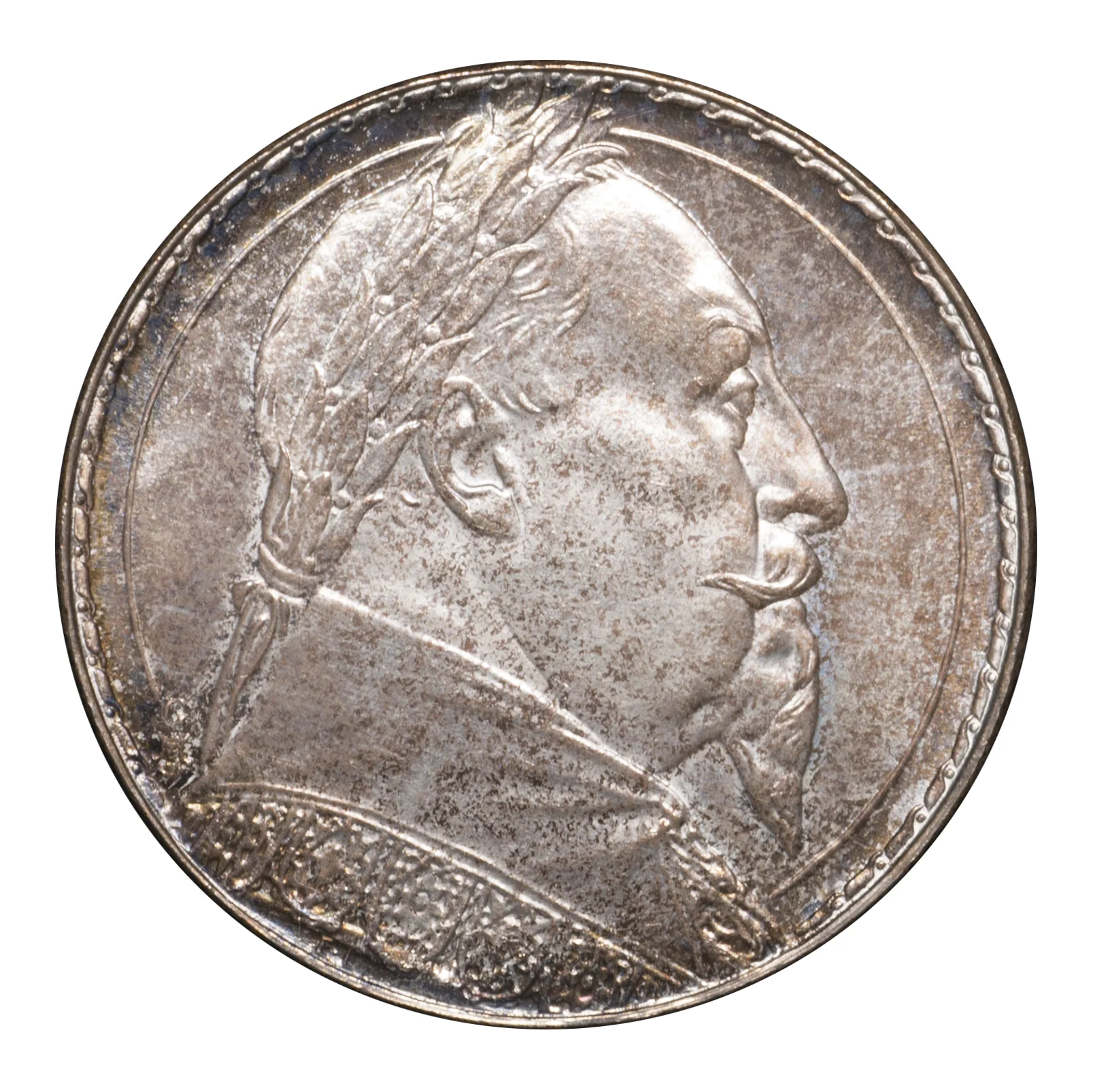
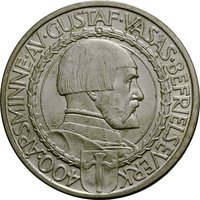
Gustav II Adolf in right-facing laureate portrait. Below, artist initials and mintmarks at lower left.
Inscription:
G
E·L
E·L
Script: Latin
Engraver: Erik Lindberg
Reverse
Description:
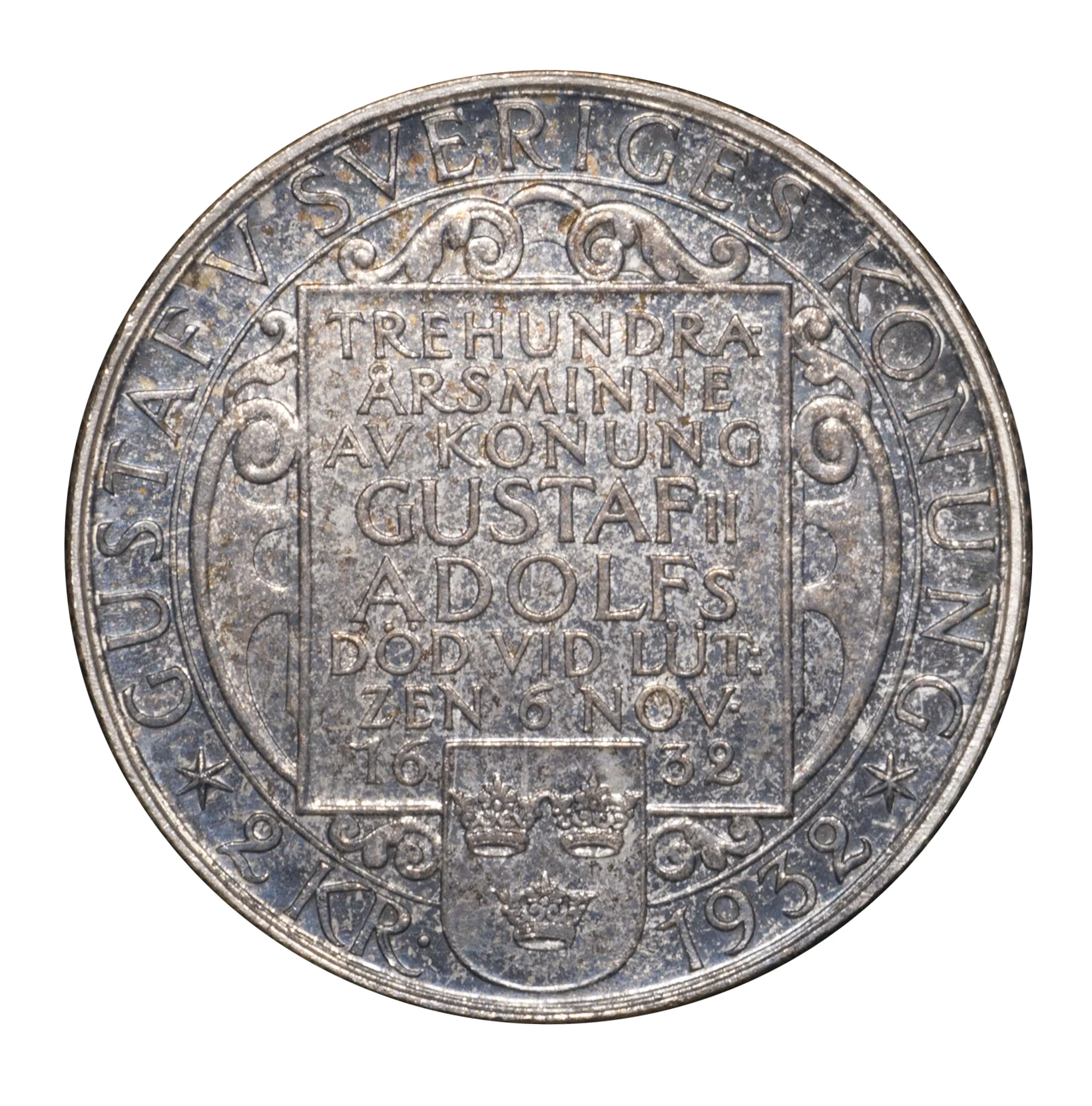
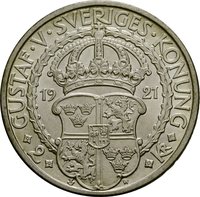
Ornate circular inscription plate. A shield with Sweden's three crowns divides the value and date below.
Inscription:
GUSTAF V SVERIGES KONUNG
TREHUNDRA-
ÅRSMINNE
AV KONUNG
GUSTAF II
ADOLFs
DÖD VID LÜT:
ZEN 6 NOV·
16 32
2 KR· 1932
TREHUNDRA-
ÅRSMINNE
AV KONUNG
GUSTAF II
ADOLFs
DÖD VID LÜT:
ZEN 6 NOV·
16 32
2 KR· 1932
Translation:
GUSTAF V SWEDEN'S KING
THREE HUNDRED-
YEAR MEMORIAL
OF KING
GUSTAF II
ADOLF'S
DEATH AT LÜT:
ZEN 6 NOV·
16 32
2 KR· 1932
THREE HUNDRED-
YEAR MEMORIAL
OF KING
GUSTAF II
ADOLF'S
DEATH AT LÜT:
ZEN 6 NOV·
16 32
2 KR· 1932
Script: Latin
Language: Swedish
Engraver: Erik Lindberg
Edge
Reeded
Mints
| Name | Mark |
|---|---|
| Kungliga Myntet | — |
Mintings
| Year | Mint Mark | Mintage | Quality | Collection |
|---|---|---|---|---|
| 1932 | — | 253,770 |
Historical background
In 1932, Sweden was in the grip of the Great Depression, and its currency, the Swedish krona, was under severe strain. The country had returned to the gold standard in the 1920s, but the global economic collapse placed this commitment under intense pressure. As capital fled and foreign exchange reserves dwindled, the Riksbank (Sweden's central bank) was forced to raise interest rates sharply to defend the krona's gold parity, a move that deepened domestic deflation and unemployment.
The political response became a defining moment. In the autumn of 1932, a new Social Democratic government, led by Per Albin Hansson, took power. While initially committed to maintaining the gold standard to ensure stability, it faced a critical choice: continue orthodox policies to defend the currency or abandon gold to pursue reflationary economic policies aimed at combating the Depression. The situation reached a crisis point in late September, just after the election, when a major bank, Kreuger & Toll, collapsed, triggering further capital flight and exhausting the Riksbank's reserves.
Consequently, Sweden was forced to suspend the gold standard on September 27, 1932, following the lead of Great Britain, which had done so a year earlier. This decisive break from orthodox monetary policy freed the krona from its golden anchor, allowing it to depreciate. This devaluation, combined with the new government's expansionary fiscal policies, marked the beginning of Sweden's recovery and the establishment of its famous "folkhemmet" (People's Home) welfare model, making the currency crisis of 1932 a pivotal economic and political turning point.
The political response became a defining moment. In the autumn of 1932, a new Social Democratic government, led by Per Albin Hansson, took power. While initially committed to maintaining the gold standard to ensure stability, it faced a critical choice: continue orthodox policies to defend the currency or abandon gold to pursue reflationary economic policies aimed at combating the Depression. The situation reached a crisis point in late September, just after the election, when a major bank, Kreuger & Toll, collapsed, triggering further capital flight and exhausting the Riksbank's reserves.
Consequently, Sweden was forced to suspend the gold standard on September 27, 1932, following the lead of Great Britain, which had done so a year earlier. This decisive break from orthodox monetary policy freed the krona from its golden anchor, allowing it to depreciate. This devaluation, combined with the new government's expansionary fiscal policies, marked the beginning of Sweden's recovery and the establishment of its famous "folkhemmet" (People's Home) welfare model, making the currency crisis of 1932 a pivotal economic and political turning point.
🌱 Common