

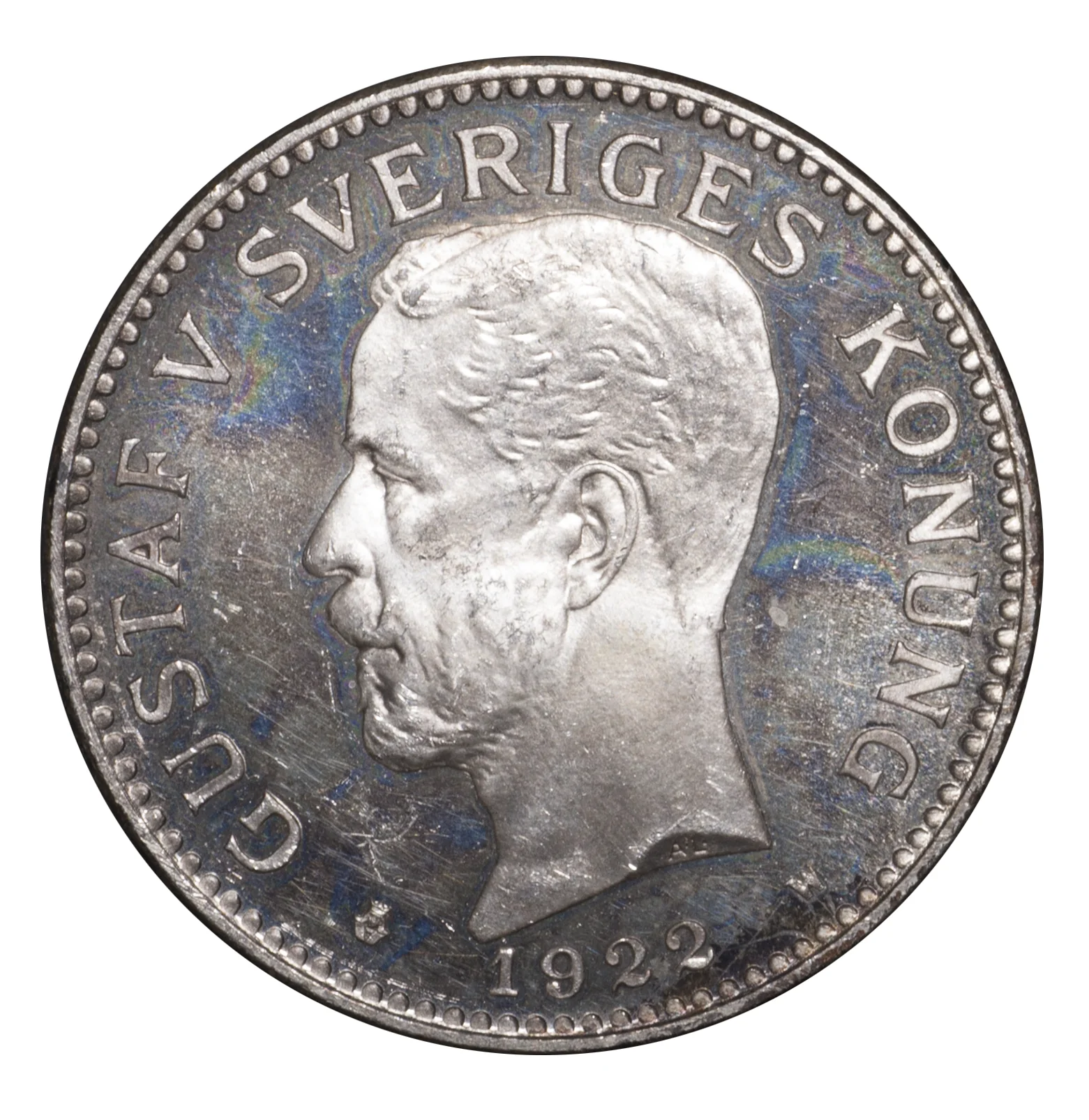
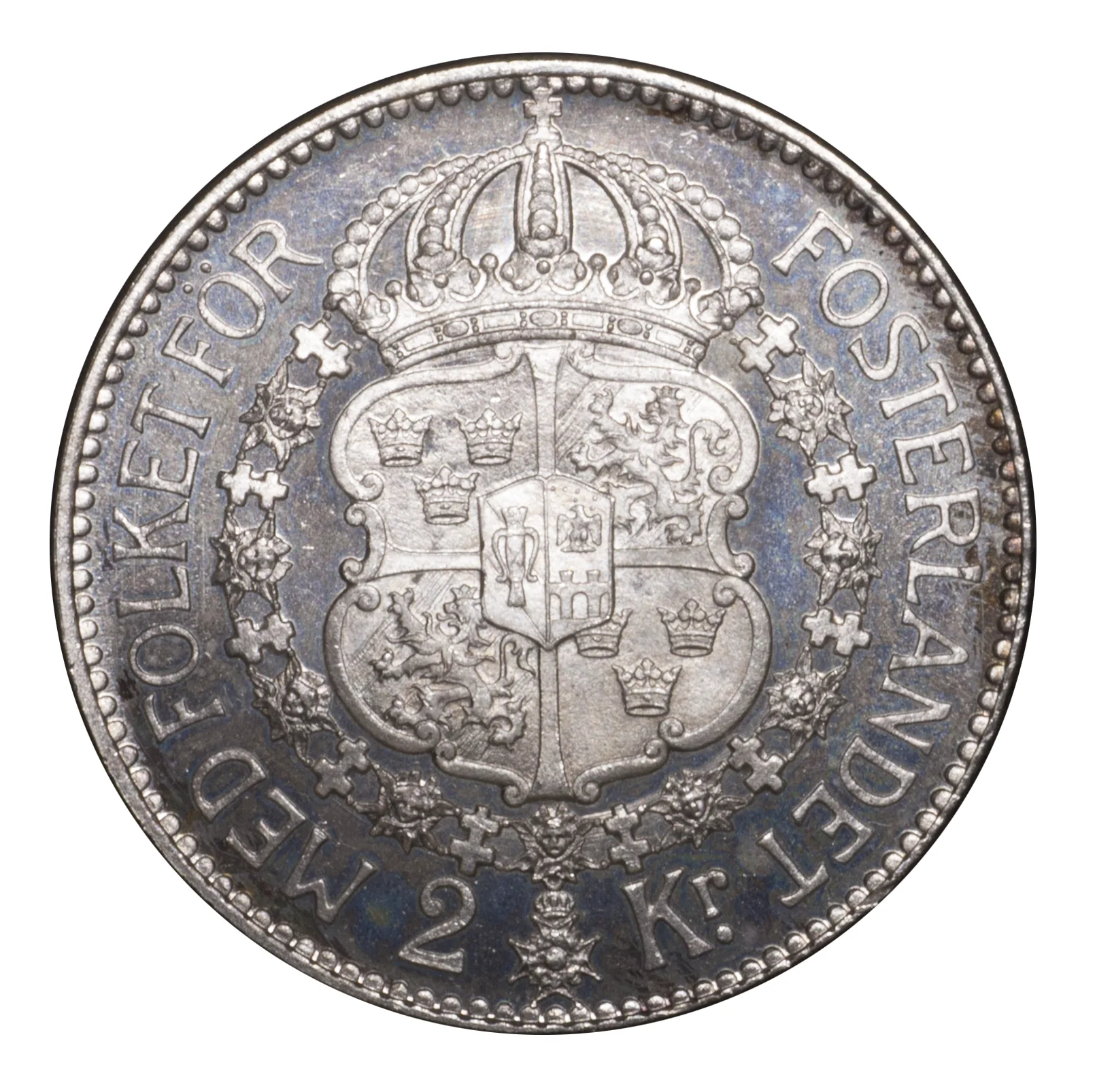
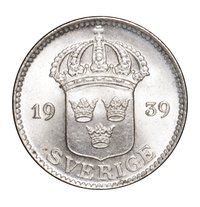
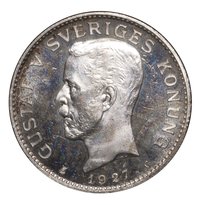
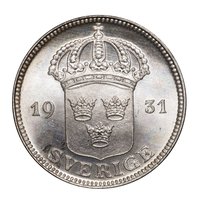
Obverse
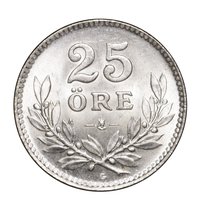
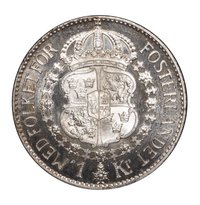
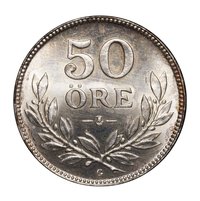
Reverse
Edge
Reeded
Mints
| Name | Mark |
|---|---|
| Kungliga Myntet | — |
Mintings
| Year | Mint Mark | Mintage | Quality | Collection |
|---|---|---|---|---|
| 1910 | — | 374,725 | ||
| 1912 | — | 156,912 | ||
| 1913 | — | 304,616 | ||
| 1914 | — | 191,905 | ||
| 1915 | — | 155,965 | ||
| 1922 | — | 201,821 | ||
| 1924 | — | 199,314 | ||
| 1926 | — | 221,577 | ||
| 1928 | — | 160,319 | ||
| 1929 | — | 184,458 | ||
| 1930 | — | 178,387 | ||
| 1931 | — | 210,576 | ||
| 1934 | — | 273,419 | ||
| 1935 | — | 211,059 | ||
| 1936 | — | 491,296 | ||
| 1937 | — | 129,760 | ||
| 1937 | — | — | Proof | |
| 1938 | — | 638,970 | ||
| 1938 | — | — | Proof | |
| 1939 | — | 1,200,329 | ||
| 1939 | — | — | Proof | |
| 1940 | — | — |
Historical background
In 1910, Sweden operated under the classical gold standard, a system it had formally adopted in 1873 alongside Denmark and Norway to form the Scandinavian Monetary Union (SMU). This system defined the Swedish krona (krona, plural kronor) as a fixed quantity of gold, ensuring its value was stable and internationally convertible. The SMU was highly successful in its early decades, allowing Swedish, Danish, and Norwegian coins to circulate freely in all three countries as legal tender, effectively creating a single currency area that facilitated trade and economic integration.
By the dawn of the 20th century, however, the monetary landscape was becoming more complex. While the union remained officially intact, the financial strains of World War I were on the horizon. In 1905, the political union between Sweden and Norway was dissolved, creating underlying tensions within the Monetary Union. Furthermore, the period saw a global shift from circulating gold and silver coins to greater use of paper banknotes and demand deposits. Sweden's Riksbank, the world's oldest central bank, managed the currency's gold backing, but the system's rigidity was increasingly tested by growing international capital flows and the expanding needs of a modern industrial economy.
Consequently, the currency situation in 1910 represented the tail end of an era of remarkable monetary stability. The krona was a trusted and solid currency, its value anchored firmly to gold. Yet, the foundations of the system upon which it relied—the Scandinavian Monetary Union and the international gold standard—were showing early signs of fragility. Within a few years, the outbreak of World War I would force Sweden, like most nations, to suspend gold convertibility, ending this period of fixed stability and ushering in an age of managed currencies.
By the dawn of the 20th century, however, the monetary landscape was becoming more complex. While the union remained officially intact, the financial strains of World War I were on the horizon. In 1905, the political union between Sweden and Norway was dissolved, creating underlying tensions within the Monetary Union. Furthermore, the period saw a global shift from circulating gold and silver coins to greater use of paper banknotes and demand deposits. Sweden's Riksbank, the world's oldest central bank, managed the currency's gold backing, but the system's rigidity was increasingly tested by growing international capital flows and the expanding needs of a modern industrial economy.
Consequently, the currency situation in 1910 represented the tail end of an era of remarkable monetary stability. The krona was a trusted and solid currency, its value anchored firmly to gold. Yet, the foundations of the system upon which it relied—the Scandinavian Monetary Union and the international gold standard—were showing early signs of fragility. Within a few years, the outbreak of World War I would force Sweden, like most nations, to suspend gold convertibility, ending this period of fixed stability and ushering in an age of managed currencies.
🌱 Common