

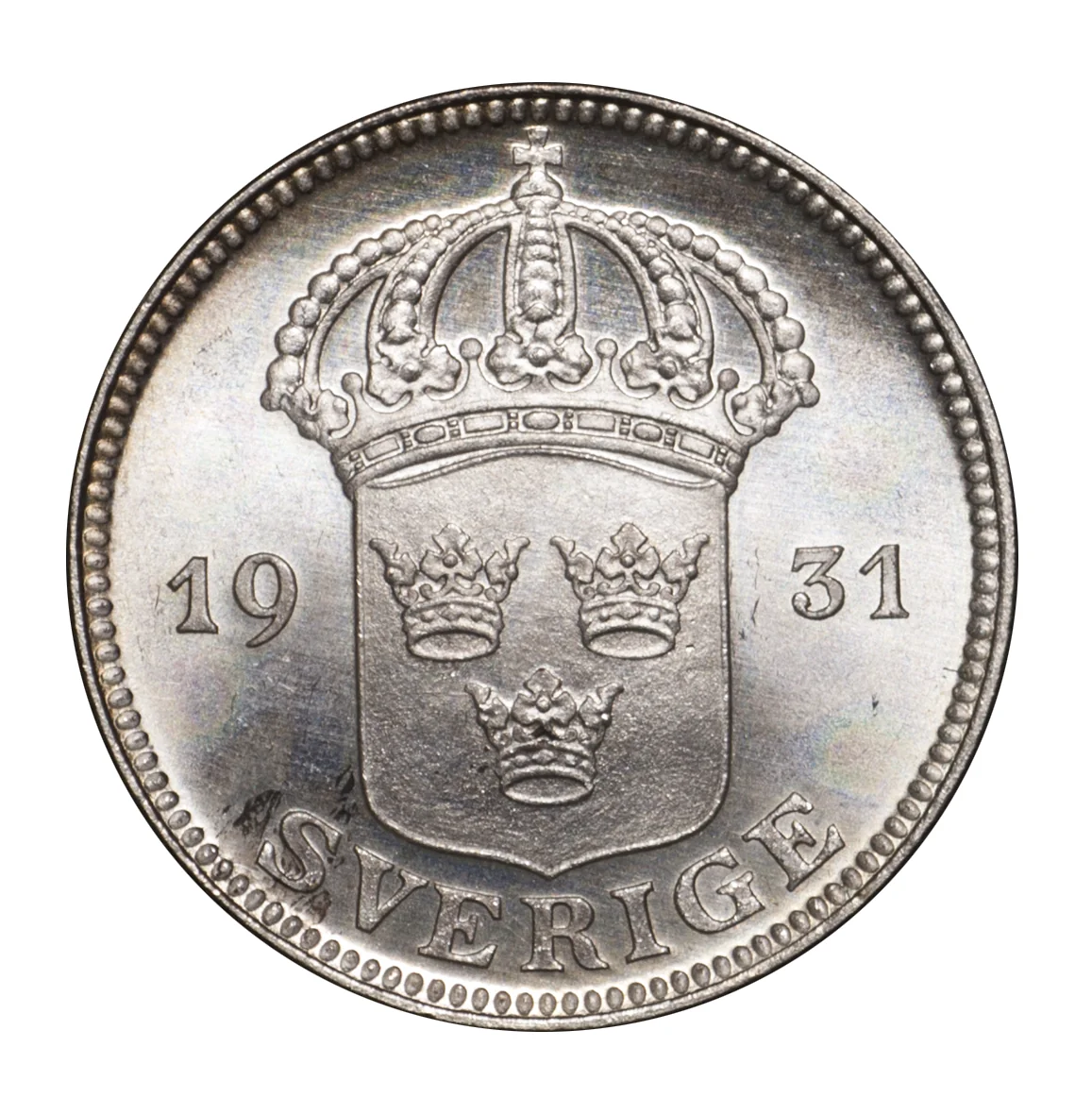
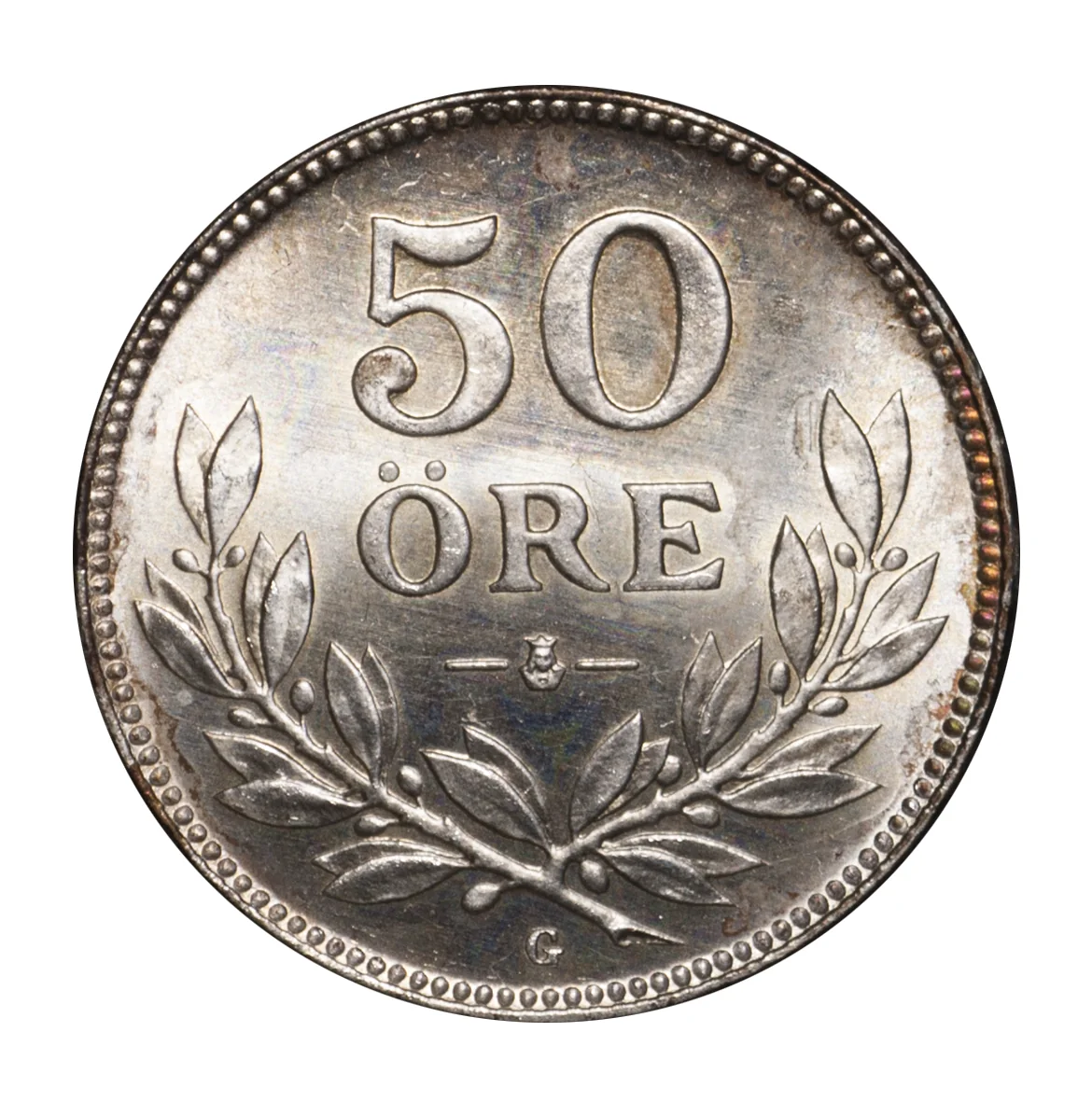
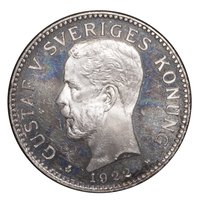
Obverse
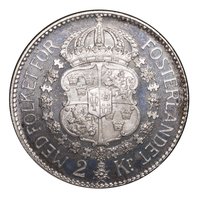
Reverse
Edge
Reeded
Categories
| Symbols> Coat of Arms |
Mints
| Name | Mark |
|---|---|
| Kungliga Myntet | — |
Mintings
| Year | Mint Mark | Mintage | Quality | Collection |
|---|---|---|---|---|
| 1911 | — | 472,534 | ||
| 1912 | — | 483,062 | ||
| 1914 | — | 378,448 | ||
| 1916 | — | 536,718 | ||
| 1919 | — | 458,296 | ||
| 1927 | — | 671,596 | ||
| 1928 | — | 1,135,054 | ||
| 1929 | — | 470,991 | ||
| 1930 | — | 547,919 | ||
| 1931 | — | 671,457 | ||
| 1933 | — | 547,606 | ||
| 1934 | — | 613,124 | ||
| 1935 | — | 690,792 | ||
| 1936 | — | — | ||
| 1938 | — | 441,546 | ||
| 1939 | — | — | Proof | |
| 1939 | — | 921,750 |
Historical background
In 1911, Sweden was operating under the classical gold standard, a monetary system it had formally adopted in 1873 alongside Denmark and Norway in the Scandinavian Monetary Union (SMU). This system guaranteed that the Swedish krona was freely convertible into a fixed quantity of gold, ensuring price stability and facilitating international trade. The Riksbank, Sweden's central bank, was legally obligated to exchange banknotes for gold upon demand, which anchored the currency's value and instilled confidence in the financial system.
The period around 1911 was one of relative calm and prosperity for the Swedish currency within the union. The SMU functioned well, allowing the coins of all three member nations to circulate freely across borders as legal tender. This created a de facto common currency area in Scandinavia. Sweden's economy was industrializing rapidly, with strong exports in timber, iron ore, and emerging engineering products, generating gold inflows that comfortably backed the currency. There were no significant liquidity crises or runs on the krona during this specific year.
However, underlying strains that would later fracture the monetary union were beginning to emerge. The system's rigidity meant that Sweden's monetary policy was largely dictated by international gold flows rather than domestic economic needs. Furthermore, the outbreak of World War I in 1914 would soon trigger a global suspension of the gold standard. While still stable in 1911, the impending war would lead Sweden, like other nations, to abandon gold convertibility, ending the practical function of the SMU and ushering in an era of monetary upheaval.
The period around 1911 was one of relative calm and prosperity for the Swedish currency within the union. The SMU functioned well, allowing the coins of all three member nations to circulate freely across borders as legal tender. This created a de facto common currency area in Scandinavia. Sweden's economy was industrializing rapidly, with strong exports in timber, iron ore, and emerging engineering products, generating gold inflows that comfortably backed the currency. There were no significant liquidity crises or runs on the krona during this specific year.
However, underlying strains that would later fracture the monetary union were beginning to emerge. The system's rigidity meant that Sweden's monetary policy was largely dictated by international gold flows rather than domestic economic needs. Furthermore, the outbreak of World War I in 1914 would soon trigger a global suspension of the gold standard. While still stable in 1911, the impending war would lead Sweden, like other nations, to abandon gold convertibility, ending the practical function of the SMU and ushering in an era of monetary upheaval.
🌱 Common