

2½ escudos – Cape Verde
Add to wishlist
Cape Verde
Context
Years: 1953–1967
Issuer: Cape Verde
Period:
(1951—1975)
Currency:
(since 1914)
Demonetized: Yes
Total mintage: 900,000
Material
References
KM: #
Numista: #10138
Value
Exchange value: 2.5 CVE
Obverse
Description:
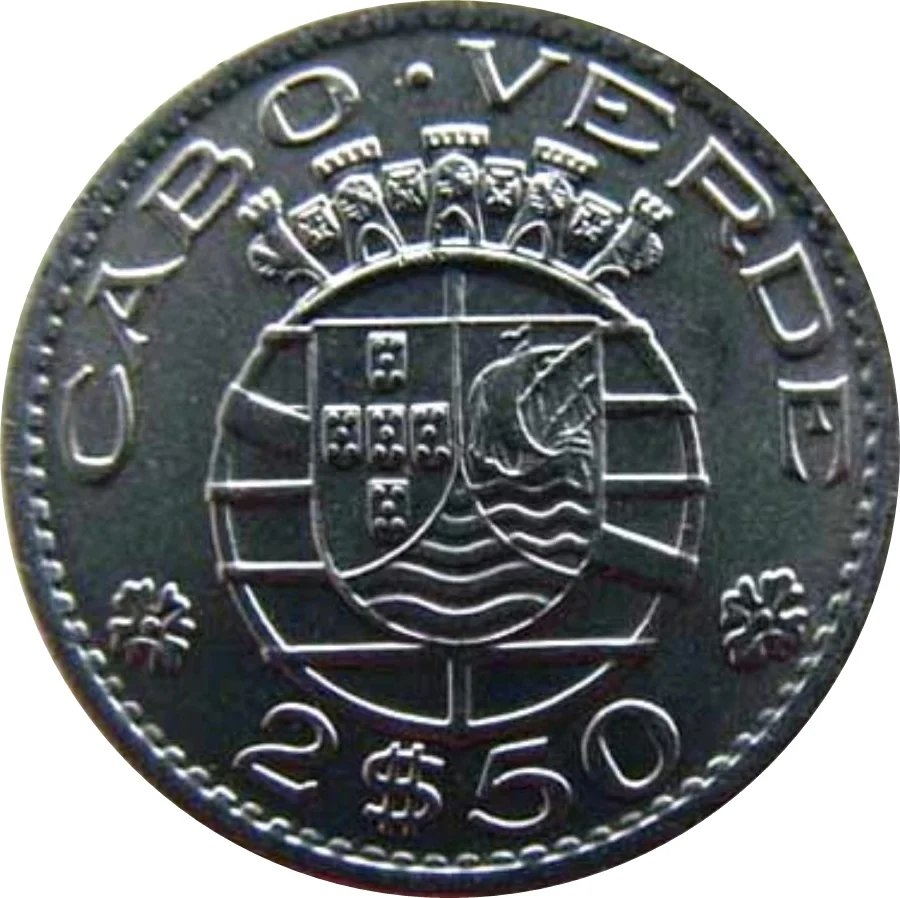
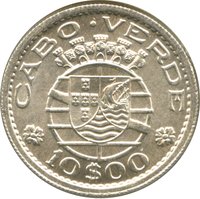
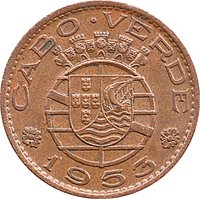
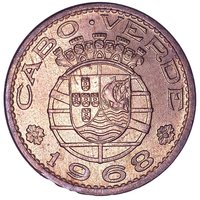
Cape Verde's coat of arms.
Inscription:
CABO·VERDE
2$50
2$50
Translation:
Two Escudos and Fifty Centavos, Cape Verde
Script: Latin
Language: Portuguese
Reverse
Description:
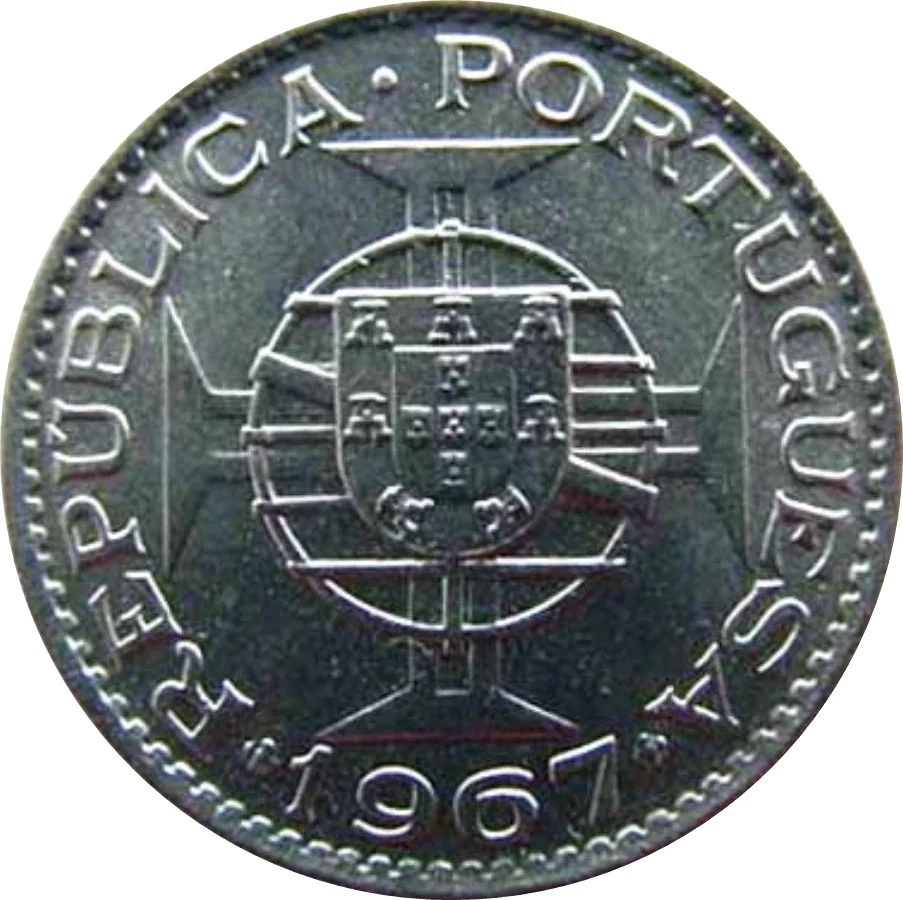
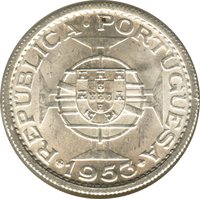
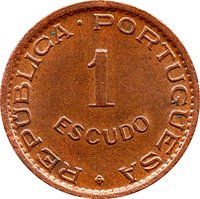
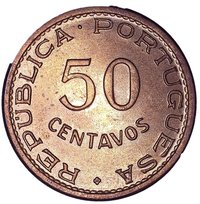
Portugal's national emblem.
Inscription:
REPÚBLICA·PORTUGUESA
·1967·
·1967·
Translation:
PORTUGUESE REPUBLIC
·1967·
·1967·
Script: Latin
Language: Portuguese
Edge
Reeded
Categories
| Symbols> Coat of Arms |
| Symbol> Cross |
Mints
| Name | Mark |
|---|---|
| Imprensa Nacional - Casa da Moeda | — |
Mintings
| Year | Mint Mark | Mintage | Quality | Collection |
|---|---|---|---|---|
| 1953 | — | 500,000 | ||
| 1967 | — | 400,000 |
Historical background
In 1953, Cape Verde remained under Portuguese colonial rule, and its currency situation was a direct reflection of this political reality. The archipelago did not have an independent monetary system; it operated entirely within Portugal's currency zone. The official legal tender was the Portuguese escudo (PTE), which circulated alongside smaller denominations like the centavo. This arrangement meant that Cape Verde's money supply, value, and monetary policy were entirely controlled by the Banco de Portugal in Lisbon, with no local central banking authority.
The economy of Cape Verde at this time was largely underdeveloped and subsistence-based, heavily reliant on agriculture and remittances from Cape Verdeans working abroad, particularly in the United States. The use of the metropolitan escudo tied the islands' economic fortunes directly to Portugal's, a country that was itself economically stagnant under the authoritarian Estado Novo regime. There was little financial infrastructure, and banking services were minimal, primarily serving colonial administration and a small commercial sector in ports like Mindelo and Praia.
Notably, this period preceded the only significant monetary distinction under colonial rule. It was not until 1935 that Portugal had formally ended Cape Verde's historical right to issue its own currency, and it would not be until 1975, after independence, that the country would introduce its own distinct currency, the Cape Verdean escudo (CVE). Therefore, in 1953, the currency situation was one of complete monetary integration and dependency, symbolizing the islands' broader political and economic subjugation within the Portuguese empire.
The economy of Cape Verde at this time was largely underdeveloped and subsistence-based, heavily reliant on agriculture and remittances from Cape Verdeans working abroad, particularly in the United States. The use of the metropolitan escudo tied the islands' economic fortunes directly to Portugal's, a country that was itself economically stagnant under the authoritarian Estado Novo regime. There was little financial infrastructure, and banking services were minimal, primarily serving colonial administration and a small commercial sector in ports like Mindelo and Praia.
Notably, this period preceded the only significant monetary distinction under colonial rule. It was not until 1935 that Portugal had formally ended Cape Verde's historical right to issue its own currency, and it would not be until 1975, after independence, that the country would introduce its own distinct currency, the Cape Verdean escudo (CVE). Therefore, in 1953, the currency situation was one of complete monetary integration and dependency, symbolizing the islands' broader political and economic subjugation within the Portuguese empire.
🌱 Common