

50 centavos – Cape Verde
Add to wishlist
Cape Verde
Context
Year: 1968
Issuer: Cape Verde
Period:
(1951—1975)
Currency:
(since 1914)
Demonetized: Yes
Total mintage: 1,000,000
Material
References
KM: #
Numista: #11448
Value
Exchange value: 0.50 CVE
Obverse
Description:
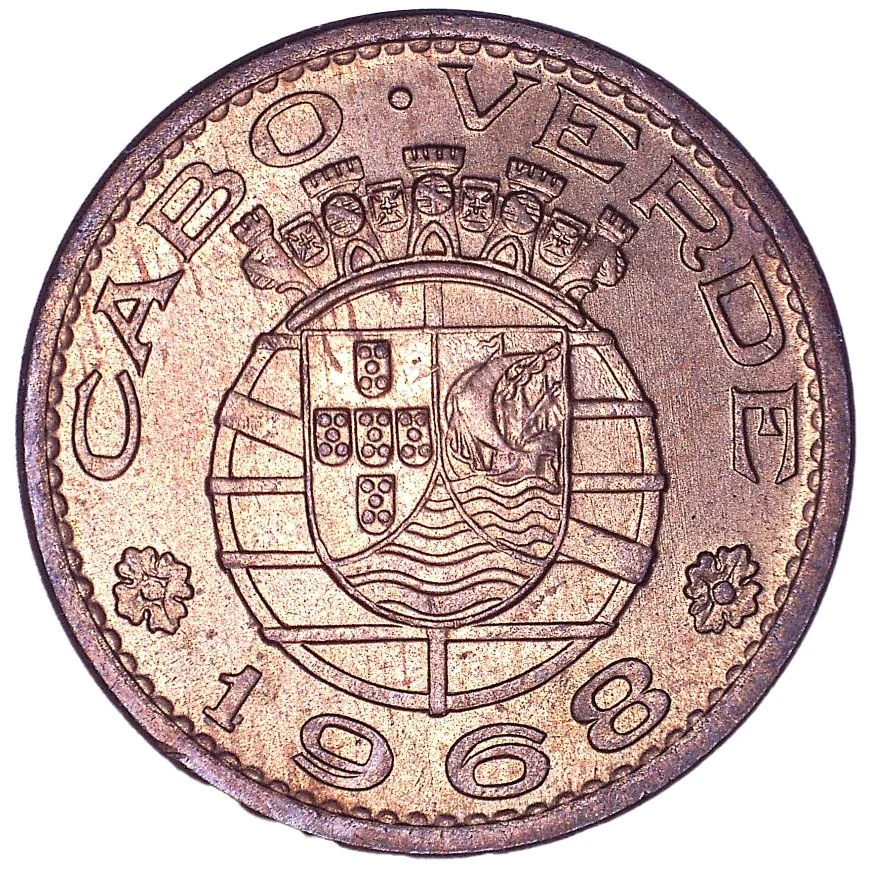
Crowns flank date.
Inscription:
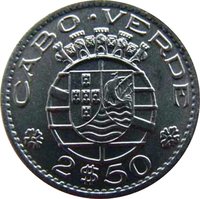
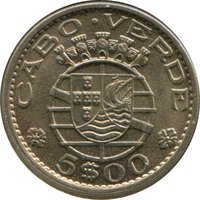
CABO VERDE
1968
1968
Translation:
Cape Verde
1968
1968
Script: Latin
Languages: French, Portuguese
Reverse
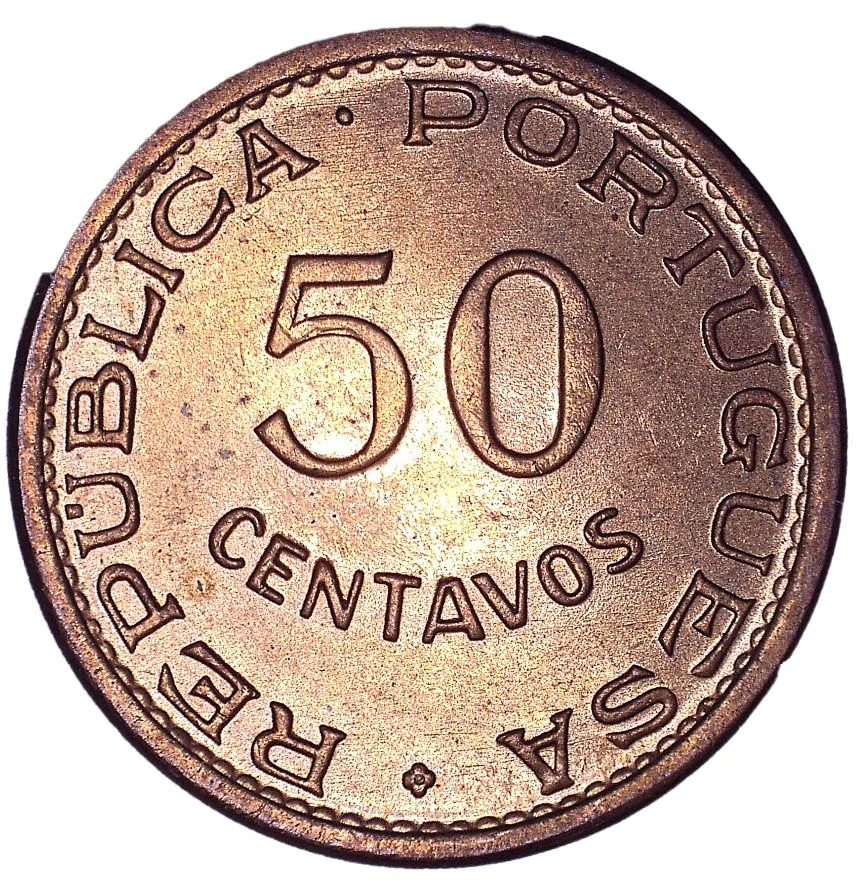
Description:
Ticket price
Inscription:
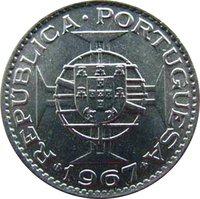
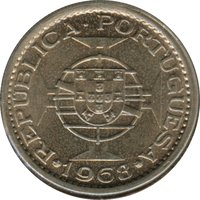
REPUBLICA PORTUGUESA
50
CENTAVOS
50
CENTAVOS
Translation:
Portuguese Republic
50
Cents
50
Cents
Script: Latin
Language: Portuguese
Edge
Plain
Mints
| Name | Mark |
|---|---|
| Imprensa Nacional - Casa da Moeda | — |
Mintings
| Year | Mint Mark | Mintage | Quality | Collection |
|---|---|---|---|---|
| 1968 | — | 1,000,000 |
Historical background
In 1968, Cape Verde remained under Portuguese colonial rule, and its currency situation was entirely integrated with that of the metropolis. The official currency was the Portuguese escudo, which circulated interchangeably across all of Portugal's overseas provinces. This meant there was no distinct Cape Verdean currency; the archipelago used the same banknotes and coins as mainland Portugal, albeit with a degree of physical scarcity and reliance on maritime supply chains for cash shipments from Lisbon.
Economically, the territory was characterized by severe underdevelopment and chronic vulnerability. The islands suffered from persistent drought and famine, leading to heavy dependence on remittances from a large diaspora and on budgetary transfers from the Portuguese state. The integrated currency system facilitated trade and administrative control for Lisbon but did little to stimulate a robust local economy. Cape Verde's financial activity was minimal, primarily serving as a waypoint for shipping, with the escudo's value and monetary policy being dictated entirely by the Banco de Portugal to suit the needs of the continental economy.
This period preceded the significant changes of the 1970s. The unified currency would persist until after Cape Verde's independence in 1975. In 1977, the new republic would introduce its own distinct currency, the Cape Verdean escudo, initially pegged to the Portuguese escudo, to assert monetary sovereignty. Therefore, the situation in 1968 represents the final phase of a colonial monetary system, masking the profound economic challenges that would soon lead the nation toward a path of independent statehood and financial management.
Economically, the territory was characterized by severe underdevelopment and chronic vulnerability. The islands suffered from persistent drought and famine, leading to heavy dependence on remittances from a large diaspora and on budgetary transfers from the Portuguese state. The integrated currency system facilitated trade and administrative control for Lisbon but did little to stimulate a robust local economy. Cape Verde's financial activity was minimal, primarily serving as a waypoint for shipping, with the escudo's value and monetary policy being dictated entirely by the Banco de Portugal to suit the needs of the continental economy.
This period preceded the significant changes of the 1970s. The unified currency would persist until after Cape Verde's independence in 1975. In 1977, the new republic would introduce its own distinct currency, the Cape Verdean escudo, initially pegged to the Portuguese escudo, to assert monetary sovereignty. Therefore, the situation in 1968 represents the final phase of a colonial monetary system, masking the profound economic challenges that would soon lead the nation toward a path of independent statehood and financial management.
🌱 Common