

1 florin – United Kingdom
Add to wishlist
United Kingdom
Context
Years: 1848–1849
Issuer: United Kingdom
Ruler: Victoria
Currency:
(1158—1970)
Demonetization: 30 June 1993
Total mintage: 413,800
Material
References
KM: #
Numista: #12805
Value
Bullion value: $26.73
Obverse
Description:
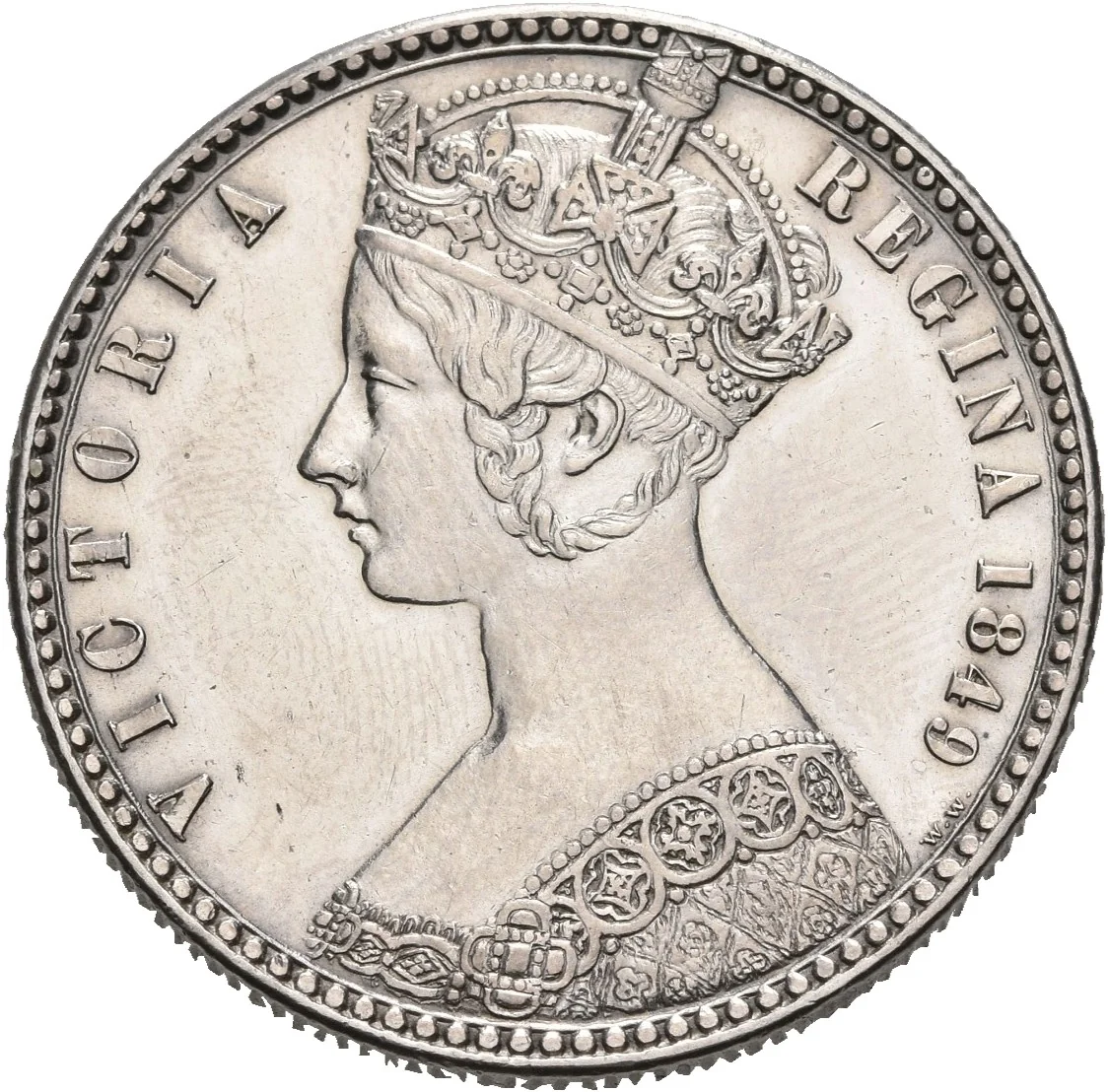
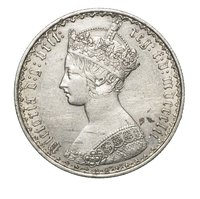
Queen Victoria crowned bust left, legend and date around.
Inscription:
VICTORIA REGINA
1849
W.W.
1849
W.W.
Translation:
Victoria Queen
1849
W.W.
1849
W.W.
Script: Latin
Engraver: William Wyon
Reverse
Description:
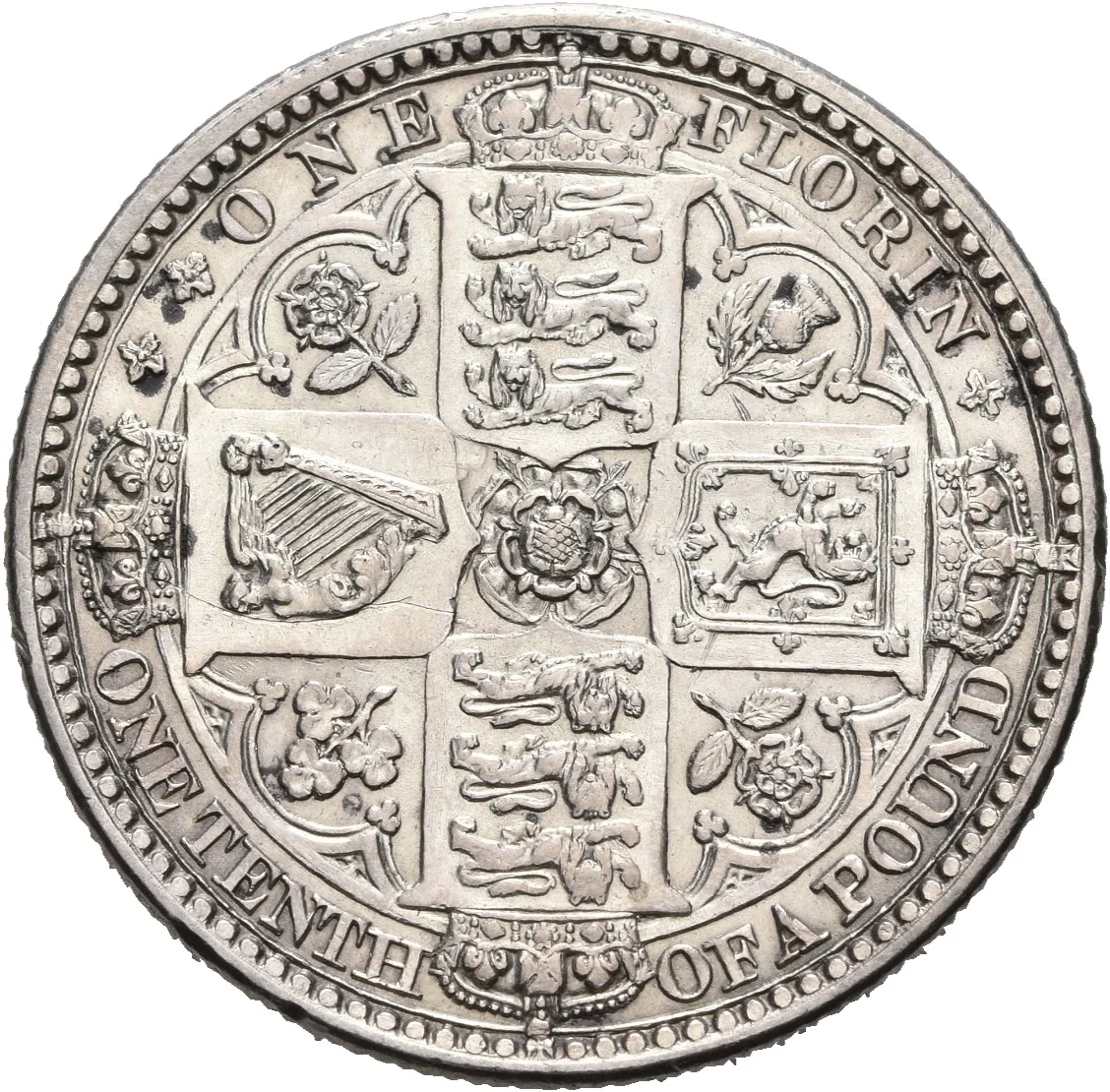
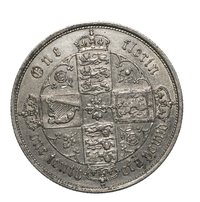
Crowned shields flank a Tudor rose, with floral emblems in corners. Legend above, denomination below.
Inscription:
ONE FLORIN
ONE TENTH OF A POUND
ONE TENTH OF A POUND
Script: Latin
Engraver: William Dyce
Edge
Mints
| Name | Mark |
|---|---|
| Royal Mint (Tower Hill) | — |
Mintings
| Year | Mint Mark | Mintage | Quality | Collection |
|---|---|---|---|---|
| 1848 | — | — | Proof | |
| 1848 | — | — | ||
| 1849 | — | 413,800 |
Historical background
In 1848, the United Kingdom’s currency system was underpinned by the gold standard, formally established in 1816 and fully restored in 1821 after the Napoleonic Wars. This meant the pound sterling was directly convertible into a fixed quantity of gold, and banknotes issued by the Bank of England were promises to pay gold on demand. The system aimed to ensure monetary stability and international confidence, but it was periodically strained by financial crises and political pressures. Notably, the Bank Charter Act of 1844 had recently sought to strengthen this framework by strictly tying the issuance of new Bank of England notes to its gold reserves, aiming to prevent the over-issuance of paper money that had caused past inflationary panics.
The year 1848 itself was one of profound tension for this system, arriving amidst the European Revolutions and domestic financial anxiety. A major commercial crisis in 1847 had forced the government to temporarily suspend the 1844 Act to allow the Bank to issue extra notes beyond its gold cover, averting a liquidity collapse but highlighting the rigidity of the rules during a panic. While the immediate crisis had passed, confidence remained fragile. The influx of gold from new discoveries in Russia and, imminently, from California and Australia, was beginning to increase the monetary base, but this was not yet fully felt in 1848. Consequently, the financial and political establishment watched continental events with deep unease, fearing that revolutionary fervour might trigger a flight of capital and a run on the Bank's gold reserves.
Thus, the currency situation in 1848 was characterised by a fragile equilibrium. The institutional framework of the gold standard was firmly in place, policed by a recent and strict law, but its vulnerability to external shocks and trade cycles had been starkly exposed. The period marked a critical test for the Bank of England’s role as lender of last resort and for the managed gold standard itself, setting the stage for the long Victorian boom that would follow, buoyed by incoming gold and imperial trade. The system held, but 1848 underscored that Britain’s monetary stability was perpetually balanced between disciplined rules and necessary flexibility in times of crisis.
The year 1848 itself was one of profound tension for this system, arriving amidst the European Revolutions and domestic financial anxiety. A major commercial crisis in 1847 had forced the government to temporarily suspend the 1844 Act to allow the Bank to issue extra notes beyond its gold cover, averting a liquidity collapse but highlighting the rigidity of the rules during a panic. While the immediate crisis had passed, confidence remained fragile. The influx of gold from new discoveries in Russia and, imminently, from California and Australia, was beginning to increase the monetary base, but this was not yet fully felt in 1848. Consequently, the financial and political establishment watched continental events with deep unease, fearing that revolutionary fervour might trigger a flight of capital and a run on the Bank's gold reserves.
Thus, the currency situation in 1848 was characterised by a fragile equilibrium. The institutional framework of the gold standard was firmly in place, policed by a recent and strict law, but its vulnerability to external shocks and trade cycles had been starkly exposed. The period marked a critical test for the Bank of England’s role as lender of last resort and for the managed gold standard itself, setting the stage for the long Victorian boom that would follow, buoyed by incoming gold and imperial trade. The system held, but 1848 underscored that Britain’s monetary stability was perpetually balanced between disciplined rules and necessary flexibility in times of crisis.
🌱 Fairly Common