

20 tenge – Kazakhstan
Add to wishlist
Kazakhstan
Context
Material
Diameter: 31.1 mm
Weight: 11 g
Shape: Round
Composition: Copper-nickel
Technique: Milled
Alignment: Medal alignment
flip
References
KM: #
Numista: #12696
Value
Exchange value: 20 KZT
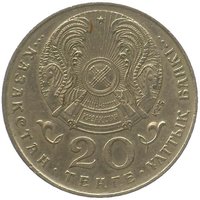
Obverse
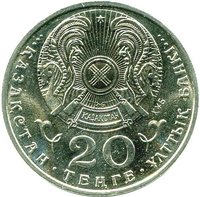
Description:
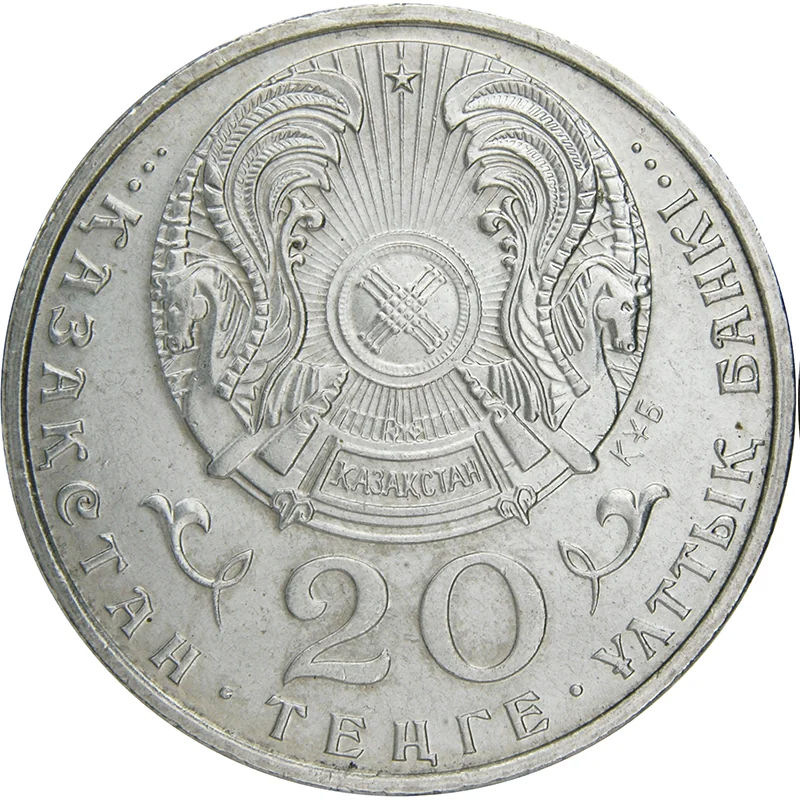
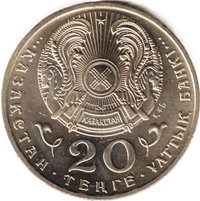
National Coat of Arms with denomination.
Inscription:
•••ҚАЗАҚСТАН • 20 ТЕҢГЕ • ҰЛЛТЫҚ БАНКІ •••
ҚҰБ
ҚҰБ
Translation:
KAZAKHSTAN 20 TENGE NATIONAL BANK
Language: Kazakh
Reverse
Description:
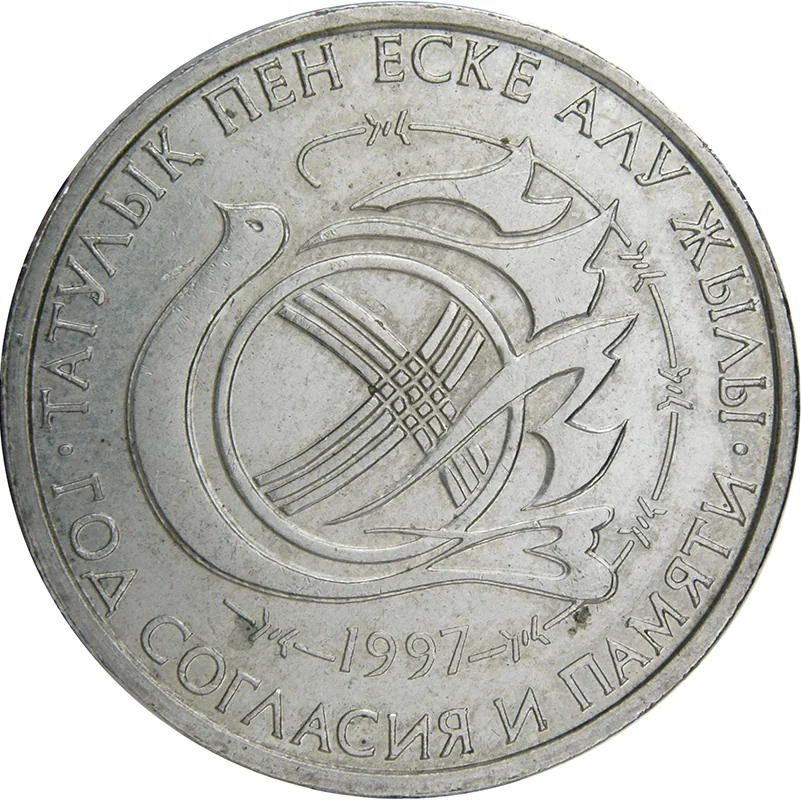
A stylized pigeon, merging with a shangyrak, inside a barbed wire ring—a symbol of political repression—with the date below.
Inscription:
• ТАТУЛЫҚ ПЕН ЕСКЕ АЛУ ЖЫЛЫ •
1997
ГОД СОГЛАСИЯ И ПАМЯТИ
1997
ГОД СОГЛАСИЯ И ПАМЯТИ
Translation:
Year of Consent and Remembrance
1997
Year of Consent and Remembrance
1997
Year of Consent and Remembrance
Edge
Mills and smooth section
Categories
| Symbols> Coat of Arms |
Mints
| Name | Mark |
|---|---|
| Kazakhstan Mint | (ҚҰБ) |
Mintings
| Year | Mint Mark | Mintage | Quality | Collection |
|---|---|---|---|---|
| 1997 | — | — | ||
| 1997 | ҚҰБ | 50,000 |
Historical background
In 1997, Kazakhstan was navigating the complex aftermath of the Soviet Union's collapse, having introduced its own currency, the tenge, in November 1993. The initial years were marked by high inflation and instability, but by 1997, the country had achieved a degree of macroeconomic stabilization. The tenge was operating under a managed float regime, with the National Bank of Kazakhstan (NBK) intervening to control its volatility against a basket of currencies, primarily the US dollar and Russian ruble. This period was characterized by relative calm, with inflation falling and the exchange rate being maintained within a stable band, fostering early confidence in the new national currency.
However, this stability was severely tested by external shocks in 1997. The Asian Financial Crisis that began in mid-1997 triggered a global flight to safety, reducing investor appetite for emerging markets like Kazakhstan. More directly impactful was the Russian financial crisis of 1998, which began with pressure on the ruble in late 1997. As Kazakhstan's largest trading partner, Russia's economic turmoil created immense speculative pressure on the tenge. Export revenues fell sharply due to collapsing commodity prices, particularly oil and metals, widening the current account deficit and draining foreign currency reserves.
Consequently, by the end of 1997, the NBK was engaged in a costly and ultimately unsustainable defense of the tenge's peg. It spent hundreds of millions of dollars in reserves to support the currency in the face of mounting capital outflows and speculative attacks. This set the stage for the inevitable devaluation that would occur in April 1999, when the NBK abandoned its defense and shifted to a free float. Thus, 1997 represents the closing chapter of the tenge's initial stability, a year where external storms gathered force and precipitated the currency crisis that would define the following period.
However, this stability was severely tested by external shocks in 1997. The Asian Financial Crisis that began in mid-1997 triggered a global flight to safety, reducing investor appetite for emerging markets like Kazakhstan. More directly impactful was the Russian financial crisis of 1998, which began with pressure on the ruble in late 1997. As Kazakhstan's largest trading partner, Russia's economic turmoil created immense speculative pressure on the tenge. Export revenues fell sharply due to collapsing commodity prices, particularly oil and metals, widening the current account deficit and draining foreign currency reserves.
Consequently, by the end of 1997, the NBK was engaged in a costly and ultimately unsustainable defense of the tenge's peg. It spent hundreds of millions of dollars in reserves to support the currency in the face of mounting capital outflows and speculative attacks. This set the stage for the inevitable devaluation that would occur in April 1999, when the NBK abandoned its defense and shifted to a free float. Thus, 1997 represents the closing chapter of the tenge's initial stability, a year where external storms gathered force and precipitated the currency crisis that would define the following period.
Series: Events
🌱 Fairly Common