

20 fils – British Mandate of Mesopotamia
Add to wishlist
Iraq
Context
Years: 1931–1933
Country: Iraq
Issuer: British Mandate of Mesopotamia
Ruler: Faisal I
Currency:
(since 1931)
Demonetization: 6 January 1961
Total mintage: 2,600,000
Material
References
KM: #
Numista: #12676
Value
Exchange value: 0.020 IQD
Bullion value: $4.61
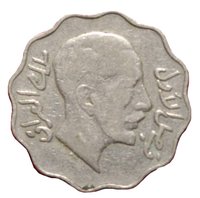
Obverse
Description:
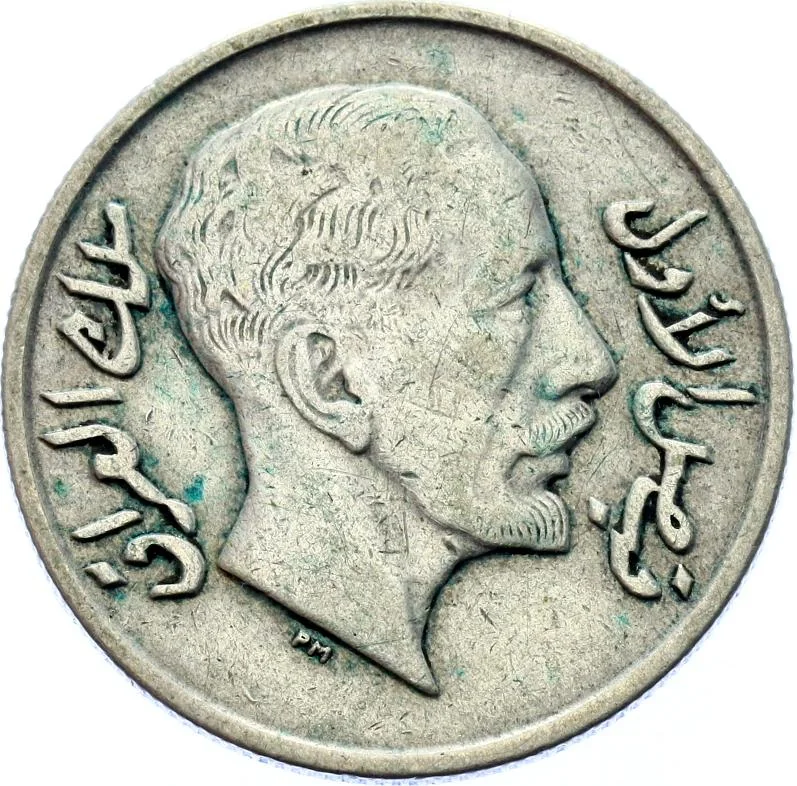
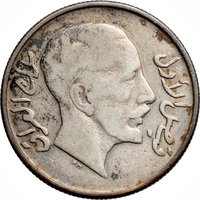
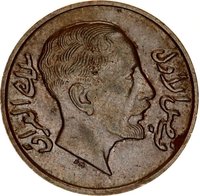
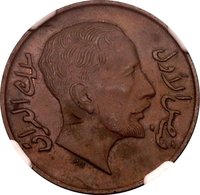
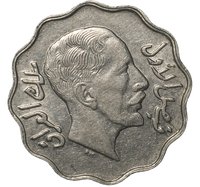
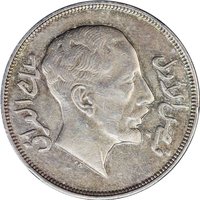
King Faisal (1921-1933) in right profile with flanking text.
Inscription:
فيصل الأول
ملك العراق
PM
ملك العراق
PM
Translation:
Faisal the First
King of Iraq
King of Iraq
Script: Arabic
Language: Arabic
Engraver: Percy Metcalfe
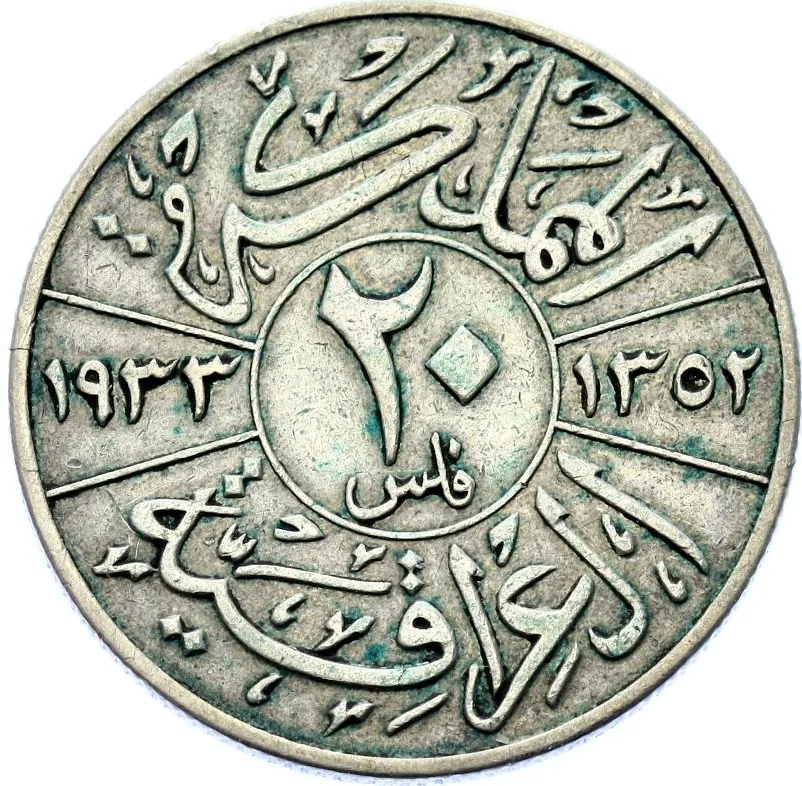
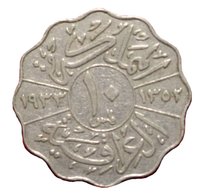
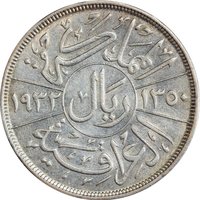
Reverse
Edge
Reeded
Mints
| Name | Mark |
|---|---|
| Royal Mint (Tower Hill) | — |
Mintings
| Year | Mint Mark | Mintage | Quality | Collection |
|---|---|---|---|---|
| 1931 | — | 1,500,000 | ||
| 1931 | — | — | Proof | |
| 1933 | — | — | ||
| 1933 | — | 1,100,000 | ||
| 1933 | — | — | Proof |
Historical background
In 1931, the currency situation in the British Mandate of Mesopotamia (soon to become the Kingdom of Iraq) was defined by a pivotal transition from the Indian rupee to a national currency. Since the British occupation during World War I, the Indian rupee had served as the official currency, tying the region's economy directly to British India and the Sterling Area. This arrangement was increasingly seen as unsuitable for a state moving toward independence, as it symbolized colonial dependency and lacked local sovereignty.
The key development of 1931 was the passage of the Iraqi Currency Law, which established the Iraqi dinar as the new official unit of currency. The dinar was deliberately pegged at par with the British pound sterling (1 dinar = 1 pound), maintaining a crucial link to the Sterling Bloc to ensure stability and facilitate trade. To manage this transition, the Iraq Currency Board was established in London, responsible for issuing the new currency fully backed by sterling reserves, guaranteeing its convertibility.
This reform was a carefully calculated move by the British Mandate authorities and the nascent Iraqi government. It aimed to provide monetary stability for economic development while preserving strong financial ties to Britain. The introduction of the dinar in 1931-32 was thus both a symbolic step toward financial independence and a practical measure that embedded the new Iraqi state within the British economic sphere of influence for the decades to follow.
The key development of 1931 was the passage of the Iraqi Currency Law, which established the Iraqi dinar as the new official unit of currency. The dinar was deliberately pegged at par with the British pound sterling (1 dinar = 1 pound), maintaining a crucial link to the Sterling Bloc to ensure stability and facilitate trade. To manage this transition, the Iraq Currency Board was established in London, responsible for issuing the new currency fully backed by sterling reserves, guaranteeing its convertibility.
This reform was a carefully calculated move by the British Mandate authorities and the nascent Iraqi government. It aimed to provide monetary stability for economic development while preserving strong financial ties to Britain. The introduction of the dinar in 1931-32 was thus both a symbolic step toward financial independence and a practical measure that embedded the new Iraqi state within the British economic sphere of influence for the decades to follow.
🌱 Fairly Common