Logo Title
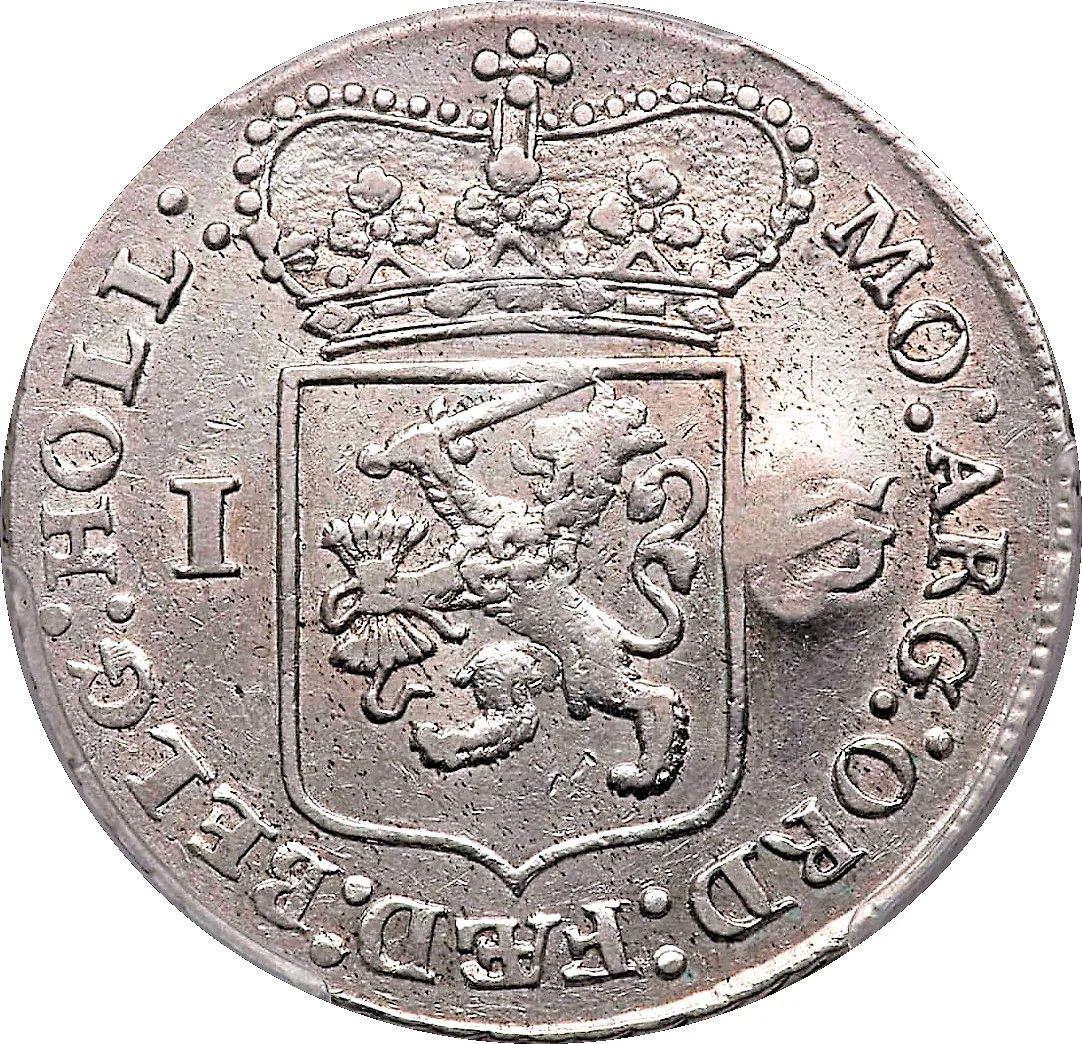
obverse
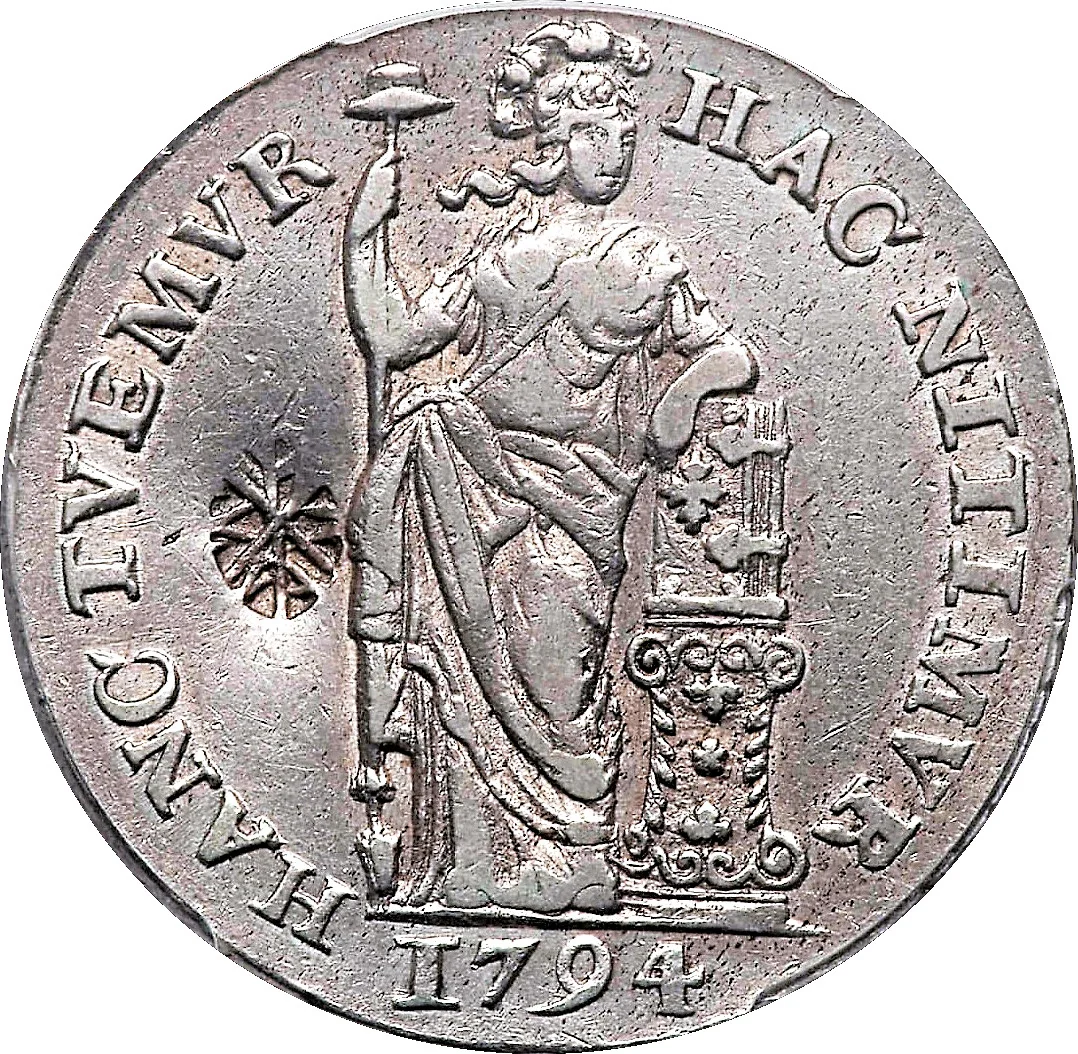
reverse
Heritage Auctions

1 Gulden – Sultanate of Sumenep

Indonesia
Context
Years: 1804–1808
Country: Indonesia Country flag
Demonetized: Yes
Material
Diameter: 32 mm
Weight: 10.62 g
Silver weight: 9.77 g
Shape: Round
Composition: 92% Silver
Magnetic: No
Technique: Countermarked
Alignment: Medal alignment
Obverse
OBVERSE ↑
flip
Reverse
REVERSE ↑
References
KM: #Click to copy to clipboard193.2
Numista: #126503
Value
Bullion value: $27.22

Obverse

Description:
Crowned Holland arms splits value.
Inscription:
1 G

MO : ARG : ORD : FÆD : BELG : HOLL.
Translation:
By the silver and gold order of the federated Belgians of Holland.
Script: Latin
Languages: Dutch, Latin

Reverse

Description:
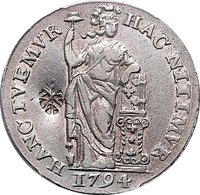
Female figure leaning on column, holding spear and cap. Date below.
Inscription:
HANC TVEMVR HAC NITIMVR

1794
Translation:
We are defended by this, by this we press forward.
Script: Latin
Language: Latin

Edge

Smooth from 1694 to 1747Fluted from 1748 to 1794
Mints

NameMark
Dordrecht

Mintings

YearMint MarkMintageQualityCollection

Historical background

In 1804, the Sultanate of Sumenep on the island of Madura was navigating a complex monetary environment shaped by both local autonomy and the overarching power of the Dutch East India Company (VOC), which had formally collapsed just two years prior. The region operated under a dual-currency system common in the Indonesian archipelago. The primary currency for significant state transactions, trade, and tribute payments was the Dutch silver rijksdaalder and its fractional coins, reflecting the entrenched economic influence of the European colonial power. This ensured compatibility with the wider regional economy centered in Surabaya and Batavia.

Alongside this imported coinage, a vibrant local economy persisted using traditional commodity money. The most important of these was the picis—small, holed coins of low-value lead or tin, often imported from China. These coins were essential for daily market transactions, small-scale trade, and the payment of wages among the common people. The Sultanate’s authority was expressed partly through its right to regulate and sometimes issue its own local coinage, though this often supplemented rather than replaced the established systems.

The currency situation in 1804 was therefore one of layered sovereignty and economic transition. While the Sultan retained ceremonial and some administrative control, the monetary reality was heavily influenced by the legacy of the VOC and the demands of inter-island trade. This period also saw increasing British interest in the region during the Napoleonic Wars, potentially introducing further monetary uncertainty. Thus, the circulation of coinage in Sumenep reflected its political position: a realm with internal cohesion but ultimately operating within a colonial economic framework that dictated the standards for high-value exchange.
Legendary