

20 shilingi (Independence) – Tanzania
Add to wishlist
Circulating commemorative coins
Commemoration: 20th Anniversary of Independence
Tanzania
Context
Material
Diameter: 34.5 mm
Weight: 16 g
Shape: Round
Composition: Copper-nickel
Technique: Milled
Alignment: Medal alignment
flip
References
KM: #
Numista: #12544
Value
Exchange value: 20 TZS
Obverse
Description:
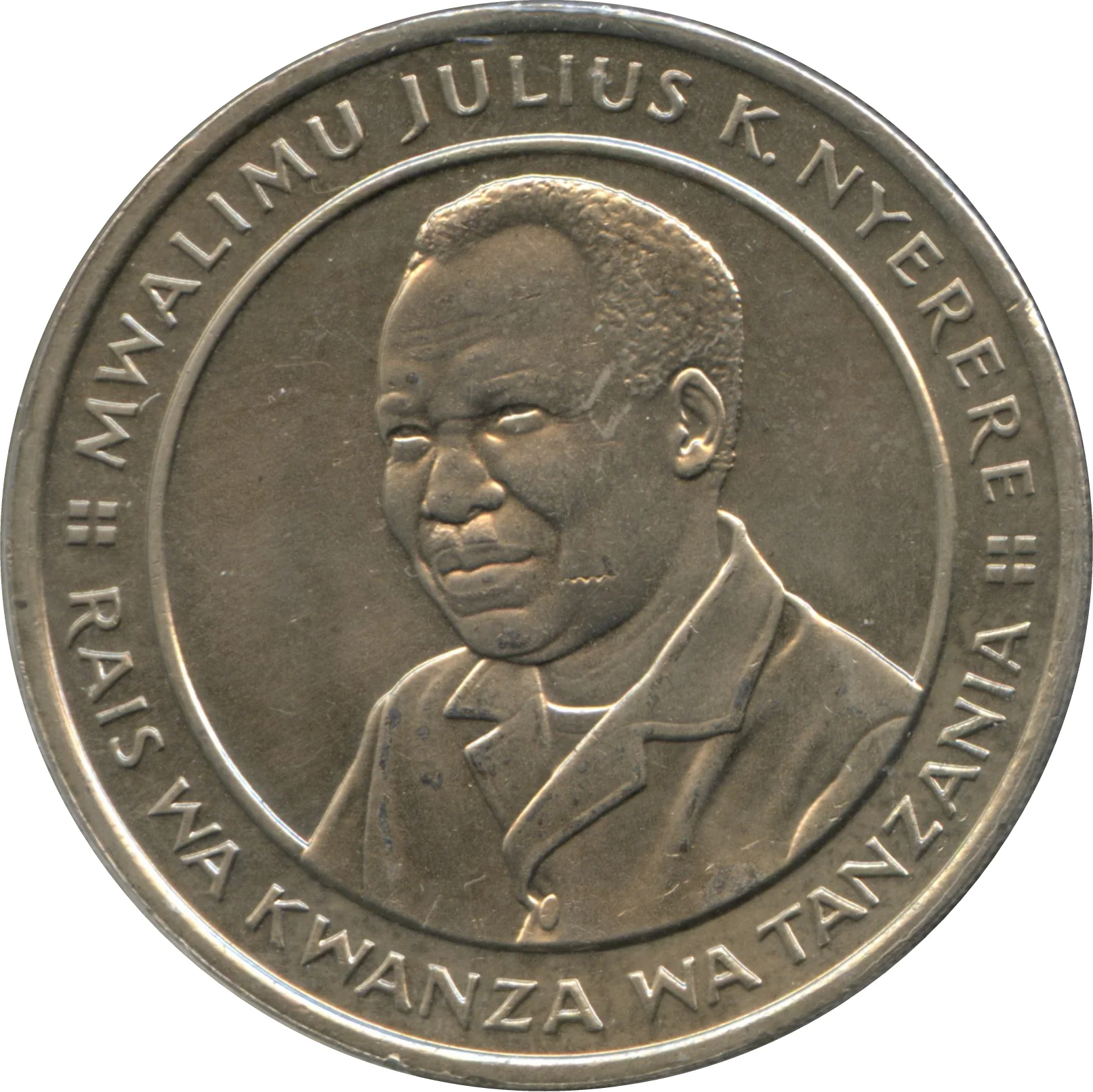
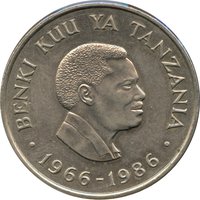
President J. K. Nyerere in profile, facing left, within a circle.
Inscription:
MWALIMU JULIUS K. NYERERE
RAIS WA KWANZA WA TANZANIA
RAIS WA KWANZA WA TANZANIA
Translation:
First President of Tanzania
Teacher Julius K. Nyerere
Teacher Julius K. Nyerere
Script: Latin
Language: Swahili
Designer: Philip Nathan
Reverse
Description:
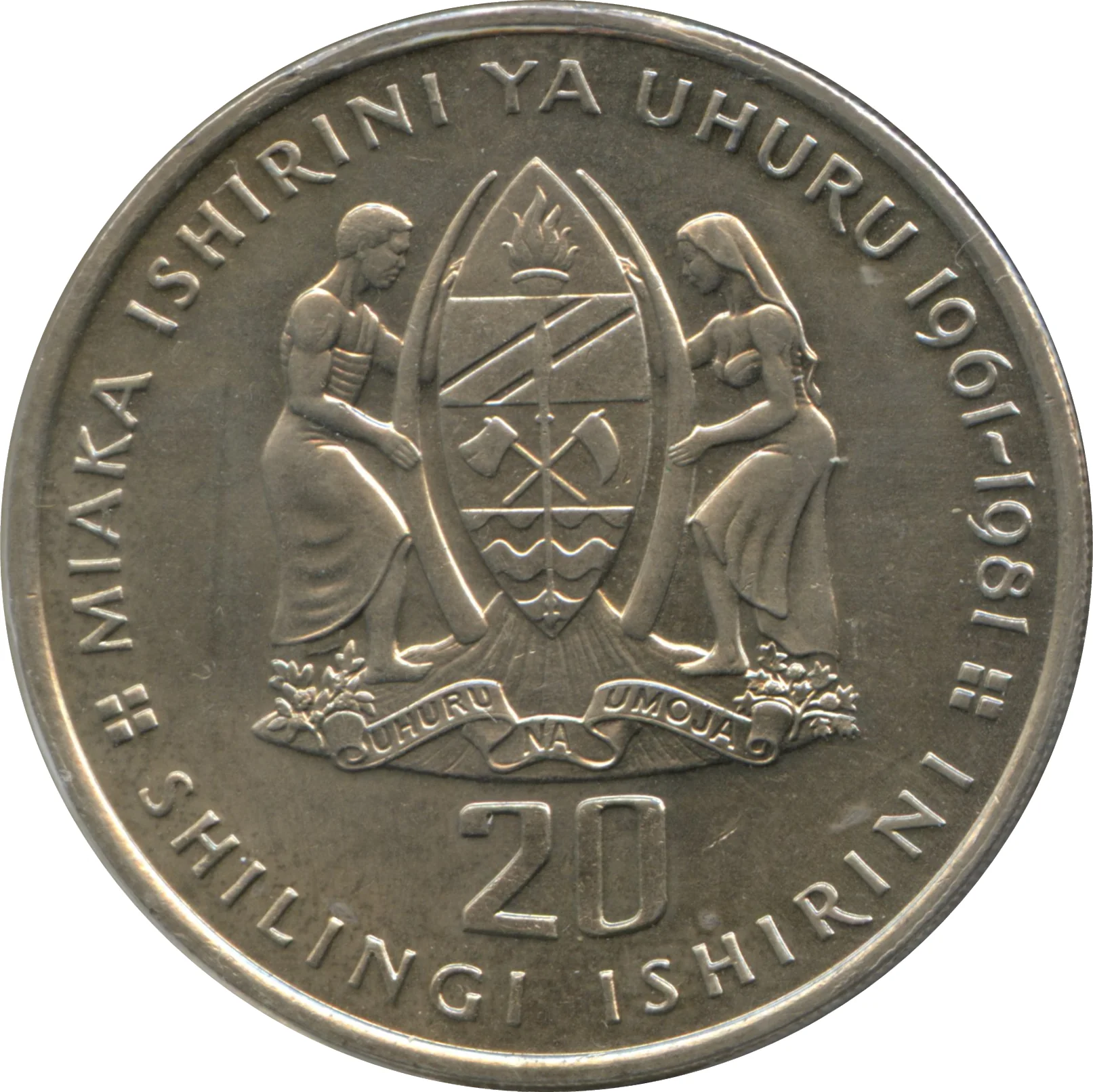
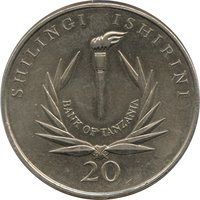
Coat of arms above, value below.
Inscription:
MIAKA ISHIRINI YA UHURU 1961-1981
20
SHILINGI ISHIRINI
20
SHILINGI ISHIRINI
Translation:
TWENTIETH YEAR OF INDEPENDENCE 1961-1981
20
TWENTY SHILLINGS
20
TWENTY SHILLINGS
Script: Latin
Language: Swahili
Designer: Philip Nathan
Edge
Reeded
Categories
| Symbols> Coat of Arms |
| Event> Independence |
| Person> Politician |
Mints
| Name | Mark |
|---|---|
| Royal Mint | — |
Mintings
| Year | Mint Mark | Mintage | Quality | Collection |
|---|---|---|---|---|
| 1981 | — | 997,000 |
Historical background
In 1981, Tanzania's currency situation was defined by severe economic strain and the legacy of the Arusha Declaration's socialist policies. The Tanzanian Shilling (TZS) was under a fixed exchange rate regime, pegged to a basket of currencies but effectively controlled by the Bank of Tanzania. This official rate, however, bore little resemblance to reality as a massive parallel (black) market for foreign exchange flourished. Driven by a critical shortage of hard currency due to declining export revenues, costly interventions in Uganda, and widespread price controls, the parallel market premium was extraordinarily high, with the shilling trading at a fraction of its official value.
The root causes were structural. The state-controlled economy, with its emphasis on ujamaa (villagization) and large-scale nationalization, had led to agricultural decline and inefficient industrial output. Tanzania's main exports, like coffee and cotton, suffered from both low global prices and domestic production issues, leading to a chronic trade deficit. Consequently, the government lacked the foreign reserves to support its currency peg or to import essential goods, including spare parts, medicines, and petroleum, causing widespread shortages and further fueling inflationary pressures.
This currency crisis was a central factor prompting the government, under President Julius Nyerere, to begin engaging with the International Monetary Fund (IMF) for support. The negotiations in 1981 were contentious, as the IMF's conditions for financial assistance—including devaluation, subsidy cuts, and trade liberalization—directly challenged Nyerere's socialist principles. The inability to reach an agreement that year meant the currency distortions and economic hardships persisted, setting the stage for the deeper crises and eventual structural adjustment programs that would follow later in the decade.
The root causes were structural. The state-controlled economy, with its emphasis on ujamaa (villagization) and large-scale nationalization, had led to agricultural decline and inefficient industrial output. Tanzania's main exports, like coffee and cotton, suffered from both low global prices and domestic production issues, leading to a chronic trade deficit. Consequently, the government lacked the foreign reserves to support its currency peg or to import essential goods, including spare parts, medicines, and petroleum, causing widespread shortages and further fueling inflationary pressures.
This currency crisis was a central factor prompting the government, under President Julius Nyerere, to begin engaging with the International Monetary Fund (IMF) for support. The negotiations in 1981 were contentious, as the IMF's conditions for financial assistance—including devaluation, subsidy cuts, and trade liberalization—directly challenged Nyerere's socialist principles. The inability to reach an agreement that year meant the currency distortions and economic hardships persisted, setting the stage for the deeper crises and eventual structural adjustment programs that would follow later in the decade.
🌟 Uncommon