

5 shilingi – Tanzania
Add to wishlist
Circulating commemorative coins
Commemoration: Central Bank
Tanzania
Context
Material
Diameter: 31.5 mm
Weight: 13 g
Shape: Decagonal
Composition: Copper-nickel
Technique: Milled
Alignment: Medal alignment
flip
References
KM: #
Numista: #12542
Value
Exchange value: 5 TZS
Obverse
Description:
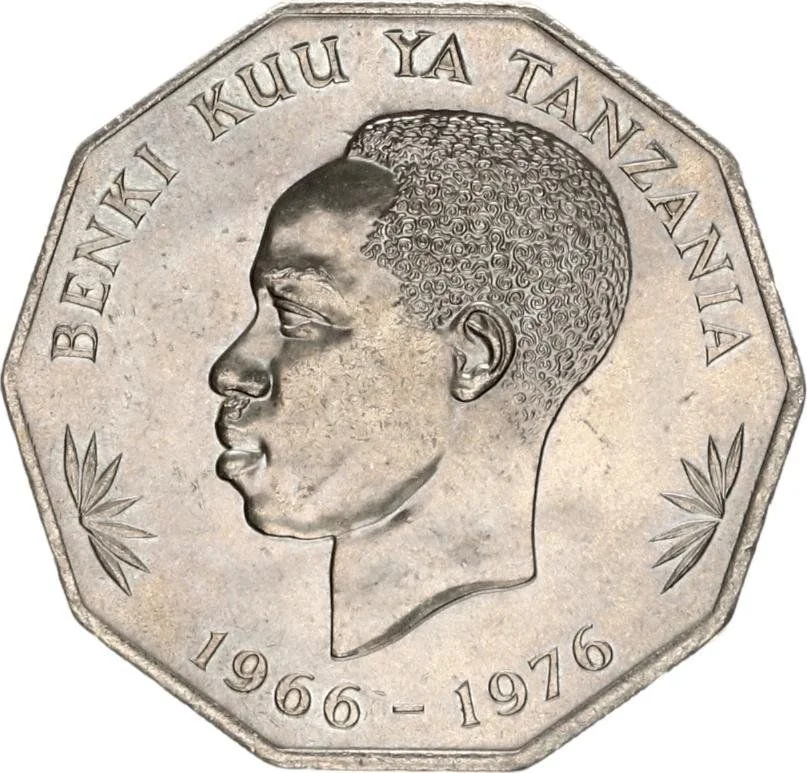
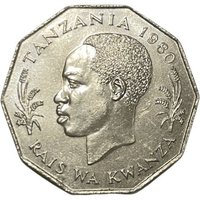
President Julius K. Nyerere bust, left. Dates below, legend between foliage above.
Inscription:
BENKI KUU YA TANZANIA
1966-1976
1966-1976
Translation:
BANK OF TANZANIA
1966-1976
1966-1976
Script: Latin
Language: Swahili
Engraver: Christopher Ironside
Reverse
Description:
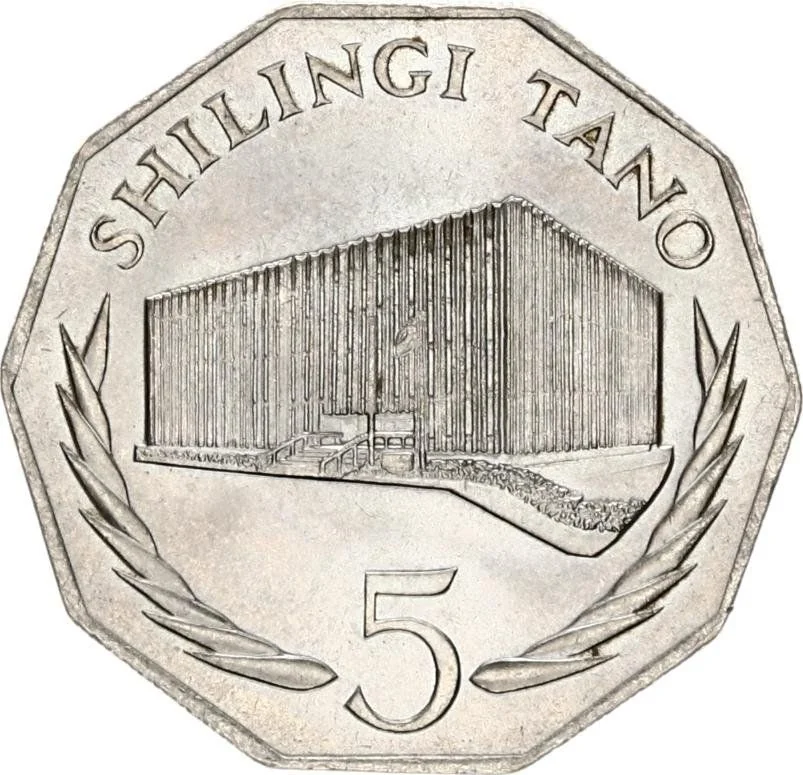
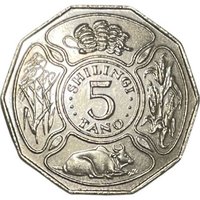
Bank of Tanzania building. Top: value in letters. Bottom: "5" between two branches.
Inscription:
SHILINGI TANO
5
5
Script: Latin
Edge
Segmented reeding
Mints
| Name | Mark |
|---|---|
| Royal Mint | — |
Mintings
| Year | Mint Mark | Mintage | Quality | Collection |
|---|---|---|---|---|
| 1976 | — | 1,000,000 |
Historical background
In 1976, Tanzania's currency situation was characterized by stability under a fixed exchange rate regime, but this stability masked underlying economic strains. The Tanzanian Shilling (TZS) was pegged to the U.S. Dollar at an official rate of approximately 8.20 TZS to 1 USD, a parity maintained since 1967. This peg, managed by the Bank of Tanzania, provided predictability for international transactions and was a cornerstone of the government's controlled economic policy under President Julius Nyerere's Ujamaa (African socialist) framework. The currency was not freely convertible, and all foreign exchange transactions were tightly regulated by the central bank to align with national priorities.
However, this rigid system existed alongside significant economic pressures. The mid-1970s were a period of severe challenge following the 1973 oil crisis, which exacerbated a chronic shortage of foreign exchange. Declining agricultural production, costly state-led industrialization projects, and the immense financial burden of the 1978-79 war with Uganda strained public finances. While the official rate held firm, these factors led to a growing disparity with the black-market value of the shilling, where the dollar commanded a much higher premium. This gap indicated mounting inflationary pressures and a scarcity of imported goods.
Consequently, 1976 represented a calm before a gathering storm. The fixed exchange rate and strict controls provided an illusion of monetary stability, but they were increasingly unsustainable. The fundamental imbalances—the foreign exchange shortage, reliance on administrative allocation, and the black-market premium—foreshadowed the severe economic crisis that would fully manifest in the early 1980s, ultimately forcing Tanzania to seek structural adjustment programs and a major devaluation of the shilling.
However, this rigid system existed alongside significant economic pressures. The mid-1970s were a period of severe challenge following the 1973 oil crisis, which exacerbated a chronic shortage of foreign exchange. Declining agricultural production, costly state-led industrialization projects, and the immense financial burden of the 1978-79 war with Uganda strained public finances. While the official rate held firm, these factors led to a growing disparity with the black-market value of the shilling, where the dollar commanded a much higher premium. This gap indicated mounting inflationary pressures and a scarcity of imported goods.
Consequently, 1976 represented a calm before a gathering storm. The fixed exchange rate and strict controls provided an illusion of monetary stability, but they were increasingly unsustainable. The fundamental imbalances—the foreign exchange shortage, reliance on administrative allocation, and the black-market premium—foreshadowed the severe economic crisis that would fully manifest in the early 1980s, ultimately forcing Tanzania to seek structural adjustment programs and a major devaluation of the shilling.
🌱 Fairly Common