

20 shilingi (Central Bank) – Tanzania
Add to wishlist
Circulating commemorative coins
Commemoration: 20th Anniversary - Central Bank
Tanzania
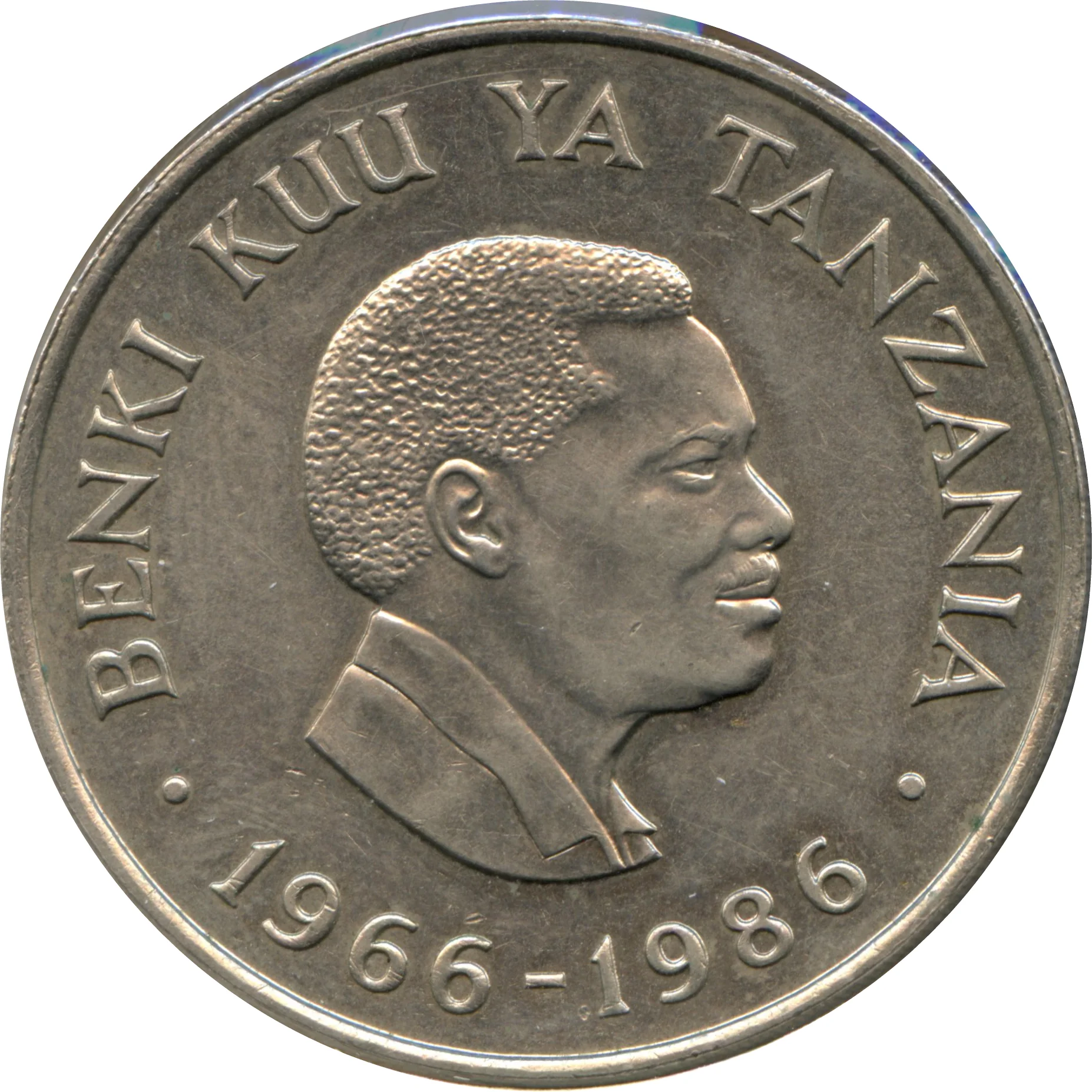
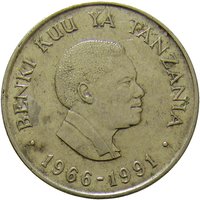
Obverse
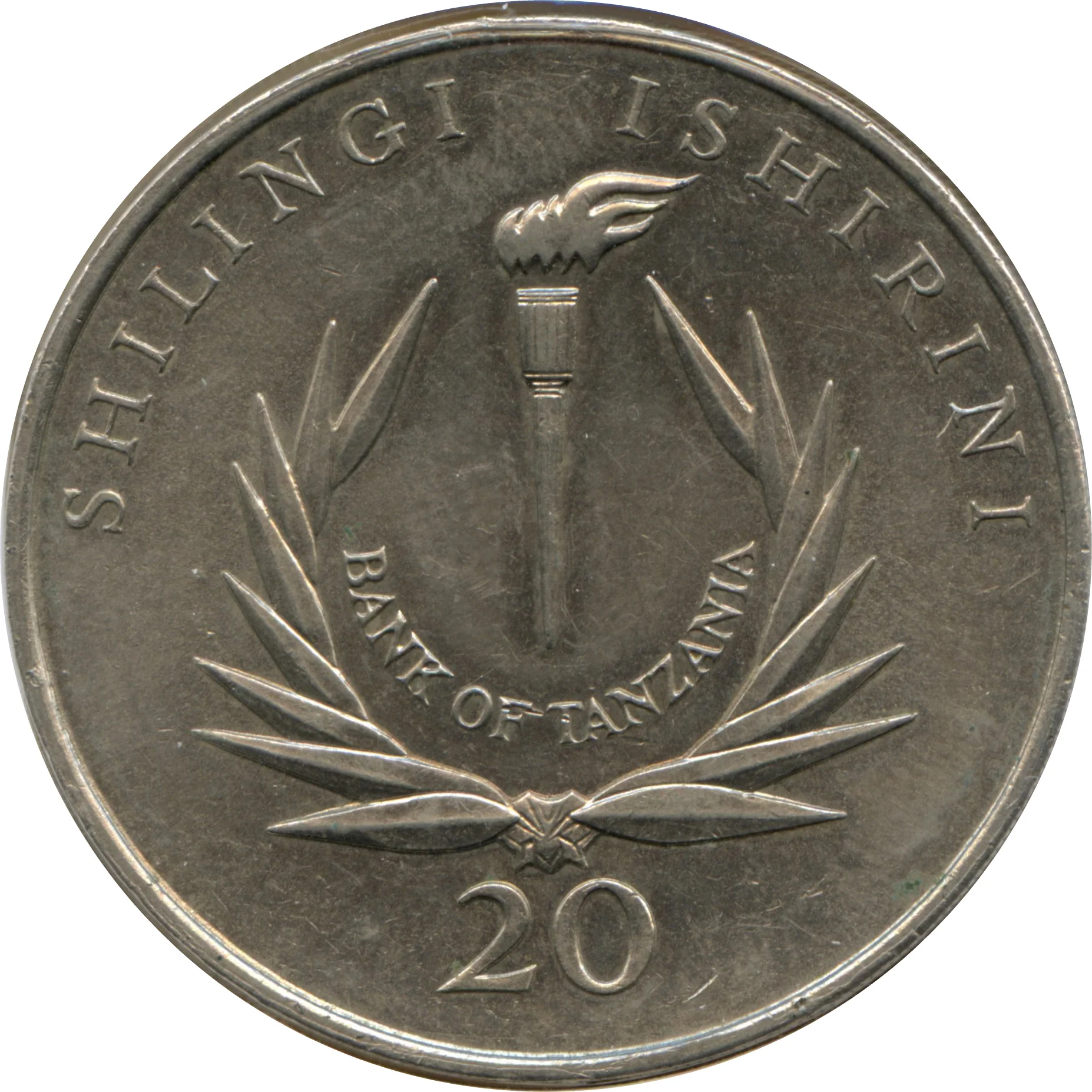
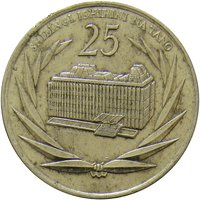
Reverse
Edge
Reeded
Mints
| Name | Mark |
|---|---|
| Royal Mint | — |
Mintings
| Year | Mint Mark | Mintage | Quality | Collection |
|---|---|---|---|---|
| 1986 | — | — |
Historical background
In 1986, Tanzania was in the midst of a severe economic crisis, largely stemming from the failure of its Ujamaa socialist policies, a collapse in global commodity prices, and a costly war with Uganda in 1978-79. The country faced chronic foreign exchange shortages, rampant inflation, and a massively overvalued official exchange rate. This overvaluation fueled a thriving black market for foreign currency, where the Tanzanian shilling traded at a fraction of its official value, crippling legitimate exports and creating acute shortages of essential imported goods, from medicine to industrial inputs.
Recognizing the unsustainable situation, the Tanzanian government, under President Ali Hassan Mwinyi and with strong pressure from the International Monetary Fund (IMF) and World Bank, embarked on a fundamental shift with the Economic Recovery Programme (ERP). A cornerstone of this reform was a decisive move to unify and devalue the shilling. In June 1986, Tanzania undertook a significant one-time devaluation, cutting the shilling's value by over 30% against the US dollar, and more importantly, established a flexible "official" exchange rate that was intended to move closer to the market reality.
This currency adjustment was a painful but necessary shock therapy. It aimed to curb the black market, boost export competitiveness for key crops like coffee and cotton, and attract foreign aid and investment by demonstrating commitment to structural adjustment. The devaluation immediately increased the local cost of imports and debt servicing, contributing to short-term hardship. However, it marked a critical turning point, moving Tanzania away from rigid state control and towards a market-based economy, setting the stage for the gradual macroeconomic stabilization and liberalization that would follow in the 1990s.
Recognizing the unsustainable situation, the Tanzanian government, under President Ali Hassan Mwinyi and with strong pressure from the International Monetary Fund (IMF) and World Bank, embarked on a fundamental shift with the Economic Recovery Programme (ERP). A cornerstone of this reform was a decisive move to unify and devalue the shilling. In June 1986, Tanzania undertook a significant one-time devaluation, cutting the shilling's value by over 30% against the US dollar, and more importantly, established a flexible "official" exchange rate that was intended to move closer to the market reality.
This currency adjustment was a painful but necessary shock therapy. It aimed to curb the black market, boost export competitiveness for key crops like coffee and cotton, and attract foreign aid and investment by demonstrating commitment to structural adjustment. The devaluation immediately increased the local cost of imports and debt servicing, contributing to short-term hardship. However, it marked a critical turning point, moving Tanzania away from rigid state control and towards a market-based economy, setting the stage for the gradual macroeconomic stabilization and liberalization that would follow in the 1990s.
🌟 Uncommon