

1 paisa – Maratha Empire
Add to wishlist
India
Context
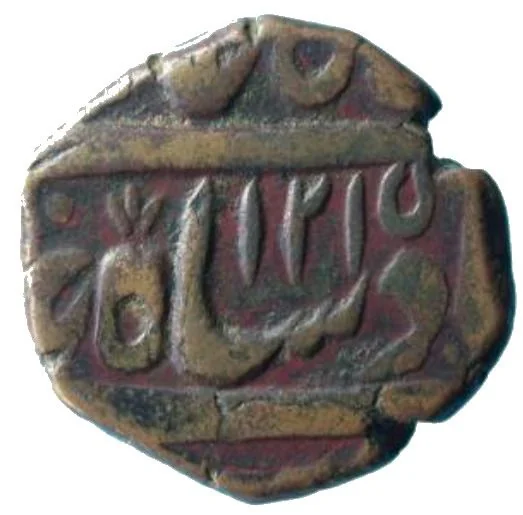
Year: 1800
Islamic (Hijri) Year:: 1215
Country: India
Issuer: Maratha Empire
Currency:
(1674—1818)
Demonetized: Yes
Material
Diameter: 22.5 mm
Weight: 8.52 g
Shape: Irregular round
Composition: Copper
Magnetic: No
Technique: Hammered
Alignment: Coin alignment
flip
References
KM: #
Numista: #551706
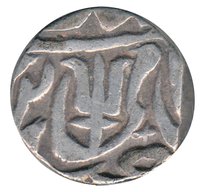
Obverse
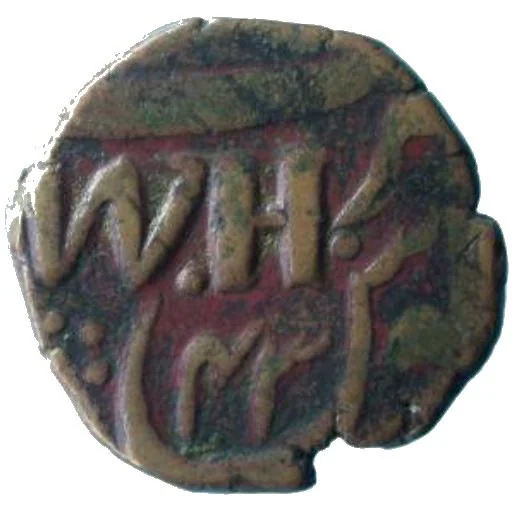
Inscription:
shah alam
badshah ghazi
badshah ghazi
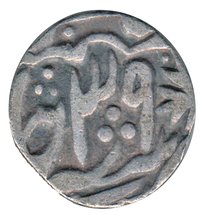
Reverse
Inscription:
sanah jalus
zarb Mustaqir al-Khilafat
zarb Mustaqir al-Khilafat
Edge
Plain
Mints
| Name | Mark |
|---|---|
| Agra | — |
Mintings
| Year | Mint Mark | Mintage | Quality | Collection |
|---|---|---|---|---|
| 1800 | — | — |
Historical background
By 1800, the currency system of the Maratha Empire was a complex and fragmented mosaic, reflecting the political decentralization of the confederacy. There was no single, uniform currency issued from a central mint. Instead, the principal Peshwa in Pune, the Gaekwads in Baroda, the Holkars in Indore, the Scindias in Gwalior, and other sardars all issued their own coins, primarily silver rupees. These rupees bore the name of the Mughal Emperor Shah Alam II as a formal concession to his nominal sovereignty, but they were distinguished by the mint name and often a tiny mark (tircha) or symbol of the issuing Maratha chief. This created a bewildering variety of coins of varying weight and purity circulating simultaneously, requiring constant evaluation by merchants and money-changers.
The system was further complicated by the heavy influx of foreign currencies due to the Marathas' extensive military and political engagements. Most significantly, the large tributes (chauth) and taxes collected from vast territories were often paid in the widely accepted Mughal Sicca Rupees or in the coins of the British East India Company, which were gaining prominence. Furthermore, the need to finance large armies and pay European-trained mercenaries led to the use of gold mohurs and even European gold coins. The result was a monetary environment where transactions required sophisticated knowledge of exchange rates between different Maratha, Mughal, and British issues.
This currency fragmentation was both a symptom and a cause of the empire's weakening political cohesion on the eve of the Second Anglo-Maratha War (1803-1805). The lack of a centralized fiscal and monetary authority hindered efficient resource mobilization for the confederacy as a whole. As British economic and political influence grew, their more uniform currency began to dominate trade and revenue systems, even within Maratha domains. Thus, by 1800, the chaotic state of Maratha currency not only mirrored the empire's internal divisions but also foreshadowed its impending subordination to the emerging, standardized financial order of the British Raj.
The system was further complicated by the heavy influx of foreign currencies due to the Marathas' extensive military and political engagements. Most significantly, the large tributes (chauth) and taxes collected from vast territories were often paid in the widely accepted Mughal Sicca Rupees or in the coins of the British East India Company, which were gaining prominence. Furthermore, the need to finance large armies and pay European-trained mercenaries led to the use of gold mohurs and even European gold coins. The result was a monetary environment where transactions required sophisticated knowledge of exchange rates between different Maratha, Mughal, and British issues.
This currency fragmentation was both a symptom and a cause of the empire's weakening political cohesion on the eve of the Second Anglo-Maratha War (1803-1805). The lack of a centralized fiscal and monetary authority hindered efficient resource mobilization for the confederacy as a whole. As British economic and political influence grew, their more uniform currency began to dominate trade and revenue systems, even within Maratha domains. Thus, by 1800, the chaotic state of Maratha currency not only mirrored the empire's internal divisions but also foreshadowed its impending subordination to the emerging, standardized financial order of the British Raj.
✨ Legendary