

½ Baiocco – Gubbio
Context
Material
Diameter: 28 mm
Weight: 6.6 g
Shape: Round
Composition: Copper
Magnetic: No
Technique: Roller milled
Alignment: Coin alignment
flip
References
KM: #Click to copy to clipboard99
Numista: #551365
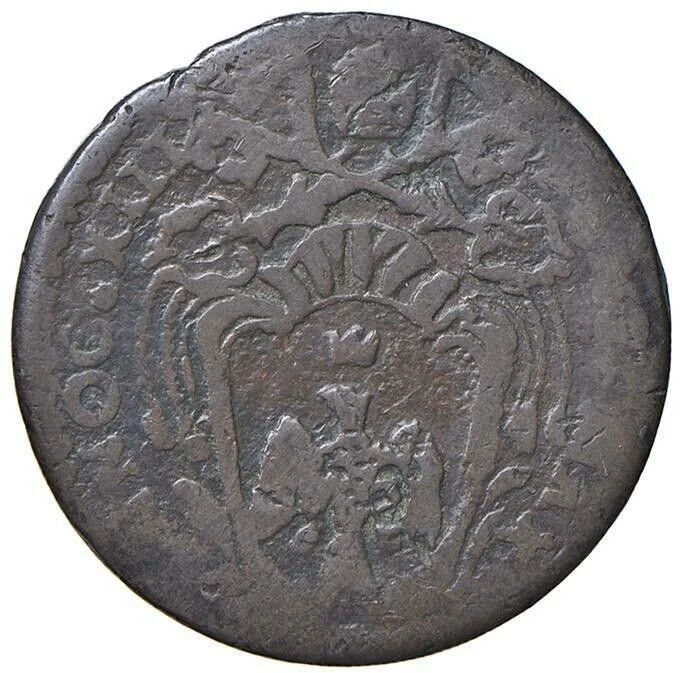
Obverse
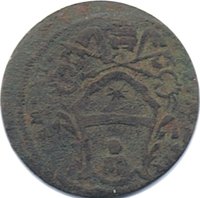
Description:
Arms of Pope Innocent XIII
Inscription:
INNOC٠XIII PONT٠MAX
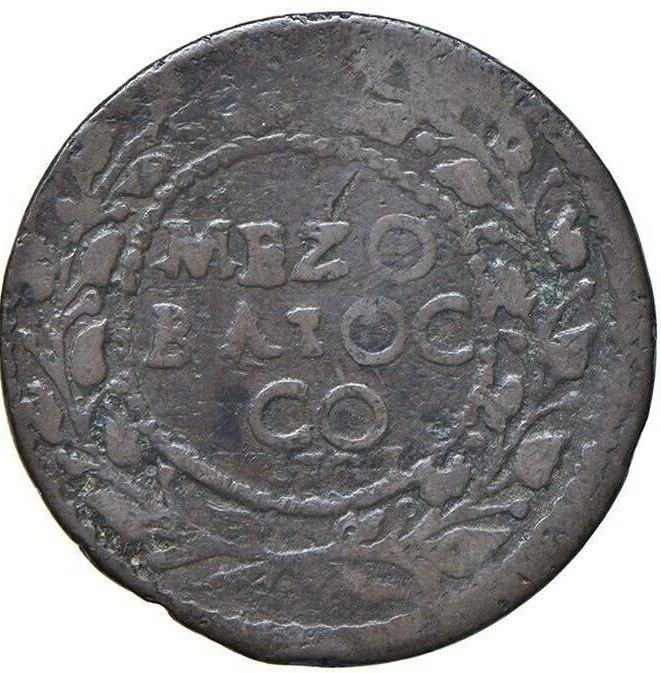
Reverse
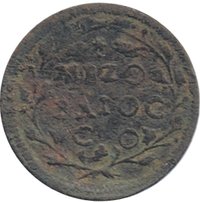
Description:
Three-line inscription, date below, within beaded circle and wreath.
Inscription:
MEZO
BAIOC
CO
1721
BAIOC
CO
1721
Script: Latin
Edge
Mints
| Name | Mark |
|---|---|
| Gubbio | — |
Mintings
| Year | Mint Mark | Mintage | Quality | Collection |
|---|---|---|---|---|
| 1721 | — | — | ||
| 1723 | — | — |
Historical background
In 1721, the Italian city-state of Gubbio, like much of the Papal States under which it fell, operated within a complex and often chaotic monetary system. The official currency was the Papal scudo, a silver coin, but in daily circulation, this existed alongside a bewildering array of other coins. These included older, debased local issues, coins from neighbouring Italian states like Tuscany and the Venetian Republic, and even clipped and worn Spanish silver reales from the vast trade networks of the New World. This proliferation created constant problems of valuation, as merchants and citizens had to navigate fluctuating exchange rates between these disparate coins based on their precious metal content and perceived reliability.
The local economy of Gubbio, heavily reliant on wool, ceramics, and agriculture, suffered from this instability. The intrinsic value of a coin (its weight in silver or gold) often differed from its face value, leading to frequent episodes of Gresham's Law, where "bad money drives out good." People hoarded the full-weight Papal scudi and spent the worn or debased coins, further degrading the quality of circulating currency. This environment fostered distrust in transactions, complicated tax collection for the local commune, and created fertile ground for money-changers (campsores) whose expertise in assessing coins became both a necessary service and a potential source of exploitation.
While the Papal Mint in Rome attempted to impose order, its reach was limited in practice. Therefore, the tangible currency situation in Gubbio’s market square was one of daily negotiation and inconvenience. Prices were often quoted in the abstract lira and soldo (units of account), but actual payment required a physical assortment of mixed coinage, carefully weighed and assessed. This fragmented system acted as a drag on commerce and was a persistent concern for the city's governing council, which had limited power to reform a monetary regime controlled by distant papal authorities.
The local economy of Gubbio, heavily reliant on wool, ceramics, and agriculture, suffered from this instability. The intrinsic value of a coin (its weight in silver or gold) often differed from its face value, leading to frequent episodes of Gresham's Law, where "bad money drives out good." People hoarded the full-weight Papal scudi and spent the worn or debased coins, further degrading the quality of circulating currency. This environment fostered distrust in transactions, complicated tax collection for the local commune, and created fertile ground for money-changers (campsores) whose expertise in assessing coins became both a necessary service and a potential source of exploitation.
While the Papal Mint in Rome attempted to impose order, its reach was limited in practice. Therefore, the tangible currency situation in Gubbio’s market square was one of daily negotiation and inconvenience. Prices were often quoted in the abstract lira and soldo (units of account), but actual payment required a physical assortment of mixed coinage, carefully weighed and assessed. This fragmented system acted as a drag on commerce and was a persistent concern for the city's governing council, which had limited power to reform a monetary regime controlled by distant papal authorities.
✨ Legendary