

2 Doppie – Monaco
Monaco

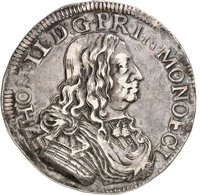
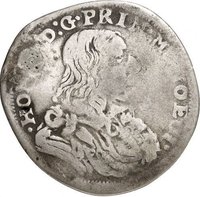
Obverse
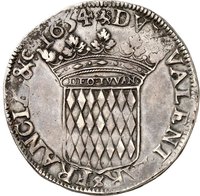
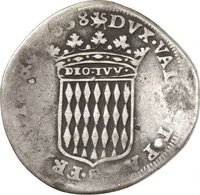
Reverse
Description:
Crowned H entwined in branches.
Inscription:
DEO IVVANTE ET S PROTEGENTE 1656
Script: Latin
Edge
Mints
| Name | Mark |
|---|---|
| Monaco | — |
Mintings
| Year | Mint Mark | Mintage | Quality | Collection |
|---|---|---|---|---|
| 1656 | — | — |
Historical background
In 1656, the Principality of Monaco, under the rule of Honoré II (who had taken the title of Prince in 1612), did not mint its own independent currency. The small, rocky territory lacked the economic scale and precious metal reserves necessary for a sovereign mint. Instead, its monetary system was fundamentally tied to and dominated by the coinage of its vastly larger and more powerful neighbor, the Kingdom of France. French livres, sous, and deniers circulated widely for daily transactions, forming the bedrock of local commerce.
However, Monaco's unique political status created a complex monetary landscape. While economically dependent on France, the principality was a protectorate of Spain from 1524 until 1641, a transition Honoré II had masterminded. This recent shift in allegiance meant that older Spanish silver reales and gold escudos, particularly from the powerful Spanish Habsburg monarchy, still lingered in circulation. Furthermore, due to its active port and position on the Ligurian coast, various Italian state currencies, especially from Genoa and Tuscany, also flowed through the hands of merchants and traders.
Therefore, the "currency situation" in Monaco in 1656 was one of pragmatic dependence mixed with historical residue. The principality functioned within a de facto French monetary zone, but its recent past as a Spanish ally and its Mediterranean commercial ties meant its money supply was not homogeneous. Prince Honoré II’s administration would have accepted French coin for official purposes, while the market simultaneously dealt with a practical, if diminishing, mosaic of foreign coins, their values determined by their weight and fineness of metal rather than any decree from the Prince's Palace.
However, Monaco's unique political status created a complex monetary landscape. While economically dependent on France, the principality was a protectorate of Spain from 1524 until 1641, a transition Honoré II had masterminded. This recent shift in allegiance meant that older Spanish silver reales and gold escudos, particularly from the powerful Spanish Habsburg monarchy, still lingered in circulation. Furthermore, due to its active port and position on the Ligurian coast, various Italian state currencies, especially from Genoa and Tuscany, also flowed through the hands of merchants and traders.
Therefore, the "currency situation" in Monaco in 1656 was one of pragmatic dependence mixed with historical residue. The principality functioned within a de facto French monetary zone, but its recent past as a Spanish ally and its Mediterranean commercial ties meant its money supply was not homogeneous. Prince Honoré II’s administration would have accepted French coin for official purposes, while the market simultaneously dealt with a practical, if diminishing, mosaic of foreign coins, their values determined by their weight and fineness of metal rather than any decree from the Prince's Palace.
✨ Legendary