

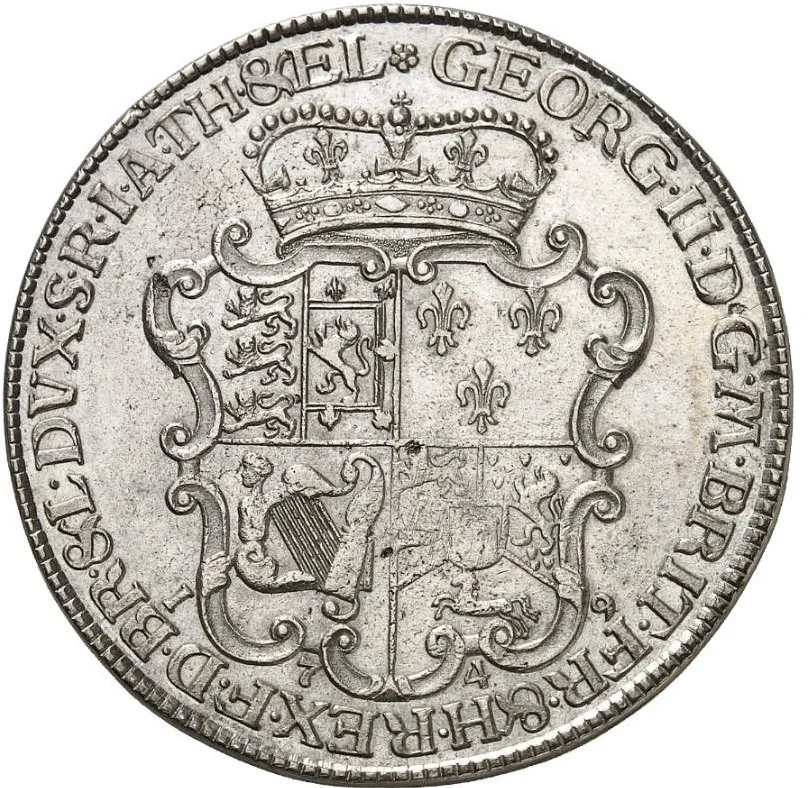

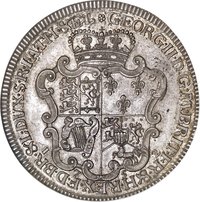
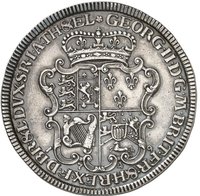
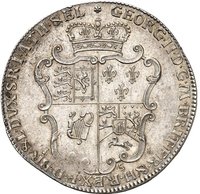
Obverse
Description:
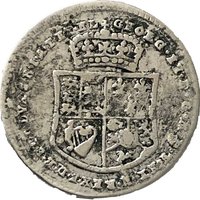
Quartered arms on an ornate shield.
Inscription:
GEORG • II • D • G • M • BRIT • FR • & H • REX • F • D • BR • & L • DVX • S • R • I • A • TH • EL • *
1749
1749
Script: Latin
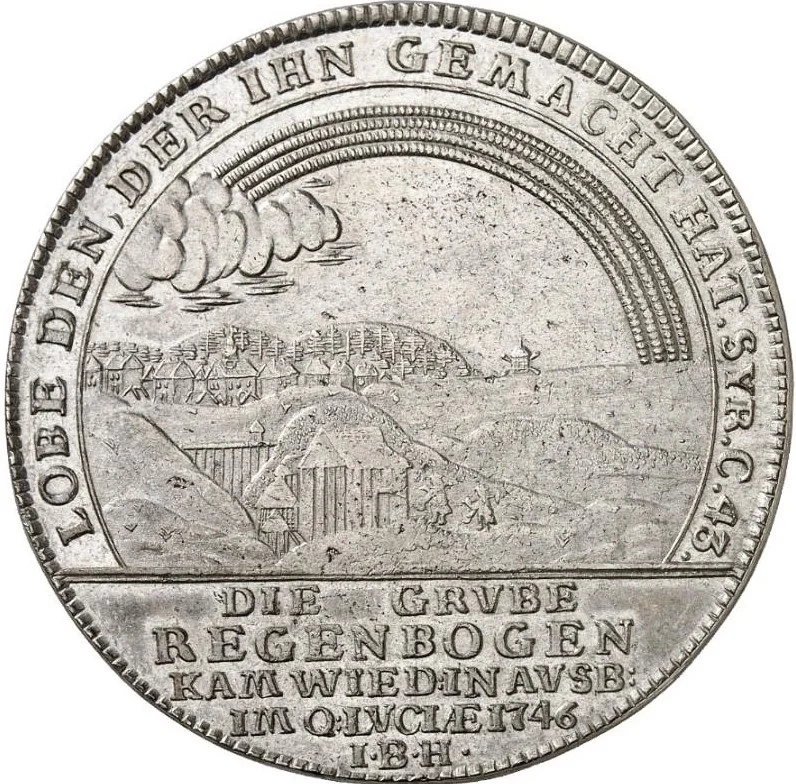
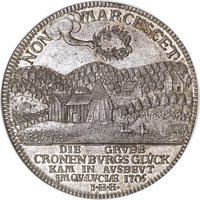
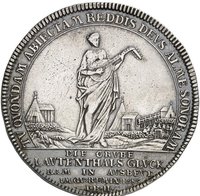
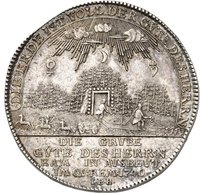
Reverse
Description:
Rainbow above a mine.
Inscription:
LOBE DEN, DER IHN GEMACHT HAT. SYR. C. 43.
DIE GRVBE
REGENBOGEN
KAM WIED : IN AVSB:
M Q: LVCIÆ 1746
I.B.H.
DIE GRVBE
REGENBOGEN
KAM WIED : IN AVSB:
M Q: LVCIÆ 1746
I.B.H.
Script: Latin
Edge
Mints
| Name | Mark |
|---|---|
| Zellerfeld | — |
Mintings
| Year | Mint Mark | Mintage | Quality | Collection |
|---|---|---|---|---|
| 1745 | — | — | ||
| 1749 | — | — | ||
| 1752 | — | — |
Historical background
In 1745, the currency situation in the Duchy of Brunswick-Lüneburg, specifically the Principality of Calenberg (with its capital in Hanover), was characterized by significant complexity and instability. The region was part of the Holy Roman Empire's intricate monetary system, where numerous states issued their own coinage, leading to a chaotic mix of circulating specie. Hanover itself was under the rule of the Elector George II, who was also King of Great Britain, creating a financial link to British subsidies, especially during the ongoing War of the Austrian Succession (1740-1748). This war placed heavy fiscal demands on the principality, straining its finances and encouraging the debasement of coinage to fund military expenditures.
The circulating medium was a confusing patchwork of various coins, including Reichsthaler, Gute Groschen, and Mariengroschen, alongside older, worn, and foreign coins, particularly from neighboring Brunswick-Wolfenbüttel. The value of these coins was not fixed by their metal content alone but also by official Kurant (specie) valuations set by the state, which often differed from their actual market value. This period saw a chronic shortage of high-value specie (Kurantgeld) and an overabundance of depreciated small change (Scheidemünze), causing difficulties for trade and daily transactions. The disparity led to frequent public complaints and official ordinances attempting, with limited success, to regulate exchange rates and curb the influx of inferior money.
Consequently, monetary policy in 1745 was largely reactive and defensive. The Hanoverian government issued repeated mandates to fix the value of coins and prohibit the circulation of specific debased issues, but these measures were often undermined by economic necessity and the porous borders of the Empire. The situation reflected a broader crisis of public credit and trust in the currency, a common challenge for German states financing warfare in the mid-18th century. This instability would persist until more comprehensive reforms were later undertaken, seeking to standardize the monetary system in the latter part of the century.
The circulating medium was a confusing patchwork of various coins, including Reichsthaler, Gute Groschen, and Mariengroschen, alongside older, worn, and foreign coins, particularly from neighboring Brunswick-Wolfenbüttel. The value of these coins was not fixed by their metal content alone but also by official Kurant (specie) valuations set by the state, which often differed from their actual market value. This period saw a chronic shortage of high-value specie (Kurantgeld) and an overabundance of depreciated small change (Scheidemünze), causing difficulties for trade and daily transactions. The disparity led to frequent public complaints and official ordinances attempting, with limited success, to regulate exchange rates and curb the influx of inferior money.
Consequently, monetary policy in 1745 was largely reactive and defensive. The Hanoverian government issued repeated mandates to fix the value of coins and prohibit the circulation of specific debased issues, but these measures were often undermined by economic necessity and the porous borders of the Empire. The situation reflected a broader crisis of public credit and trust in the currency, a common challenge for German states financing warfare in the mid-18th century. This instability would persist until more comprehensive reforms were later undertaken, seeking to standardize the monetary system in the latter part of the century.
✨ Legendary