

4 Mariengroschen – Brunswick-Lüneburg-Calenberg-Hannover
Germany

Material
Diameter: 22 mm
Weight: 3.33 g
Shape: Irregular round
Technique: Milled
Alignment: Coin alignment
flip
References
KM: #Click to copy to clipboard296
Numista: #397172
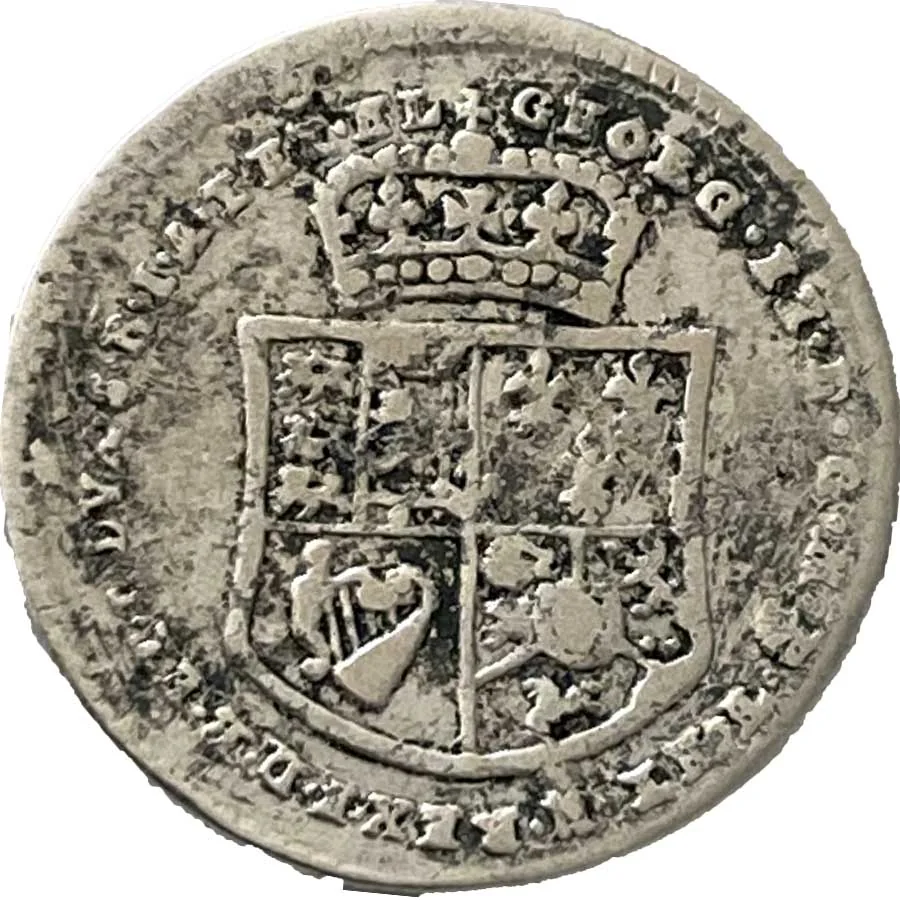
Obverse
Description:
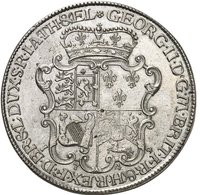
Shield with a crown.
Inscription:
GEORG II D G M B F ET H REX F D B ET L DVX S R I A T ET EL
Script: Latin
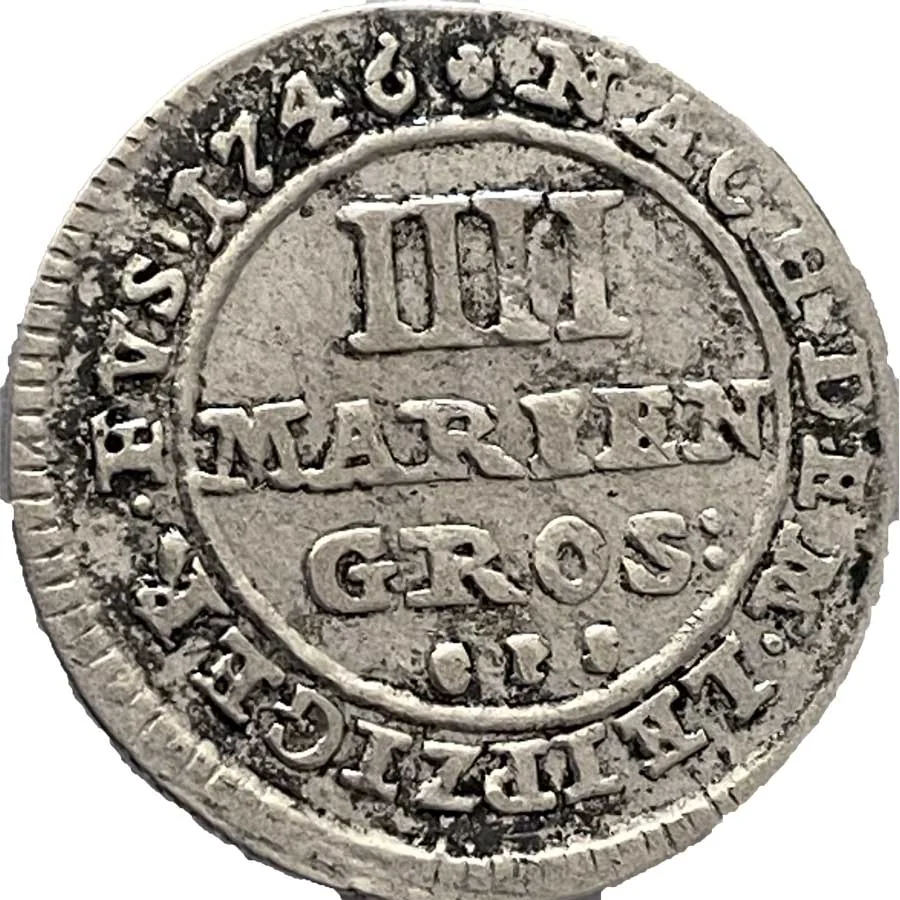
Reverse
Description:
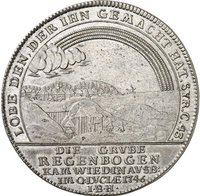
Circular legend value.
Inscription:
IIII
MARIEN
GROS
C P S
NACH DEM LEIPZIGER FVS 1746
MARIEN
GROS
C P S
NACH DEM LEIPZIGER FVS 1746
Script: Latin
Edge
Plain
Mints
| Name | Mark |
|---|---|
| Clausthal | — |
Mintings
| Year | Mint Mark | Mintage | Quality | Collection |
|---|---|---|---|---|
| 1746 | — | — | ||
| 1752 | C | — |
Historical background
In 1746, the currency situation in the Duchy of Brunswick-Lüneburg, specifically the Principality of Calenberg (with its capital in Hanover), was complex and fragmented, reflecting the broader monetary disarray of the Holy Roman Empire. The territory did not have a single, unified currency. Instead, circulation was dominated by the Reichsthaler, a large silver coin defined by imperial ordinance, and its fractional units like Gutegroschen and Mariengroschen. However, these official coins competed with a plethora of older, debased, and foreign coins, as well as various Kippermünzen (poor-quality emergency coins) minted during earlier wars, leading to chronic uncertainty in everyday transactions.
This monetary confusion was actively being addressed by the ruling prince, who was also the British King George II. His Hanoverian administration, under the guidance of officials like the influential minister Gerlach Adolph von Münchhausen, was pursuing a policy of standardization and stabilization. The goal was to align the principality's currency more firmly with the Reichsthaler standard to facilitate trade, improve state finances, and reduce fraud. This involved recalling old coins and issuing new, full-value specie, a slow and expensive process that was still underway in 1746.
Therefore, the year 1746 represents a point of transition within Calenberg-Hanover. It was a period of managed reform moving away from the inflationary chaos of the early 18th century, yet still grappling with the practical legacy of a disordered monetary system. The state's efforts aimed to create a more reliable and centrally controlled currency, which was seen as essential for economic development and strengthening princely authority in the lead-up to the territory's eventual elevation to an Electorate in 1754.
This monetary confusion was actively being addressed by the ruling prince, who was also the British King George II. His Hanoverian administration, under the guidance of officials like the influential minister Gerlach Adolph von Münchhausen, was pursuing a policy of standardization and stabilization. The goal was to align the principality's currency more firmly with the Reichsthaler standard to facilitate trade, improve state finances, and reduce fraud. This involved recalling old coins and issuing new, full-value specie, a slow and expensive process that was still underway in 1746.
Therefore, the year 1746 represents a point of transition within Calenberg-Hanover. It was a period of managed reform moving away from the inflationary chaos of the early 18th century, yet still grappling with the practical legacy of a disordered monetary system. The state's efforts aimed to create a more reliable and centrally controlled currency, which was seen as essential for economic development and strengthening princely authority in the lead-up to the territory's eventual elevation to an Electorate in 1754.
✨ Legendary