

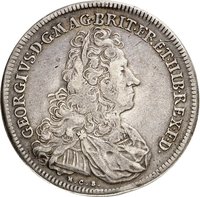
Obverse
Description:
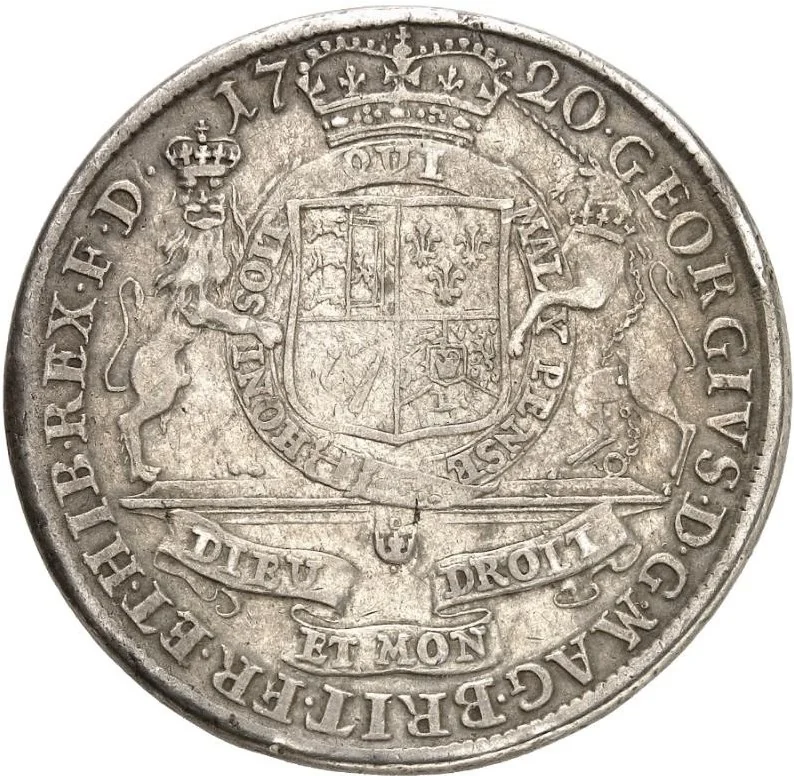
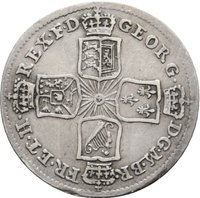
Garter arms with crown above and supporters.
Inscription:
1720
GEORGIVS • D • G • M • BRIT • FR • ET HIB • REX F • D •
HONI SOIT QUI MAL Y PENSE
DIEU ET MON DROIT
GEORGIVS • D • G • M • BRIT • FR • ET HIB • REX F • D •
HONI SOIT QUI MAL Y PENSE
DIEU ET MON DROIT
Script: Latin
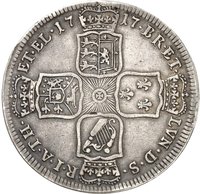
Reverse
Description:
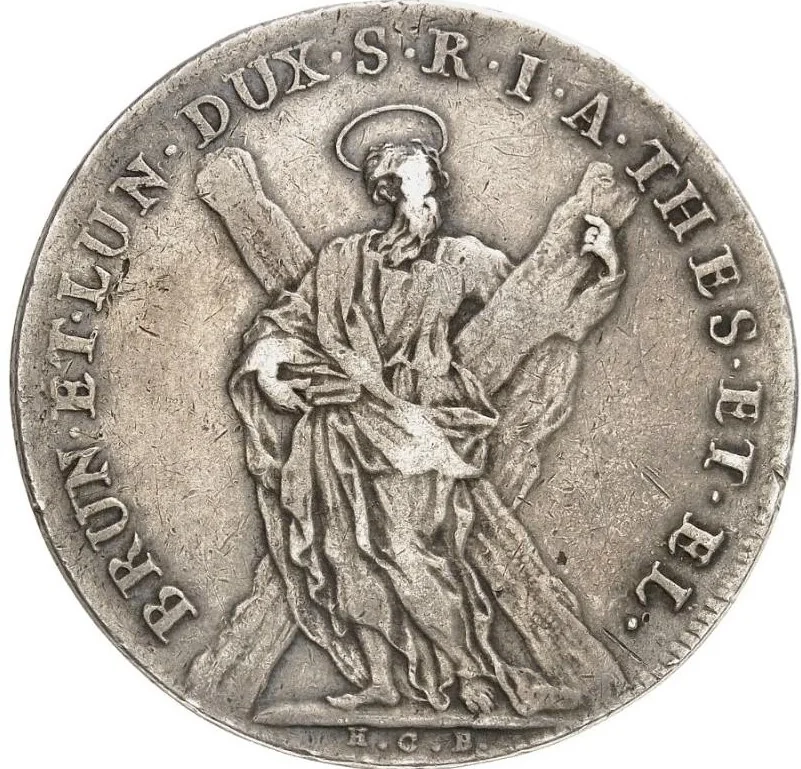
St. Andrew with a cross.
Inscription:
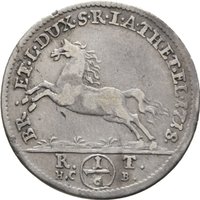
BRUN ET LUN DUX S R I A THES ET EL
HCB
HCB
Script: Latin
Edge
Mints
| Name | Mark |
|---|---|
| Clausthal | — |
| Zellerfeld | — |
Mintings
| Year | Mint Mark | Mintage | Quality | Collection |
|---|---|---|---|---|
| 1718 | — | — | ||
| 1719 | — | — | ||
| 1720 | — | — | ||
| 1721 | — | — | ||
| 1722 | — | — | ||
| 1723 | — | — | ||
| 1724 | — | — | ||
| 1725 | — | — | ||
| 1726 | — | — | ||
| 1727 | — | — |
Historical background
In 1718, the currency situation in the Principality of Calenberg-Göttingen, part of the broader Brunswick-Lüneburg complex, was characterized by significant instability and complexity, a direct legacy of the Great Northern War (1700-1721). The war had drained state coffers, leading the ruling Prince-Elector George Louis (soon to become King George I of Great Britain) and his administration to resort to repeated debasements of the coinage. By lowering the silver content in coins like the Thaler and its subdivisions, the state sought to create short-term profit to fund military expenses, but this severely eroded public trust and the currency's intrinsic value.
This period saw a chaotic circulation of multiple coinage types. Alongside the debased local currency, older, full-value Reichsthaler coins from prior reigns remained in use, as did various foreign coins from neighboring German states and trade partners. The result was a dysfunctional monetary system where the value of a coin was determined not simply by its face value but by its weight, fineness, and origin, requiring constant expert evaluation. This environment fostered uncertainty, hindered commerce, and benefited money-changers at the expense of the general populace and merchants.
The year 1718 itself was not a point of reform but rather one of ongoing crisis within this deteriorating system. While George Louis was now absent, ruling from London, his Hanoverian ministers grappled with the economic consequences. The situation would eventually create the imperative for a major monetary reform, which came to fruition a few years later with the introduction of the "Hanoverian Kuranttaler" in 1724, a stable silver currency based on a clear Reichsthaler standard, aiming to restore order and confidence in the principality's finances.
This period saw a chaotic circulation of multiple coinage types. Alongside the debased local currency, older, full-value Reichsthaler coins from prior reigns remained in use, as did various foreign coins from neighboring German states and trade partners. The result was a dysfunctional monetary system where the value of a coin was determined not simply by its face value but by its weight, fineness, and origin, requiring constant expert evaluation. This environment fostered uncertainty, hindered commerce, and benefited money-changers at the expense of the general populace and merchants.
The year 1718 itself was not a point of reform but rather one of ongoing crisis within this deteriorating system. While George Louis was now absent, ruling from London, his Hanoverian ministers grappled with the economic consequences. The situation would eventually create the imperative for a major monetary reform, which came to fruition a few years later with the introduction of the "Hanoverian Kuranttaler" in 1724, a stable silver currency based on a clear Reichsthaler standard, aiming to restore order and confidence in the principality's finances.

✨ Legendary