

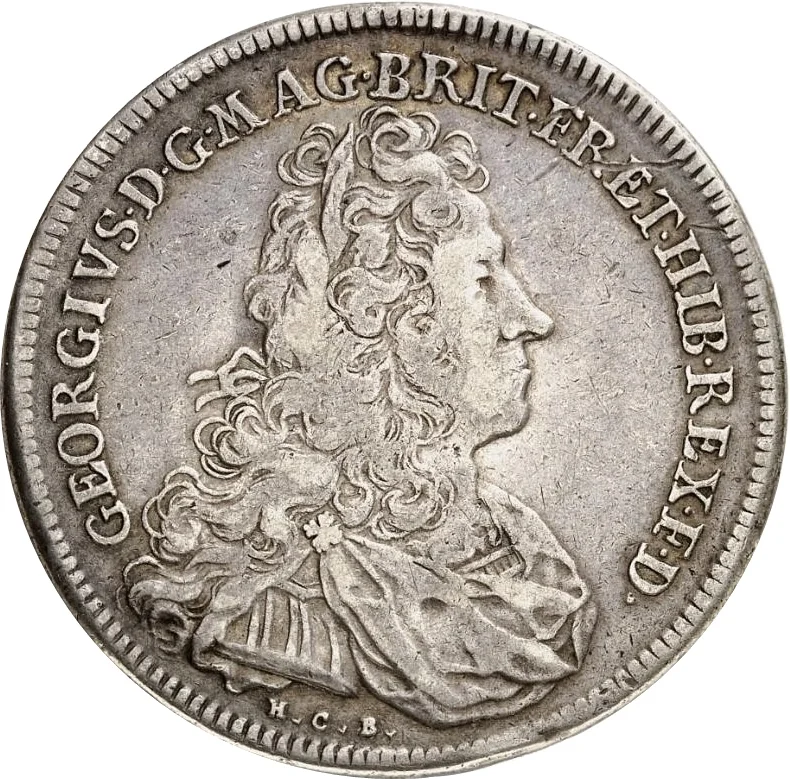

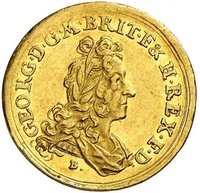
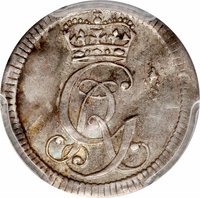
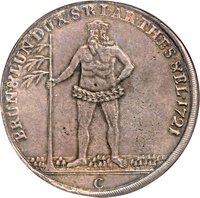
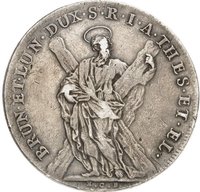
Obverse
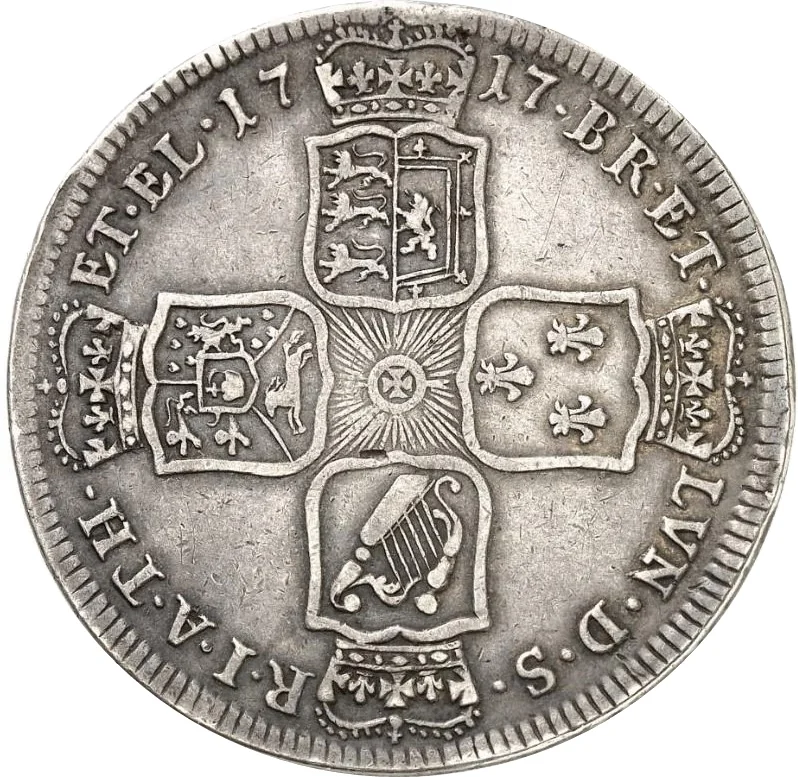
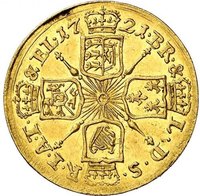
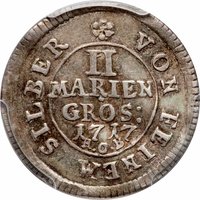
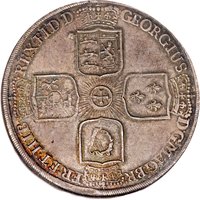
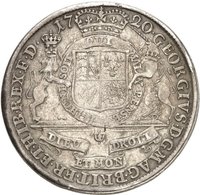
Reverse
Description:
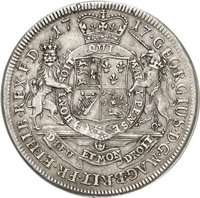
Four crowned shields crosswise, date around.
Inscription:
BR ET LVN D S R I TH ET EL
1717
1717
Script: Latin
Edge
Mints
| Name | Mark |
|---|---|
| Zellerfeld | — |
Mintings
| Year | Mint Mark | Mintage | Quality | Collection |
|---|---|---|---|---|
| 1717 | — | — |
Historical background
In 1717, the currency situation in the Electorate of Brunswick-Lüneburg (commonly referred to by its dynastic name, Hanover, after its capital) was one of profound complexity and instability, a legacy of the fragmented monetary systems of the Holy Roman Empire. The territory, ruled by Elector George Louis (who had also become King George I of Great Britain in 1714), did not have a uniform coinage. Circulation was dominated by a bewildering variety of domestic and foreign coins, including Reichsthalers, Gute Groschen, and lower-denomination Mariengroschen, alongside Dutch, French, and English coins brought in through trade and dynastic connections. Their values fluctuated constantly based on intrinsic silver content and local ordinances, leading to chronic confusion, widespread counterfeiting, and economic friction.
This chaotic environment prompted significant reform. In 1717, the Hanoverian government, leveraging the financial expertise gained from the British connection, began a serious push toward standardization. The key initiative was the planned introduction of a new, stable silver standard based on the Reichsthaler, divided into 36 Mariengroschen, each of 8 Pfennig. This move aimed to replace the myriad of circulating specie with a unified, state-guaranteed currency, thereby simplifying trade, strengthening state fiscal control, and curbing the losses from currency arbitrage and debasement.
The reform of 1717 was therefore a pivotal moment in Hanover's financial modernization, representing a transition from medieval monetary fragmentation to a more centralized and rational system. While full implementation took years, the groundwork laid in this period was crucial. It stabilized the economy of George I's German territories, facilitating their administration and integration, and reflected the broader trend across German states of using currency consolidation as a tool for enhancing princely power and economic coherence in the early 18th century.
This chaotic environment prompted significant reform. In 1717, the Hanoverian government, leveraging the financial expertise gained from the British connection, began a serious push toward standardization. The key initiative was the planned introduction of a new, stable silver standard based on the Reichsthaler, divided into 36 Mariengroschen, each of 8 Pfennig. This move aimed to replace the myriad of circulating specie with a unified, state-guaranteed currency, thereby simplifying trade, strengthening state fiscal control, and curbing the losses from currency arbitrage and debasement.
The reform of 1717 was therefore a pivotal moment in Hanover's financial modernization, representing a transition from medieval monetary fragmentation to a more centralized and rational system. While full implementation took years, the groundwork laid in this period was crucial. It stabilized the economy of George I's German territories, facilitating their administration and integration, and reflected the broader trend across German states of using currency consolidation as a tool for enhancing princely power and economic coherence in the early 18th century.
✨ Legendary