

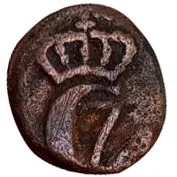
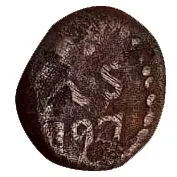
4 Cash – Danish India
India
Context
Years: 1797–1800
Country: India 
Issuer: Danish India
Ruler: Christian VII
Currency:
(1730—1818)
Demonetized: Yes
Material
Diameter: 14 mm
Weight: 2.4 g
Thickness: 3.4 mm
Shape: Irregular round
Composition: Copper
Magnetic: No
References
KM: #Click to copy to clipboard157
Numista: #26493
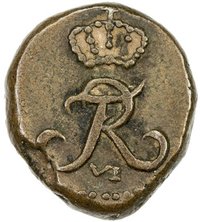
Obverse
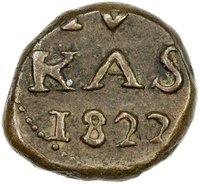
Reverse
Edge
Mintings
| Year | Mint Mark | Mintage | Quality | Collection |
|---|---|---|---|---|
| 1797 | — | — | ||
| 1799 | — | — | ||
| 1800 | — | — |
Historical background
In 1797, the currency situation in Danish India, centered on the trading posts of Tranquebar (in Tamil Nadu) and Serampore (in Bengal), was complex and dominated by the monetary systems of neighboring powers. The Danish Asiatic Company, which administered these enclaves, did not issue a dominant local coinage for general circulation. Instead, the economy operated on a multi-currency system, heavily reliant on a variety of foreign silver coins that served as the primary media of exchange. The most important of these was the Spanish silver dollar (or 8 Real piece), a global trade coin, alongside other regional silver rupees from the Mughal Empire and various emerging Indian states.
This reliance on external coinage created chronic problems of scarcity and instability. The supply of acceptable silver coins was irregular, dependent on the ebb and flow of regional trade, leading to frequent shortages that hampered commerce. Furthermore, the diverse coins in circulation had fluctuating values against each other and against the Danish accounting system, which used the Rixdollar (Rigsdaler) as a notional unit. This necessitated the constant publication of elaborate exchange rate lists, and the resulting confusion and arbitrage opportunities fostered an environment ripe for merchant disputes and economic inefficiency.
Recognizing these challenges, the Danish authorities made a significant attempt to reform the system in the very year of 1797. They introduced a new, standardized silver coin minted at the Serampore fort: the so-called "Serampore Rupee." This coin was deliberately aligned in weight and fineness with the widely accepted rupee of the neighbouring British East India Company's Bengal Presidency, aiming to seamlessly integrate into the regional economy. The 1797 Serampore Rupee therefore represents a pivotal moment—a direct but short-lived effort by the Danish to assert monetary sovereignty and stabilize commerce by adopting a regional standard, before their Indian possessions were eventually sold to the British in the 19th century.
This reliance on external coinage created chronic problems of scarcity and instability. The supply of acceptable silver coins was irregular, dependent on the ebb and flow of regional trade, leading to frequent shortages that hampered commerce. Furthermore, the diverse coins in circulation had fluctuating values against each other and against the Danish accounting system, which used the Rixdollar (Rigsdaler) as a notional unit. This necessitated the constant publication of elaborate exchange rate lists, and the resulting confusion and arbitrage opportunities fostered an environment ripe for merchant disputes and economic inefficiency.
Recognizing these challenges, the Danish authorities made a significant attempt to reform the system in the very year of 1797. They introduced a new, standardized silver coin minted at the Serampore fort: the so-called "Serampore Rupee." This coin was deliberately aligned in weight and fineness with the widely accepted rupee of the neighbouring British East India Company's Bengal Presidency, aiming to seamlessly integrate into the regional economy. The 1797 Serampore Rupee therefore represents a pivotal moment—a direct but short-lived effort by the Danish to assert monetary sovereignty and stabilize commerce by adopting a regional standard, before their Indian possessions were eventually sold to the British in the 19th century.
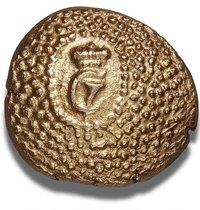
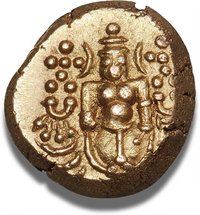
💎 Extremely Rare