

1 pagoda – Danish India
Add to wishlist
India
Context
Year: 1789
Country: India
Issuer: Danish India
Ruler: Christian VII
Currency:
(1730—1818)
Subdivision: 1 pagoda = 42 Royalins
Demonetized: Yes
Material
References
KM: #
Numista: #382340
Value
Bullion value: $529.33
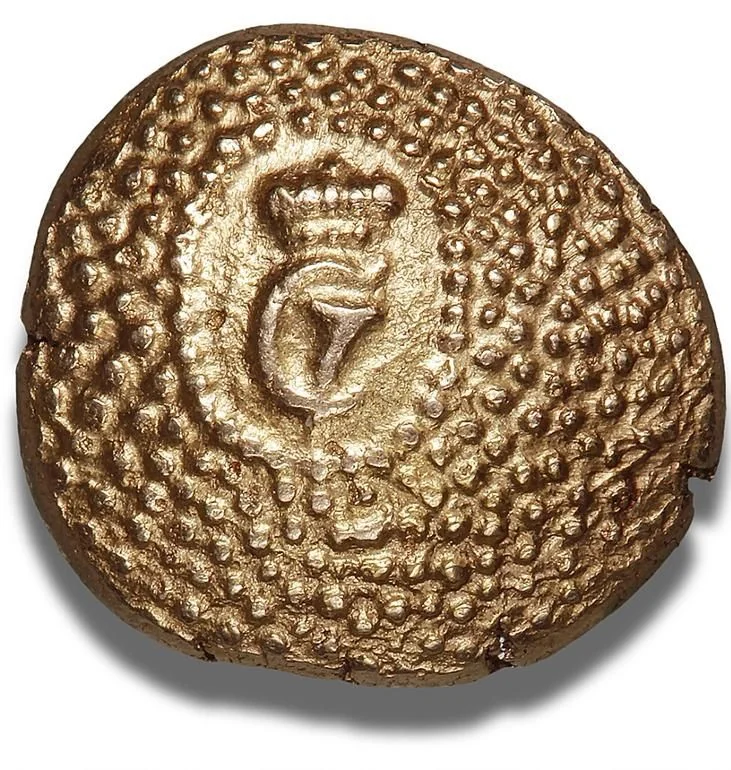
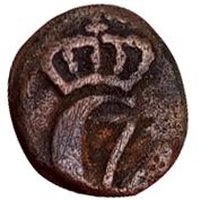
Obverse
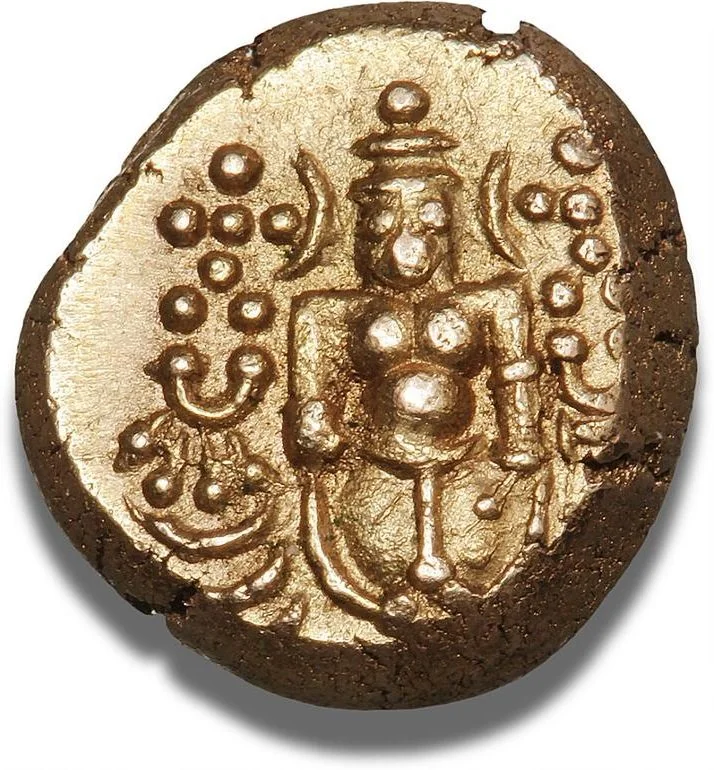
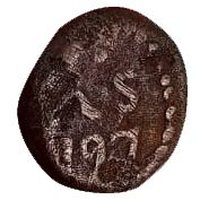
Reverse
Description:
Goddess of wealth and prosperity.
Edge
Plain
Mintings
| Year | Mint Mark | Mintage | Quality | Collection |
|---|---|---|---|---|
| 1789 | — | — |
Historical background
In 1789, the currency situation in Danish India, centered on the trading outposts of Tranquebar (Tharangambadi) on the Coromandel Coast and Serampore (Frederiksnagore) in Bengal, was characterized by complexity and dependency. The Danish Asiatic Company, which administered these settlements, did not issue a distinct local coinage for general circulation. Instead, the economy operated on a multi-currency system dominated by regional and foreign specie. The most important of these was the Indian Rupee, primarily the silver Arcot rupee minted by the neighboring British East India Company's Madras Presidency, alongside various other Mughal and regional variants. This reliance on externally minted coinage reflected Denmark's minor commercial position and the overwhelming economic gravity of the subcontinent.
This monetary plurality created persistent challenges for trade and administration. Merchants and the Company itself had to constantly navigate fluctuating exchange rates between the different silver rupees, gold pagodas (another regional coin), and copper coins used for small transactions. Furthermore, the Danish settlements needed a reliable medium to pay for textiles, spices, and other goods procured for the Europe-bound trade, as well as for local expenses. To facilitate this, the Danish authorities occasionally struck "Tranquebar Rupees"—essentially imitation Arcot rupees—by melting down and re-minting foreign silver. These coins, bearing the monogram of the Danish king but conforming to local weight and fineness standards, were not a sovereign currency but a practical tool to integrate into the existing Indian monetary ecosystem.
Ultimately, the currency scene in 1789 underscores the pragmatic and subordinate nature of Danish India. Without the political or economic power to impose a monetary standard, the Danish enclaves adapted to the circulatory norms of the wider region. This system, while functional, was inherently unstable, susceptible to shortages of acceptable specie and the monetary policies of larger neighbors. It mirrored Denmark's broader role in 18th-century India: a niche participant in the European trading network, operating within commercial frameworks dictated by both Indian economies and the rising British hegemony.
This monetary plurality created persistent challenges for trade and administration. Merchants and the Company itself had to constantly navigate fluctuating exchange rates between the different silver rupees, gold pagodas (another regional coin), and copper coins used for small transactions. Furthermore, the Danish settlements needed a reliable medium to pay for textiles, spices, and other goods procured for the Europe-bound trade, as well as for local expenses. To facilitate this, the Danish authorities occasionally struck "Tranquebar Rupees"—essentially imitation Arcot rupees—by melting down and re-minting foreign silver. These coins, bearing the monogram of the Danish king but conforming to local weight and fineness standards, were not a sovereign currency but a practical tool to integrate into the existing Indian monetary ecosystem.
Ultimately, the currency scene in 1789 underscores the pragmatic and subordinate nature of Danish India. Without the political or economic power to impose a monetary standard, the Danish enclaves adapted to the circulatory norms of the wider region. This system, while functional, was inherently unstable, susceptible to shortages of acceptable specie and the monetary policies of larger neighbors. It mirrored Denmark's broader role in 18th-century India: a niche participant in the European trading network, operating within commercial frameworks dictated by both Indian economies and the rising British hegemony.
✨ Legendary