

1 Grosso – Papal States
Vatican City
Context
Year: 1726
Country: Vatican City 
Issuer: Papal States
Ruler: Benedict XIII
Currency:
(1534—1835)
Demonetized: Yes
References
KM: #Click to copy to clipboard814
Numista: #264852
Value
Bullion value: $3.48
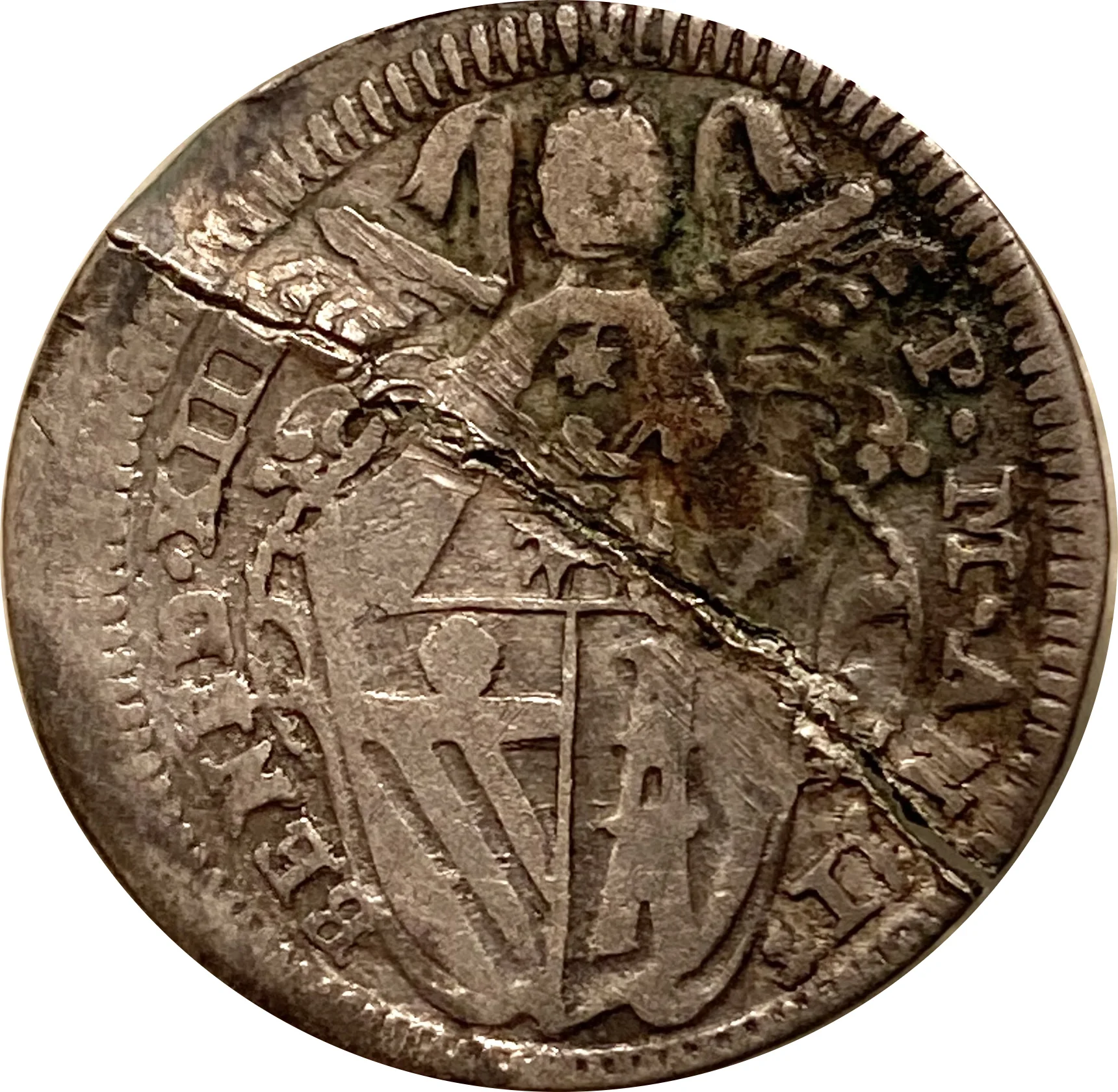
Obverse
Inscription:
BENED • XIII
P•M•AN•III
P•M•AN•III
Script: Latin
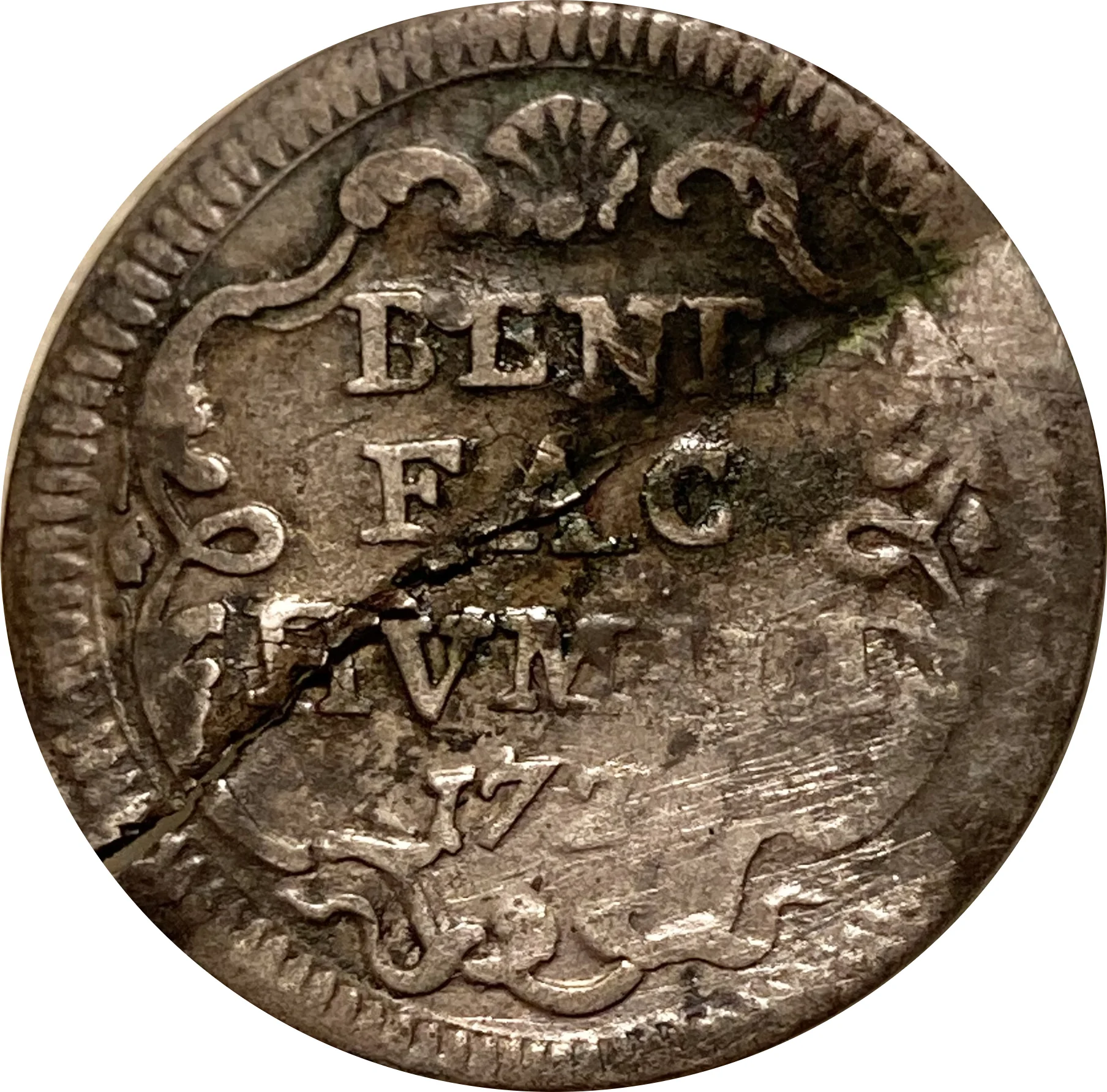
Reverse
Inscription:
BENE
FAC
HVMILI
1726
FAC
HVMILI
1726
Script: Latin
Edge
Mintings
| Year | Mint Mark | Mintage | Quality | Collection |
|---|---|---|---|---|
| 1726 | — | — |
Historical background
In 1726, the Papal States under Pope Benedict XIII faced a significant and chronic monetary crisis, common to many Italian states of the period. The primary issue was the severe debasement and chaotic multiplicity of coins in circulation. The papal mint issued a confusing array of scudi, giuli, baiochi, and quattrini, but their silver content had been steadily reduced over decades to finance state expenditures. This practice led to a wide divergence between the official "mint" value of coins and their much lower market value based on their intrinsic metal content, causing economic instability and a loss of confidence in the currency.
The situation was exacerbated by the influx of even more debased foreign coins, particularly from neighbouring states, which flooded the Papal States due to Gresham's Law ("bad money drives out good money"). People hoarded older, higher-silver coins, further removing sound money from daily transactions. This dysfunctional system crippled commerce, as merchants struggled with constantly fluctuating exchange rates between various coin types, and tax revenues collected in devalued currency lost real purchasing power for the papal treasury.
Pope Benedict XIII, whose pontificate was notably focused on religious observance rather than fiscal administration, made an attempt to address the crisis in 1726. His monetary reform aimed to standardize the coinage by introducing new, higher-quality silver scudi and to fix the exchange rates between monetary units. However, the reform was largely ineffective. It failed to address the root fiscal problems—chronic deficit spending and a lack of economic modernization—and without the necessary bullion reserves or political will to enforce it, the new, good coins quickly disappeared from circulation, leaving the monetary chaos largely unresolved.
The situation was exacerbated by the influx of even more debased foreign coins, particularly from neighbouring states, which flooded the Papal States due to Gresham's Law ("bad money drives out good money"). People hoarded older, higher-silver coins, further removing sound money from daily transactions. This dysfunctional system crippled commerce, as merchants struggled with constantly fluctuating exchange rates between various coin types, and tax revenues collected in devalued currency lost real purchasing power for the papal treasury.
Pope Benedict XIII, whose pontificate was notably focused on religious observance rather than fiscal administration, made an attempt to address the crisis in 1726. His monetary reform aimed to standardize the coinage by introducing new, higher-quality silver scudi and to fix the exchange rates between monetary units. However, the reform was largely ineffective. It failed to address the root fiscal problems—chronic deficit spending and a lack of economic modernization—and without the necessary bullion reserves or political will to enforce it, the new, good coins quickly disappeared from circulation, leaving the monetary chaos largely unresolved.
✨ Legendary