

2 Souverains – Austrian Netherlands
Belgium
Context
Years: 1757–1766
Country: Belgium 
Issuer: Austrian Netherlands
Ruler: Maria Theresa
Currency:
(1744—1798)
Demonetized: Yes
Total mintage: 1,215,335
Material
References
KM: #Click to copy to clipboard24
Numista: #26305
Value
Bullion value: $1698.10
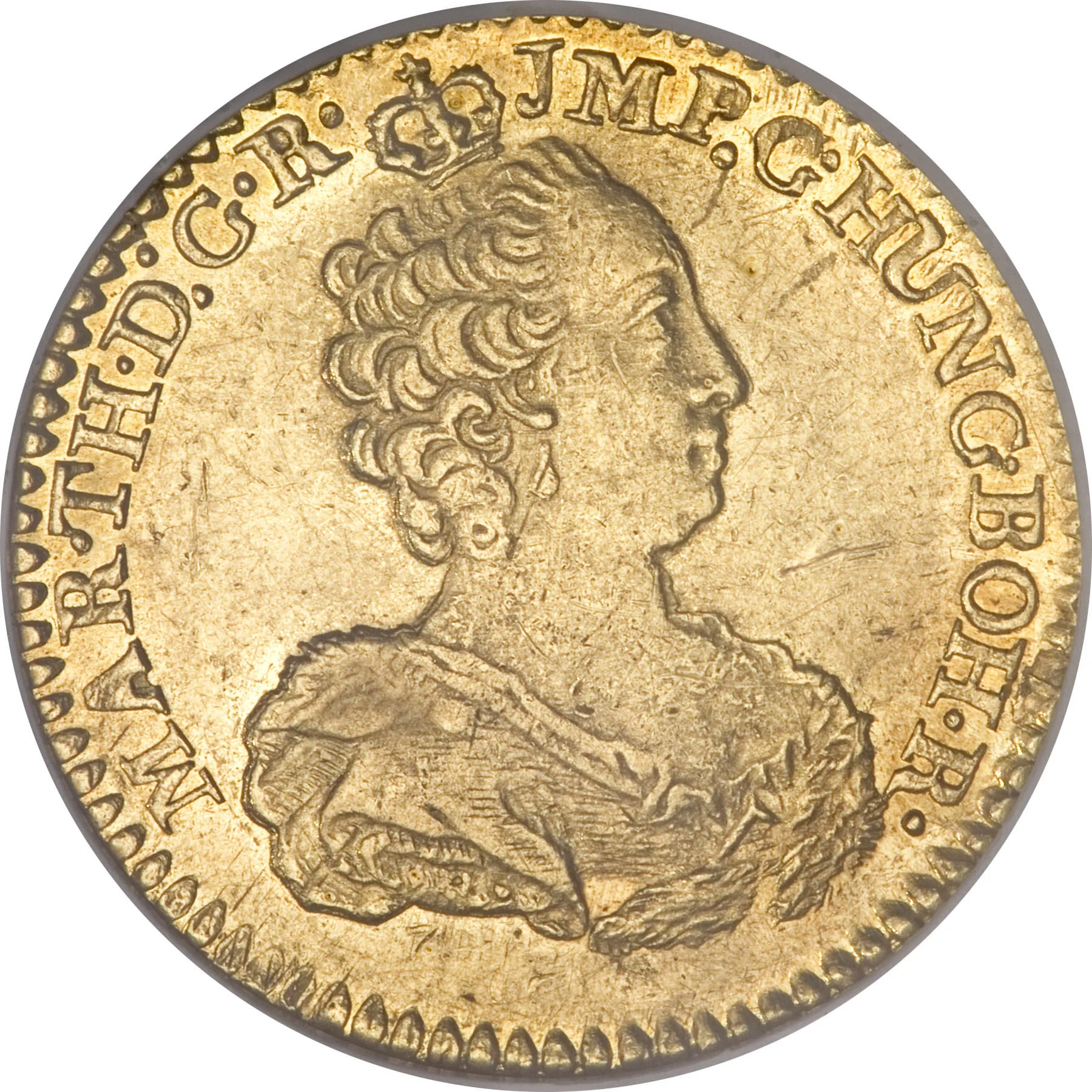
Obverse
Description:
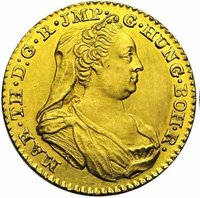
Crowned head facing right.
Inscription:
MAR · TH · D : G · R · MP . G · HUNG · BOH · R ·
Script: Latin
Engraver: Jacques Roëttiers
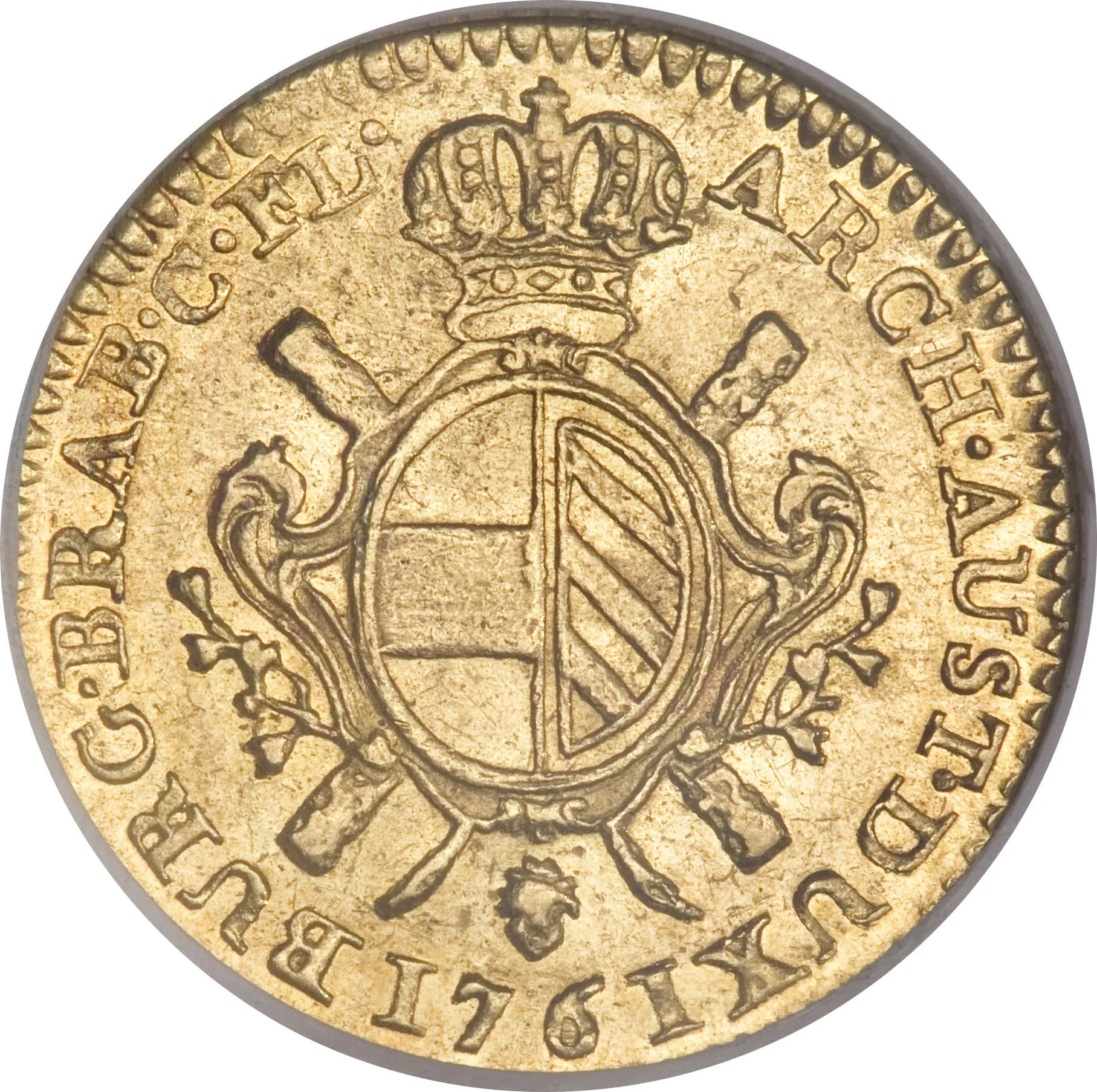
Reverse
Description:
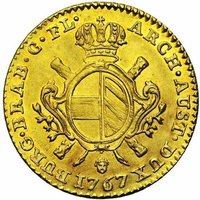
Crowned oval shield with Austria-Burgundy arms on a Burgundian cross, mint mark below, date in legend.
Inscription:
ARCH · AUST · DUX · BURG · BRAB · C · FL ·
1761
1761
Script: Latin
Engraver: Jacques Roëttiers
Edge
Twisted
Mints
| Name | Mark |
|---|---|
| Antwerp | — |
| Royal Mint of Belgium | — |
Mintings
| Year | Mint Mark | Mintage | Quality | Collection |
|---|---|---|---|---|
| 1757 | — | 38,354 | ||
| 1758 | — | 1,285 | ||
| 1759 | — | 190,106 | ||
| 1760 | — | 162,560 | ||
| 1761 | — | 299,743 | ||
| 1762 | — | 269,166 | ||
| 1763 | — | 119,114 | ||
| 1766 | — | 135,007 |
Historical background
In 1757, the currency situation in the Austrian Netherlands was one of profound complexity and instability, a direct consequence of the territory's geopolitical position and the ongoing global conflict of the Seven Years' War (1756-1763). The region, roughly modern-day Belgium and Luxembourg, was a Habsburg possession but geographically and economically intertwined with its neighbors, particularly the Dutch Republic and France. This led to a chaotic circulation of diverse coins: domestic issues, Dutch guilders, French louis d'or, and Spanish and German thalers all competed in daily use. The intrinsic value of their precious metal content, rather than any fixed official rate, determined their actual worth, creating a fluctuating and inefficient market for exchange.
The core of the problem was a severe shortage of high-quality, full-weight subsidiary coinage for everyday transactions. Decades of wear, clipping, and the export of good silver to neighboring states had drained the system. In response, the Habsburg authorities in Brussels and Vienna had repeatedly authorized the minting of low-weight, debased patagon and florin coins. While this temporarily increased the money supply, it further eroded public trust and exacerbated inflationary pressures. Merchants and money-changers, essential intermediaries in this environment, imposed variable agios (premiums or discounts) on different coins, making commerce unpredictable and burdensome.
This monetary disorder was acutely felt in 1757 as the war strained public finances and disrupted trade. The government's need to fund its military contributions to the Austrian war effort against Prussia intensified fiscal pressures. Attempts at regulation, like the failed currency ordinance of 1756, proved unenforceable. Consequently, the economy operated on a fragile and speculative basis, with the value of money in one's pocket subject to constant uncertainty. This background of monetary chaos would ultimately pave the way for the more sweeping, but also controversial, reforms attempted by Empress Maria Theresa's minister, Count Cobenzl, later in the 1760s.
The core of the problem was a severe shortage of high-quality, full-weight subsidiary coinage for everyday transactions. Decades of wear, clipping, and the export of good silver to neighboring states had drained the system. In response, the Habsburg authorities in Brussels and Vienna had repeatedly authorized the minting of low-weight, debased patagon and florin coins. While this temporarily increased the money supply, it further eroded public trust and exacerbated inflationary pressures. Merchants and money-changers, essential intermediaries in this environment, imposed variable agios (premiums or discounts) on different coins, making commerce unpredictable and burdensome.
This monetary disorder was acutely felt in 1757 as the war strained public finances and disrupted trade. The government's need to fund its military contributions to the Austrian war effort against Prussia intensified fiscal pressures. Attempts at regulation, like the failed currency ordinance of 1756, proved unenforceable. Consequently, the economy operated on a fragile and speculative basis, with the value of money in one's pocket subject to constant uncertainty. This background of monetary chaos would ultimately pave the way for the more sweeping, but also controversial, reforms attempted by Empress Maria Theresa's minister, Count Cobenzl, later in the 1760s.
💎 Extremely Rare