

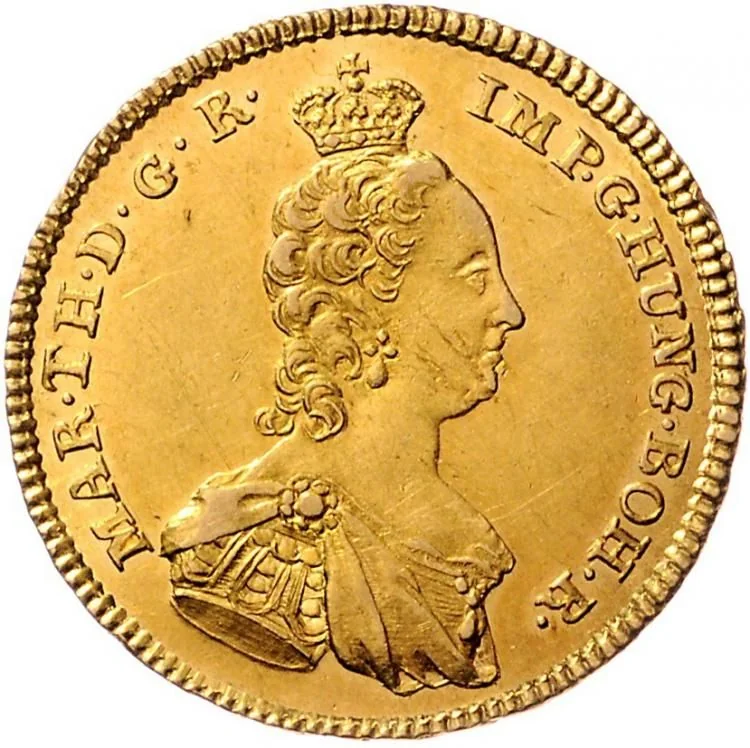
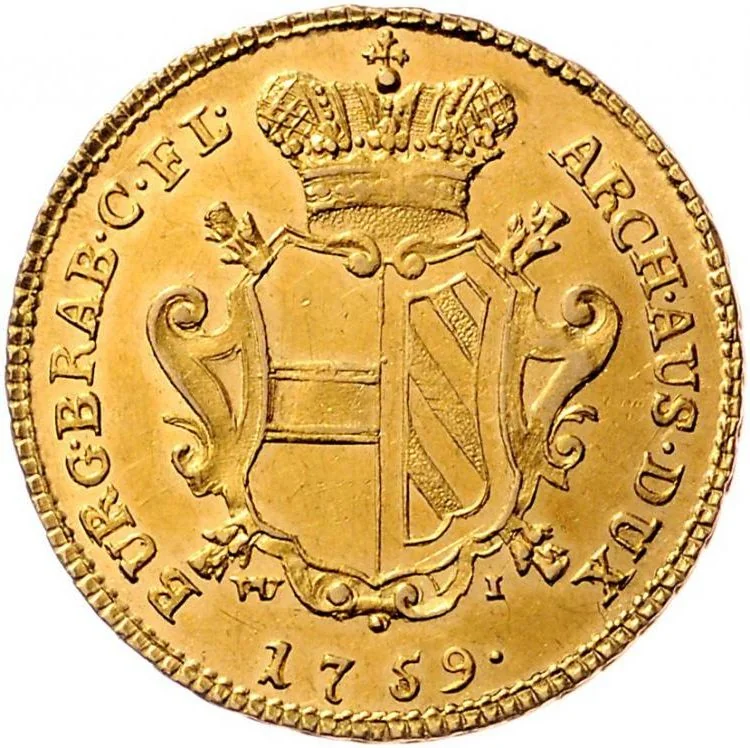
2 Souverains – Austrian Netherlands
Belgium
Context
Years: 1756–1761
Country: Belgium 
Issuer: Austrian Netherlands
Ruler: Maria Theresa
Currency:
(1744—1798)
Demonetized: Yes
Material
References
KM: #Click to copy to clipboard23
Numista: #159905
Value
Bullion value: $1701.49
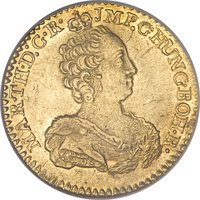
Obverse
Description:
Portrait facing right, wearing a small crown and armor on the right arm.
Inscription:
MAR TH D G R IMP G HUNG BOH R
Script: Latin
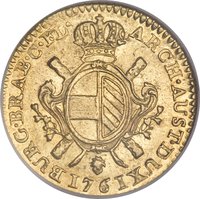
Reverse
Description:
Crowned arms with mint mark.
Inscription:
ARCH AUS DUX // BURG BRAB C FL
WI
WI
Script: Latin
Edge
Plain
Mints
| Name | Mark |
|---|---|
| Münze Österreich | WI |
Historical background
In 1756, the Austrian Netherlands (approximately modern-day Belgium and Luxembourg) was grappling with a severe and chronic currency crisis, a legacy of its complex political history. The region, under Habsburg administration since 1714, operated within a monetary system still deeply influenced by its previous Spanish rulers. The circulating medium was a chaotic mix of older Spanish coinage, local issues from various provincial mints, and a flood of debased and counterfeit coins from neighboring states. This created a system where the official banco money of account (used for large transactions and contracts) had a vastly different value from the actual current specie in everyday use, causing widespread confusion and economic friction.
The core of the problem was a significant shortage of high-quality, full-weight silver coinage for daily commerce. Decades of wear, clipping, and the export of good coin to settle international debts had led to a situation described as "bad money driving out the good" (Gresham's Law). Consequently, merchants and the public were left with a degraded circulating medium of uncertain value, which stifled trade and created price instability. The Habsburg monetary authorities in Vienna and Brussels struggled to assert control, as attempts to introduce new, standardized coinage were undermined by the sheer volume of old and foreign coins and the lucrative counterfeit operations along the region's porous borders.
This monetary instability was a significant economic vulnerability as the Seven Years' War (1756-1763) began. The conflict further strained the system, disrupting trade routes and increasing fiscal demands on the government. While the pressing issue of 1756 was the acute shortage of reliable specie, it was symptomatic of a deeper failure to integrate the province's monetary system effectively into the broader Habsburg economy. The situation would persist until more sweeping reforms were attempted under Duke Charles of Lorraine and, later, by the Austrian administration in the 1760s.
The core of the problem was a significant shortage of high-quality, full-weight silver coinage for daily commerce. Decades of wear, clipping, and the export of good coin to settle international debts had led to a situation described as "bad money driving out the good" (Gresham's Law). Consequently, merchants and the public were left with a degraded circulating medium of uncertain value, which stifled trade and created price instability. The Habsburg monetary authorities in Vienna and Brussels struggled to assert control, as attempts to introduce new, standardized coinage were undermined by the sheer volume of old and foreign coins and the lucrative counterfeit operations along the region's porous borders.
This monetary instability was a significant economic vulnerability as the Seven Years' War (1756-1763) began. The conflict further strained the system, disrupting trade routes and increasing fiscal demands on the government. While the pressing issue of 1756 was the acute shortage of reliable specie, it was symptomatic of a deeper failure to integrate the province's monetary system effectively into the broader Habsburg economy. The situation would persist until more sweeping reforms were attempted under Duke Charles of Lorraine and, later, by the Austrian administration in the 1760s.
✨ Legendary