

4 Hellers – Landgraviate of Hesse-Cassel
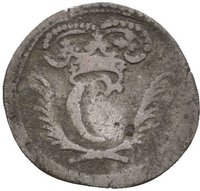
Obverse
Description:
Palm branches flanking a crowned coat of arms.
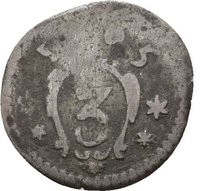
Reverse
Description:
Date above, denomination centered, mint mark below.
Inscription:
1703
IIII
A · D
IIII
A · D
Script: Latin
Edge
Mints
| Name | Mark |
|---|---|
| Kassel | — |
Mintings
| Year | Mint Mark | Mintage | Quality | Collection |
|---|---|---|---|---|
| 1703 | — | — |
Historical background
In 1703, the currency situation in the Landgraviate of Hesse-Cassel was complex and strained, typical of the Holy Roman Empire's fragmented monetary systems. The landgraviate did not have a single, unified currency; instead, circulation was a chaotic mix of domestic and foreign coins. Domestically, the primary silver coin was the Hessen-Kasselischer Taler, but its value and purity were in constant tension with a flood of foreign coins, particularly the ubiquitous Reichsthaler from other German states, Dutch ducats, and French Louis d'or. This proliferation created significant challenges for trade and public trust.
The core problem was one of debasement and fluctuating values. Landgrave Charles I, who ruled until 1730, faced persistent financial pressures, notably from maintaining a large army for hire (Soldatenhandel) and the costs of courtly representation. To raise revenue, the minting authority often reduced the silver content in coins, a practice known as debasement. This led to older, purer coins being hoarded or melted down (Gresham's Law in action), while newer, weaker coins drove inflation and eroded economic stability. Merchants and officials had to constantly refer to complex exchange rate lists (Kurantzettel) to conduct business.
Consequently, 1703 fell within a period of ongoing monetary instability and attempted reform. The government struggled to enforce its minting ordinances against both counterfeiters and the legitimate but disruptive influx of foreign currency. While a more standardized Kurantgeld (specie money) system was the ideal, achieving it was a slow process. Thus, the monetary landscape remained a patchwork, undermining economic predictability and placing a burden on the population, who bore the brunt of the uncertainty in their daily transactions.
The core problem was one of debasement and fluctuating values. Landgrave Charles I, who ruled until 1730, faced persistent financial pressures, notably from maintaining a large army for hire (Soldatenhandel) and the costs of courtly representation. To raise revenue, the minting authority often reduced the silver content in coins, a practice known as debasement. This led to older, purer coins being hoarded or melted down (Gresham's Law in action), while newer, weaker coins drove inflation and eroded economic stability. Merchants and officials had to constantly refer to complex exchange rate lists (Kurantzettel) to conduct business.
Consequently, 1703 fell within a period of ongoing monetary instability and attempted reform. The government struggled to enforce its minting ordinances against both counterfeiters and the legitimate but disruptive influx of foreign currency. While a more standardized Kurantgeld (specie money) system was the ideal, achieving it was a slow process. Thus, the monetary landscape remained a patchwork, undermining economic predictability and placing a burden on the population, who bore the brunt of the uncertainty in their daily transactions.

✨ Legendary