

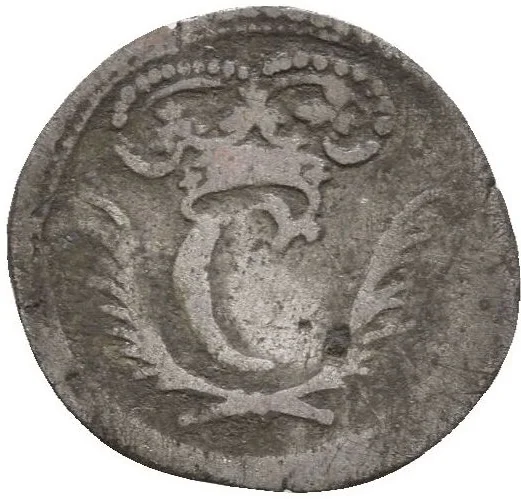
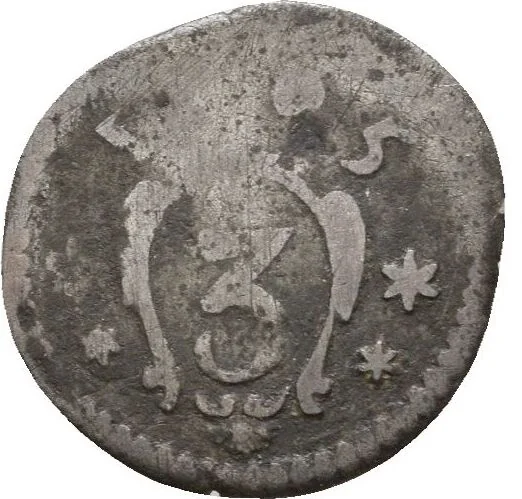
3 Hellers – Landgraviate of Hesse-Cassel
Obverse
Reverse
Edge
Mints
| Name | Mark |
|---|---|
| Kassel | — |
Mintings
| Year | Mint Mark | Mintage | Quality | Collection |
|---|---|---|---|---|
| 1702 | — | — | ||
| 1704 | — | — | ||
| 1705 | — | — |
Historical background
In 1702, the currency situation in the Landgraviate of Hesse-Cassel was complex and strained, a legacy of its strategic role in European conflicts. The state had become a major supplier of mercenary troops, most notably during the recent War of the Spanish Succession (1701-1714). This "Soldatenhandel" (soldier trade) generated substantial foreign revenue, primarily in stable silver coins like Reichsthalers. However, this influx existed alongside a chronically debased domestic coinage. The landgraviate, like many German states, faced persistent shortages of small change, leading to the issuance of inferior Kippermünzen (small, low-value coins) for local transactions, which eroded public trust.
Economically, the system was a bimetallic one, based on the Reichsthaler (a large silver coin) and the Gulden (florin), but with no unified imperial currency, each territory minted its own. Hesse-Cassel's coins often competed with those from neighboring states and a flood of foreign currency circulating within its borders. The landgrave, Charles I, who succeeded in 1670, had continued the practice of currency debasement to generate short-term seigniorage profit, further complicating the monetary landscape. This created a two-tier system: stable "good money" (often foreign or high-value silver) used for state finance and trade, and "bad money" (debased local coin) used in everyday life, which constantly fluctuated in value.
The year 1702 fell within the early and financially pressing years of the War of the Spanish Succession, where Landgrave Charles I was a committed ally to the anti-French coalition. While the mercenary contracts promised future income, the immediate costs of mobilization and warfare placed heavy demands on the treasury. This pressure likely exacerbated existing inflationary tendencies from the debased coinage and hindered any potential monetary reform. Thus, the currency situation was marked by instability, a duality between foreign silver and domestic petty coinage, and was fundamentally shaped by the fiscal-military demands of war.
Economically, the system was a bimetallic one, based on the Reichsthaler (a large silver coin) and the Gulden (florin), but with no unified imperial currency, each territory minted its own. Hesse-Cassel's coins often competed with those from neighboring states and a flood of foreign currency circulating within its borders. The landgrave, Charles I, who succeeded in 1670, had continued the practice of currency debasement to generate short-term seigniorage profit, further complicating the monetary landscape. This created a two-tier system: stable "good money" (often foreign or high-value silver) used for state finance and trade, and "bad money" (debased local coin) used in everyday life, which constantly fluctuated in value.
The year 1702 fell within the early and financially pressing years of the War of the Spanish Succession, where Landgrave Charles I was a committed ally to the anti-French coalition. While the mercenary contracts promised future income, the immediate costs of mobilization and warfare placed heavy demands on the treasury. This pressure likely exacerbated existing inflationary tendencies from the debased coinage and hindered any potential monetary reform. Thus, the currency situation was marked by instability, a duality between foreign silver and domestic petty coinage, and was fundamentally shaped by the fiscal-military demands of war.

✨ Legendary