Logo Title
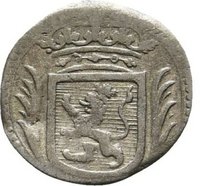
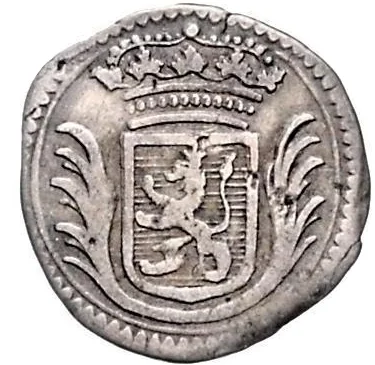
obverse
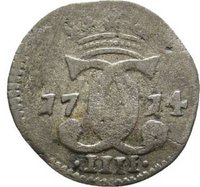
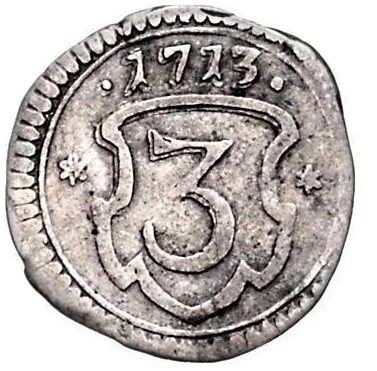
reverse
WAG Online Auktions

3 Hellers – Landgraviate of Hesse-Cassel

Context
Year: 1713
Ruler: Charles I
Currency:
Demonetized: Yes
Material
Shape: Round
Composition: Billon
References
KM: #Click to copy to clipboard363
Numista: #262621

Obverse

Description:
Palm branches flanking a crowned coat of arms.

Reverse

Description:
Date top, denomination centered in border.
Inscription:
1713

* 3 *

Edge

Mints

NameMark
Kassel

Mintings

YearMint MarkMintageQualityCollection
1713

Historical background

In 1713, the currency situation in the Landgraviate of Hesse-Cassel was one of profound instability and complexity, a legacy of the financial strains of the War of the Spanish Succession (1701-1714). Landgrave Charles, who ruled until his death that March, had heavily debased the coinage to fund his substantial military contributions to the conflict. This practice flooded the economy with low-value coins, such as the Albusthaler and its subdivisions, which contained significantly less silver than their face value promised. The result was severe inflation, a loss of public confidence in the currency, and chaotic exchange rates that hampered both daily trade and the state's own finances.

The monetary landscape was a tangled web of various coins in circulation. Alongside the debased local currency, older, full-value Reichsthalers and foreign coins, particularly from neighboring German states, also circulated. This created a two-tier system where "good" money (full-weight coin) was hoarded or used for large transactions and foreign trade, while "bad" money (debased coin) was forced onto the local populace for everyday use. The discrepancy between the nominal and intrinsic value of coins led to widespread economic distortion, punishing savers and creditors and creating a significant barrier to economic recovery in the postwar period.

This crisis presented an immediate and severe challenge to the new Landgrave, Frederick I, who ascended the throne in March 1713. He inherited a treasury drained by war and a monetary system in disarray, which threatened both the principality's internal stability and its ability to engage in commerce. Frederick's urgent task was to restore monetary order, a process that would eventually lead to attempted reforms, including recalling and re-minting debased coinage. However, in 1713, the situation remained unresolved, characterized by confusion, devaluation, and the pressing need for a comprehensive stabilization of Hesse-Cassel's currency.
Legendary