

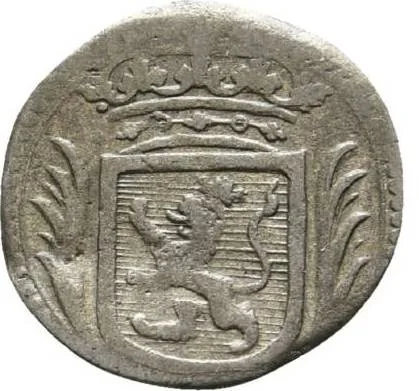
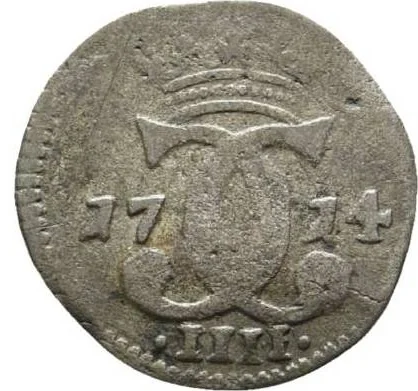
4 Hellers – Landgraviate of Hesse-Cassel
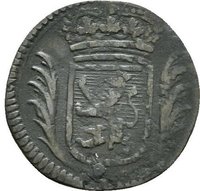
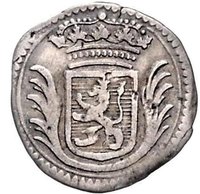
Obverse
Description:
Palm branches flanking a crowned coat of arms.
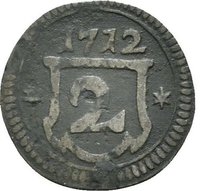
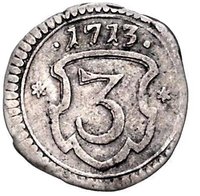
Reverse
Description:
Split date flanking a mirrored monogram, denomination below.
Inscription:
17 14
CC
· IIII ·
CC
· IIII ·
Edge
Mints
| Name | Mark |
|---|---|
| Kassel | — |
Mintings
| Year | Mint Mark | Mintage | Quality | Collection |
|---|---|---|---|---|
| 1712 | — | — | ||
| 1713 | — | — | ||
| 1714 | — | — | ||
| 1716 | — | — | ||
| 1717 | — | — |
Historical background
In 1712, the currency situation in the Landgraviate of Hesse-Cassel was complex and strained, a legacy of its significant financial and military engagements. The state was a major European mercenary power, and Landgrave Karl (ruled 1670-1730) had profited greatly by renting Hessian troops to foreign powers, most notably during the War of the Spanish Succession. While this generated substantial revenue, it also created a volatile economy flooded with foreign specie, particularly Dutch thalers and French coins, alongside a multitude of domestic and regional issues. This proliferation of coins of varying intrinsic value and weight standards made trade cumbersome and fostered widespread confusion and opportunity for debasement.
The primary unit of account was the Reichsthaler, but the actual circulating medium was a chaotic mix of physical coins, including Taler, Gulden, Kreuzer, and Pfennige. A key problem was the persistent gap between the "bank money" used for official accounting, which was stable, and the "current money" used in everyday transactions, which was subject to depreciation and fluctuating agios (exchange premiums). The landgrave's government attempted to control this through repeated minting ordinances (Münzordnungen) that set official exchange rates, but these were often undermined by market forces and the sheer volume of foreign coin.
Consequently, the year 1712 fell within a period of ongoing monetary instability and reform efforts. Karl’s administration was actively working to consolidate the state's finances and assert greater control over the currency, aiming to reduce fragmentation and secure the wealth derived from its military enterprises. However, full stabilization remained elusive, as the economy was still grappling with the inflationary pressures and monetary hangover from the long and costly war that had just concluded with the Treaty of Utrecht in 1713. The situation demanded a strong, centralized fiscal policy to translate wartime profits into long-term economic stability.
The primary unit of account was the Reichsthaler, but the actual circulating medium was a chaotic mix of physical coins, including Taler, Gulden, Kreuzer, and Pfennige. A key problem was the persistent gap between the "bank money" used for official accounting, which was stable, and the "current money" used in everyday transactions, which was subject to depreciation and fluctuating agios (exchange premiums). The landgrave's government attempted to control this through repeated minting ordinances (Münzordnungen) that set official exchange rates, but these were often undermined by market forces and the sheer volume of foreign coin.
Consequently, the year 1712 fell within a period of ongoing monetary instability and reform efforts. Karl’s administration was actively working to consolidate the state's finances and assert greater control over the currency, aiming to reduce fragmentation and secure the wealth derived from its military enterprises. However, full stabilization remained elusive, as the economy was still grappling with the inflationary pressures and monetary hangover from the long and costly war that had just concluded with the Treaty of Utrecht in 1713. The situation demanded a strong, centralized fiscal policy to translate wartime profits into long-term economic stability.
✨ Legendary