

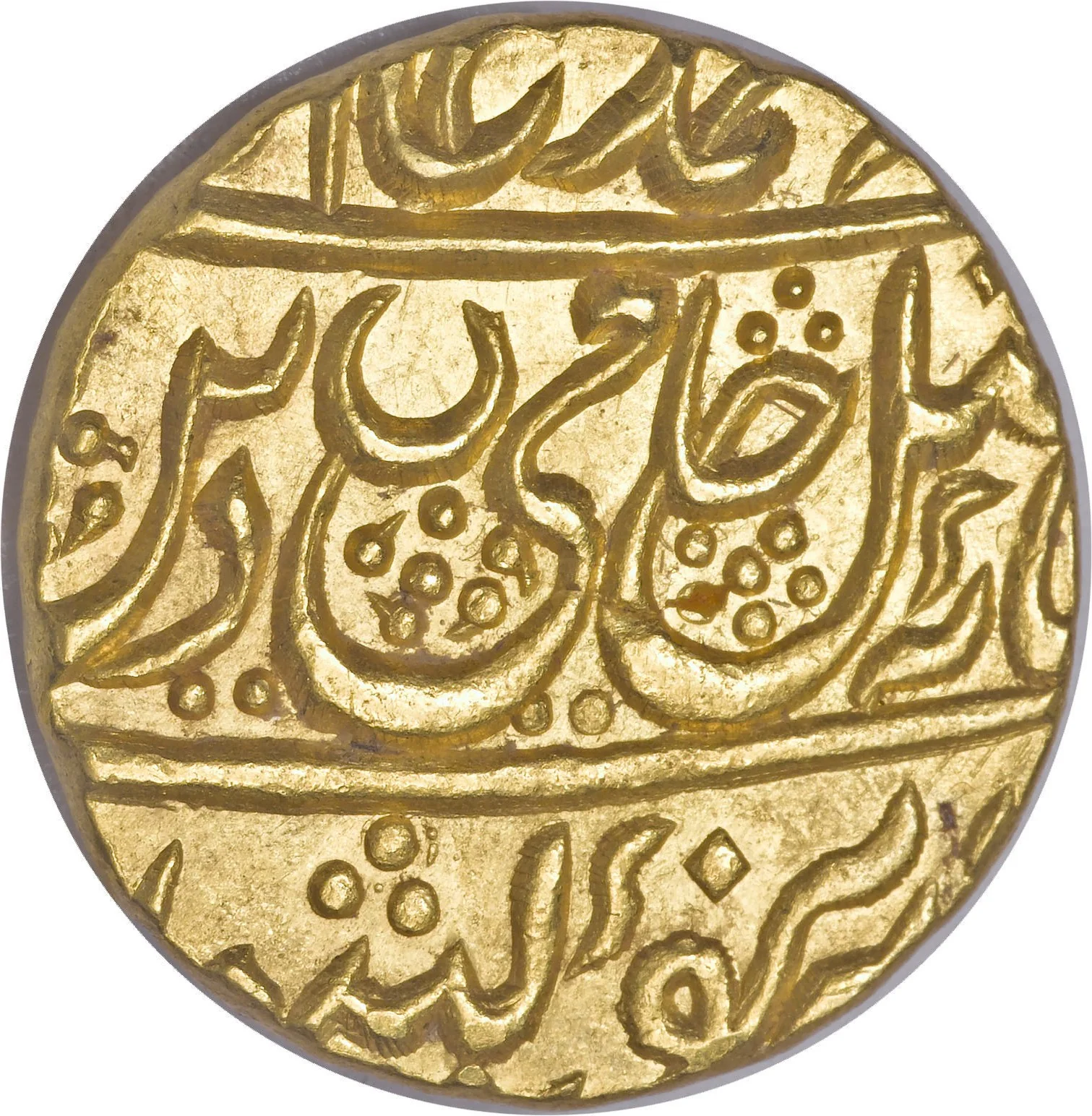
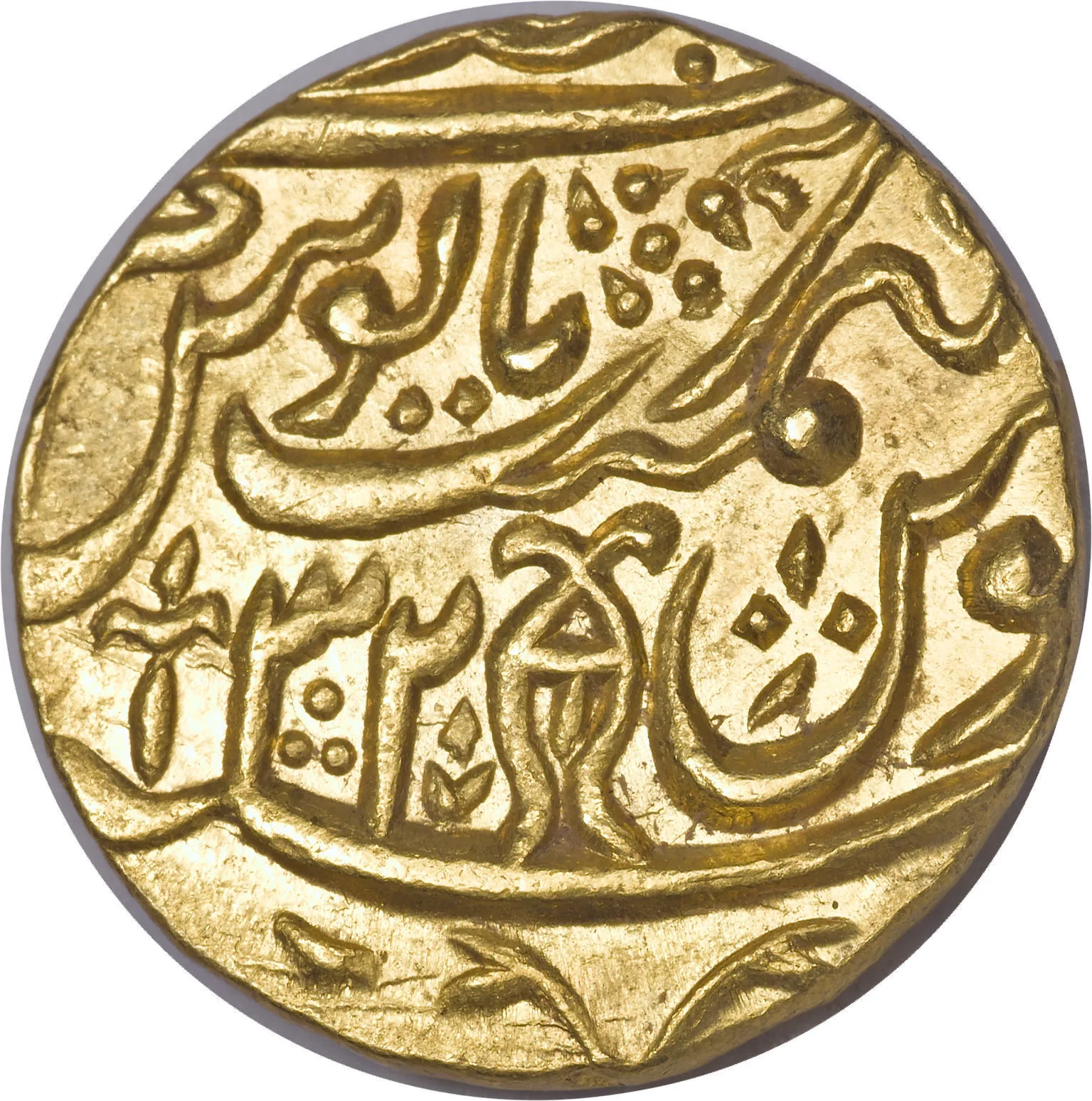
1 Mohur – Awadh
India
Context
Years: 1766–1790
Country: India 
Issuer: Awadh
Ruler: Shah Alam II
Currency:
(1605—1857)
Demonetized: Yes
References
KM: #Click to copy to clipboard120
Numista: #25938
Value
Bullion value: $1894.55
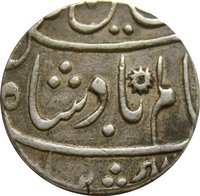
Obverse
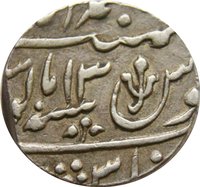
Reverse
Edge
Mints
| Name | Mark |
|---|---|
| Najibabad | — |
Mintings
| Year | Mint Mark | Mintage | Quality | Collection |
|---|---|---|---|---|
| 1766 | — | — | ||
| 1782 | — | — | ||
| 1783 | — | — | ||
| 1784 | — | — | ||
| 1790 | — | — |
Historical background
In 1766, the currency situation in Awadh was complex and transitional, reflecting its political subordination to the Mughal Empire in Delhi and the growing influence of the British East India Company. The primary circulating medium was the Mughal silver rupee, particularly the "Sicca" rupee freshly minted at the imperial mints, alongside older, worn rupees that circulated at a discount. However, the authority to mint coins was a contested symbol of sovereignty. While the Nawab of Awadh, Shuja-ud-Daula, nominally issued coins in the name of the Mughal Emperor Shah Alam II, his defeat at the Battle of Buxar (1764) had severely weakened his autonomy. The subsequent Treaty of Allahabad (1765) made him a tributary to the Company, which now controlled the rich revenues of Bengal, including its mints.
This political shift directly impacted Awadh's monetary system. A critical problem was the debasement and variety of coins in circulation. Apart from imperial rupees, numerous older regional issues and foreign coins (like the Persian lari) were used in trade, leading to confusion and frequent disputes over exchange rates and intrinsic value. The Company, seeking financial stability for its own trade and the subsidy it exacted from Awadh, began to pressure for a standardized currency. This set the stage for the later Company-driven reforms, but in 1766 the system remained a fragmented patchwork, causing significant inconvenience for revenue collection and commerce.
Furthermore, Awadh faced a drain of silver, a problem exacerbated by its political and military payments. The large war indemnity and annual tribute owed to the British East India Company were paid in silver rupees, steadily depleting the region's bullion reserves. This outward flow of specie, combined with the lack of local silver mines, threatened to weaken Awadh's economy and the Nawab's ability to finance his administration and army. Thus, in 1766, the currency situation was not merely a numismatic issue but a clear indicator of Awadh’s fading sovereignty and its increasing integration into a colonial economic order controlled from Calcutta.
This political shift directly impacted Awadh's monetary system. A critical problem was the debasement and variety of coins in circulation. Apart from imperial rupees, numerous older regional issues and foreign coins (like the Persian lari) were used in trade, leading to confusion and frequent disputes over exchange rates and intrinsic value. The Company, seeking financial stability for its own trade and the subsidy it exacted from Awadh, began to pressure for a standardized currency. This set the stage for the later Company-driven reforms, but in 1766 the system remained a fragmented patchwork, causing significant inconvenience for revenue collection and commerce.
Furthermore, Awadh faced a drain of silver, a problem exacerbated by its political and military payments. The large war indemnity and annual tribute owed to the British East India Company were paid in silver rupees, steadily depleting the region's bullion reserves. This outward flow of specie, combined with the lack of local silver mines, threatened to weaken Awadh's economy and the Nawab's ability to finance his administration and army. Thus, in 1766, the currency situation was not merely a numismatic issue but a clear indicator of Awadh’s fading sovereignty and its increasing integration into a colonial economic order controlled from Calcutta.
✨ Legendary