

1 Escalin – Austrian Netherlands
Belgium
Context
Years: 1751–1768
Country: Belgium 
Issuer: Austrian Netherlands
Ruler: Maria Theresa
Currency:
(1744—1798)
Demonetized: Yes
Total mintage: 3,437,919
Material
References
KM: #Click to copy to clipboard15
Numista: #24892
Value
Bullion value: $14.31
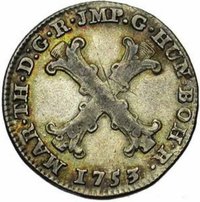
Obverse
Description:
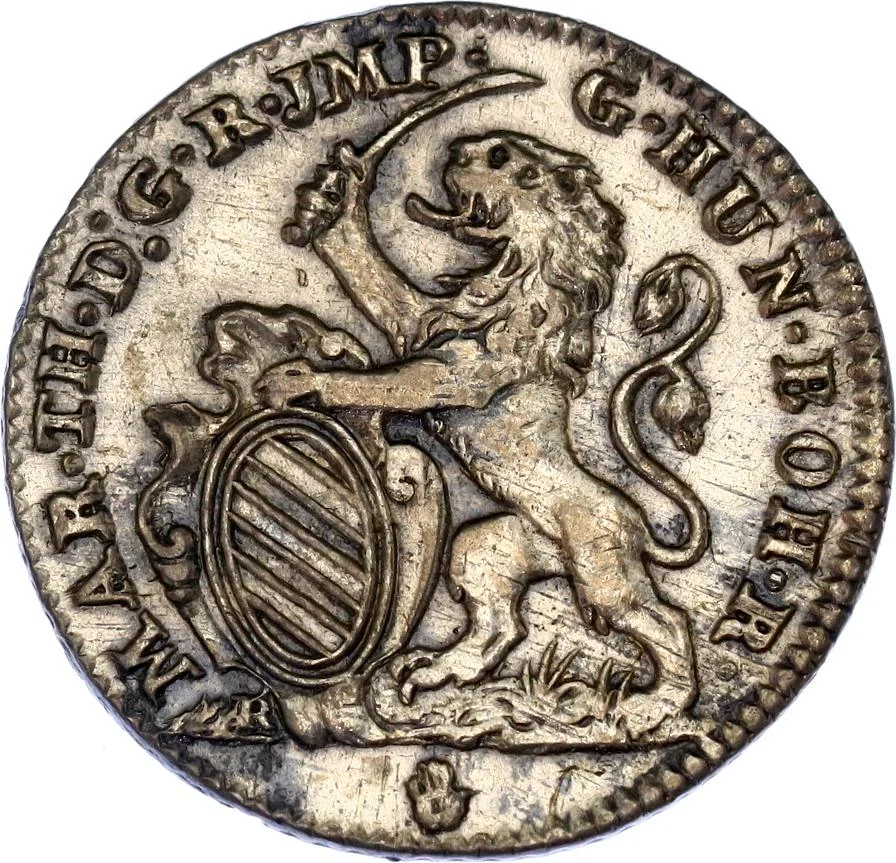
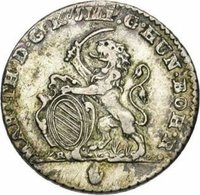
Lion of Brabant left, holding sword and ancient Burgundy shield. Mint mark below.
Inscription:
MAR · TH · D : G · R ·JMP · G· HUN · BOH · R ·
Script: Latin
Engraver: Jacques Roëttiers
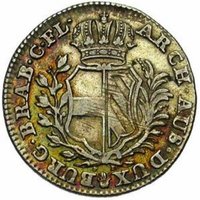
Reverse
Description:
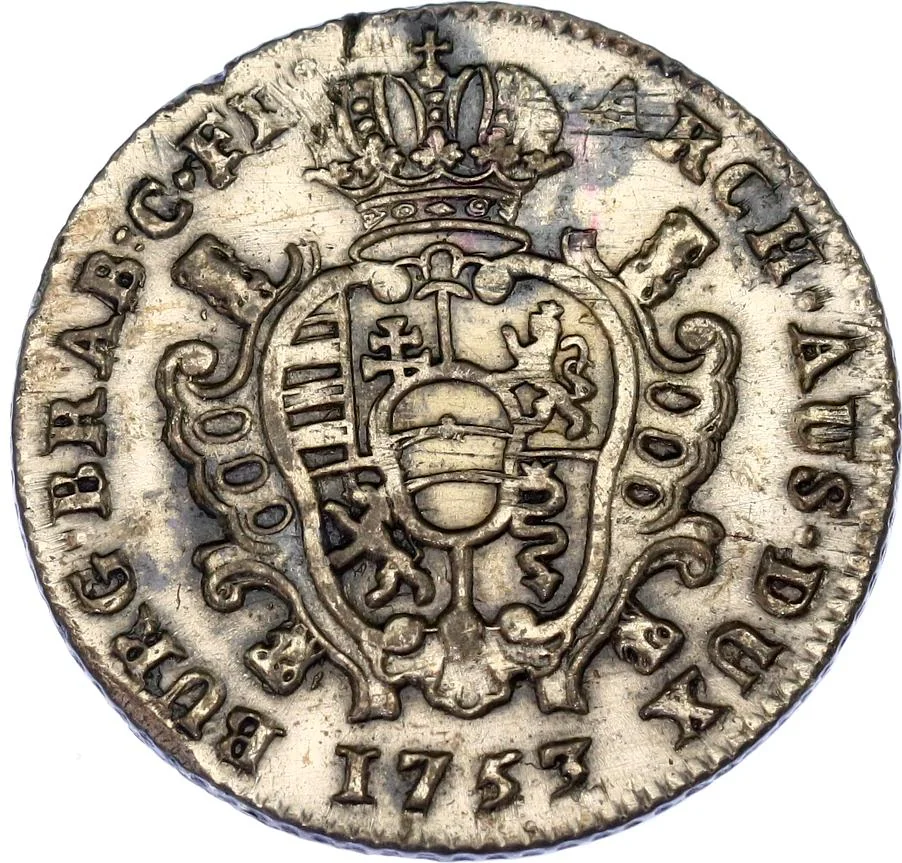
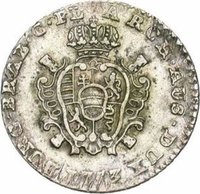
Crowned shield combining the arms of Hungary, Bohemia, Brabant, and Milan, with a central Austrian escutcheon, baroque ornamentation, and a Burgundian cross.
Inscription:
ARCH · AUS · DUX BURG · BRAB · C · FL ·
1752
1752
Script: Latin
Engraver: Jacques Roëttiers
Edge
Reeded
Mints
| Name | Mark |
|---|---|
| Antwerp | — |
| Bruges | — |
| Royal Mint of Belgium | — |
Mintings
| Year | Mint Mark | Mintage | Quality | Collection |
|---|---|---|---|---|
| 1751 | — | — | ||
| 1752 | — | — | ||
| 1753 | — | 426,163 | ||
| 1754 | — | 222,668 | ||
| 1763 | — | 781,241 | ||
| 1764 | — | 581,626 | ||
| 1765 | — | 320,487 | ||
| 1766 | — | 157,092 | ||
| 1767 | — | 933,123 | ||
| 1768 | — | 15,519 |
Historical background
In 1751, the currency situation in the Austrian Netherlands (approximately modern-day Belgium and Luxembourg) was characterized by significant complexity and instability, a legacy of the region's position as a commercial crossroads and its history under successive rulers. The monetary system was not unified, operating on a bimetallic standard of both gold and silver coins. A plethora of different coins circulated simultaneously, including domestic issues from the provincial mints (like those of Brabant and Flanders), older Spanish coins from the previous Habsburg era, and a substantial influx of foreign currency from trade with the Dutch Republic, France, and the German states. This created a chaotic marketplace where exchange rates fluctuated constantly, causing confusion for merchants and hindering economic transactions.
The root of the problem lay in the discrepancy between the official face value of coins set by the authorities and their intrinsic metal value. Widely traded foreign coins, particularly the popular Dutch rijksdaalder, often had a higher silver content than their officially decreed local equivalents. This led to Gresham's Law in practice, where "bad money drives out good": people hoarded or exported the full-weight coins for their bullion value, while the debased or lighter coins remained in daily circulation, eroding public trust. The Habsburg monetary authorities in Vienna and the local estates struggled to enforce effective ordinances against this drain of specie, as strict controls were nearly impossible in such a vibrant and open economy.
Consequently, the year 1751 fell within a period of ongoing but largely ineffective attempts at monetary reform. Authorities periodically issued proclamations to re-tariff the values of specific coins in an effort to align them with market realities, but these were often reactive and temporary fixes. The fundamental instability discouraged investment and complicated government finance, as tax revenues collected in a motley assortment of coins had to be constantly reassessed. This chaotic currency environment would persist until more sweeping reforms were undertaken under Duke Charles of Lorraine in the following decades, aiming to standardize and stabilize the monetary system.
The root of the problem lay in the discrepancy between the official face value of coins set by the authorities and their intrinsic metal value. Widely traded foreign coins, particularly the popular Dutch rijksdaalder, often had a higher silver content than their officially decreed local equivalents. This led to Gresham's Law in practice, where "bad money drives out good": people hoarded or exported the full-weight coins for their bullion value, while the debased or lighter coins remained in daily circulation, eroding public trust. The Habsburg monetary authorities in Vienna and the local estates struggled to enforce effective ordinances against this drain of specie, as strict controls were nearly impossible in such a vibrant and open economy.
Consequently, the year 1751 fell within a period of ongoing but largely ineffective attempts at monetary reform. Authorities periodically issued proclamations to re-tariff the values of specific coins in an effort to align them with market realities, but these were often reactive and temporary fixes. The fundamental instability discouraged investment and complicated government finance, as tax revenues collected in a motley assortment of coins had to be constantly reassessed. This chaotic currency environment would persist until more sweeping reforms were undertaken under Duke Charles of Lorraine in the following decades, aiming to standardize and stabilize the monetary system.
🌟 Limited