

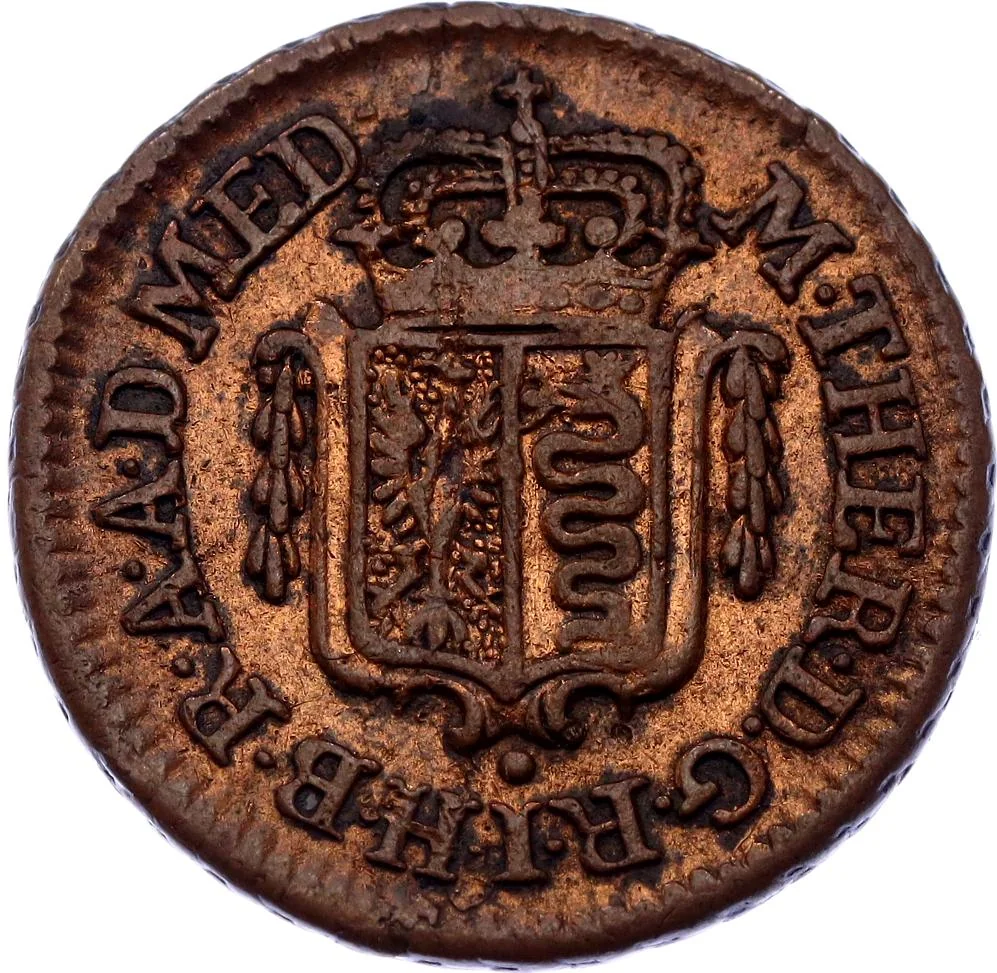
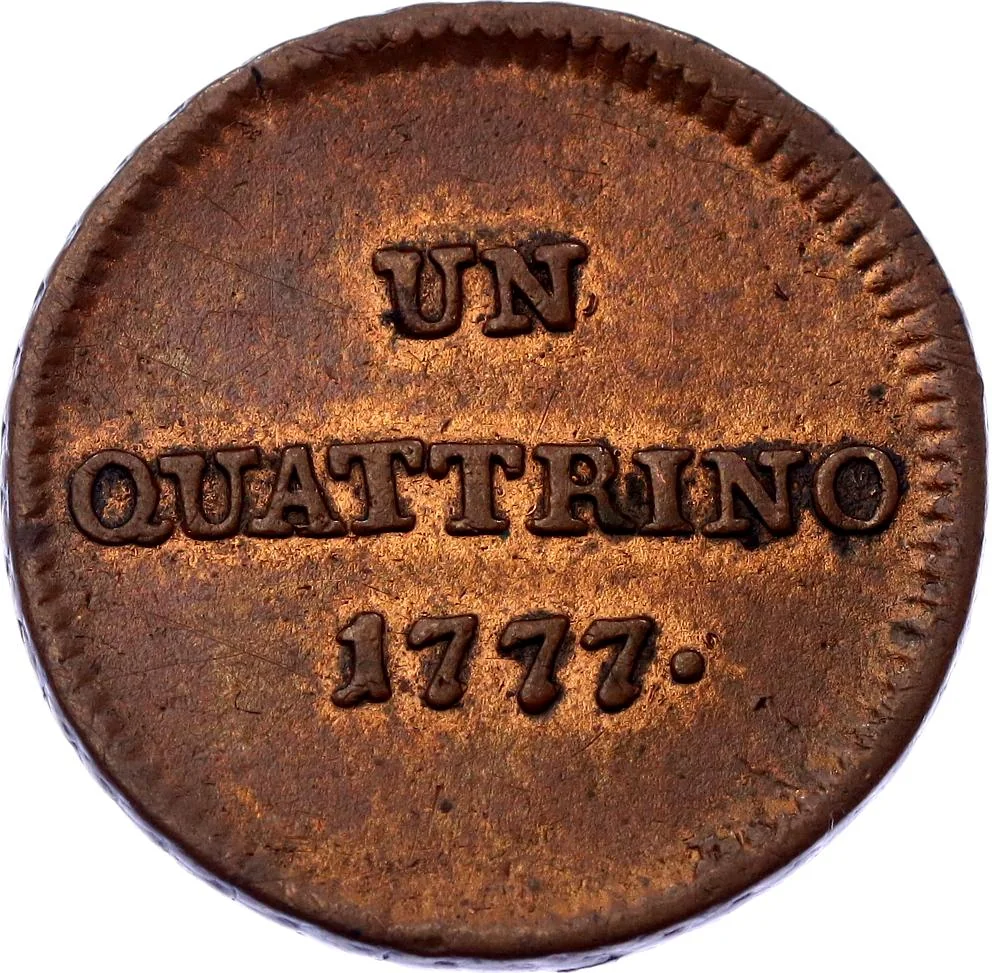
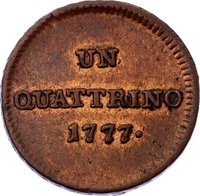
1 Quattrino – Milan
Italy
Material
References
KM: #Click to copy to clipboard182
Numista: #24738
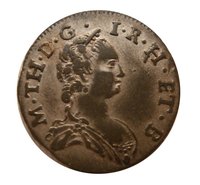
Obverse
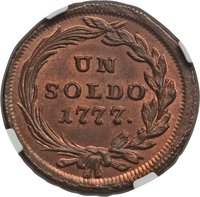
Reverse
Edge
Leaves
Mints
| Name | Mark |
|---|---|
| Milan | — |
Mintings
| Year | Mint Mark | Mintage | Quality | Collection |
|---|---|---|---|---|
| 1776 | — | — | ||
| 1777 | — | — | ||
| 1779 | — | — |
Historical background
In 1776, Milan was part of the Duchy of Milan, a territory under the Habsburg monarchy of Empress Maria Theresa. The currency system was a complex and often cumbersome reflection of the region's history and its position within the Austrian Empire. The official currency was the Milanese lira (divided into 20 soldi, each of 12 denari), but this existed alongside a multitude of older, foreign, and specialist coins. Crucially, the lira was not a physical coin but a unit of account, used for bookkeeping and setting prices, while actual transactions involved a jumble of physical specie.
The physical circulation was dominated by silver coins, most importantly the Austrian Milanese scudo, which was tariffed at a fixed value of 6 lire. However, the money in people's pockets also included older Spanish and Savoyard coins, gold zecchini from Venice, and large silver thalers from the German states. This proliferation created constant challenges. The value of these coins fluctuated based on their metal content and wear, requiring money-changers (banchieri) at every market to assess and exchange them, a process ripe for confusion and petty fraud.
Empress Maria Theresa's government was actively working to modernize and standardize this system. The state mint in Milan struck new, high-quality silver denari, soldi, and sesini to facilitate small change, as well as the definitive scudo d'argento. The goal was to assert state control over the monetary supply, reduce reliance on foreign coin, and stabilize trade. Despite these efforts, in 1776 the reality for most Milanese merchants and citizens remained one of navigating a fragmented system where the abstract lira of account and the heterogeneous mix of physical coins in circulation required careful and often frustrating daily calculation.
The physical circulation was dominated by silver coins, most importantly the Austrian Milanese scudo, which was tariffed at a fixed value of 6 lire. However, the money in people's pockets also included older Spanish and Savoyard coins, gold zecchini from Venice, and large silver thalers from the German states. This proliferation created constant challenges. The value of these coins fluctuated based on their metal content and wear, requiring money-changers (banchieri) at every market to assess and exchange them, a process ripe for confusion and petty fraud.
Empress Maria Theresa's government was actively working to modernize and standardize this system. The state mint in Milan struck new, high-quality silver denari, soldi, and sesini to facilitate small change, as well as the definitive scudo d'argento. The goal was to assert state control over the monetary supply, reduce reliance on foreign coin, and stabilize trade. Despite these efforts, in 1776 the reality for most Milanese merchants and citizens remained one of navigating a fragmented system where the abstract lira of account and the heterogeneous mix of physical coins in circulation required careful and often frustrating daily calculation.
🌟 Limited