

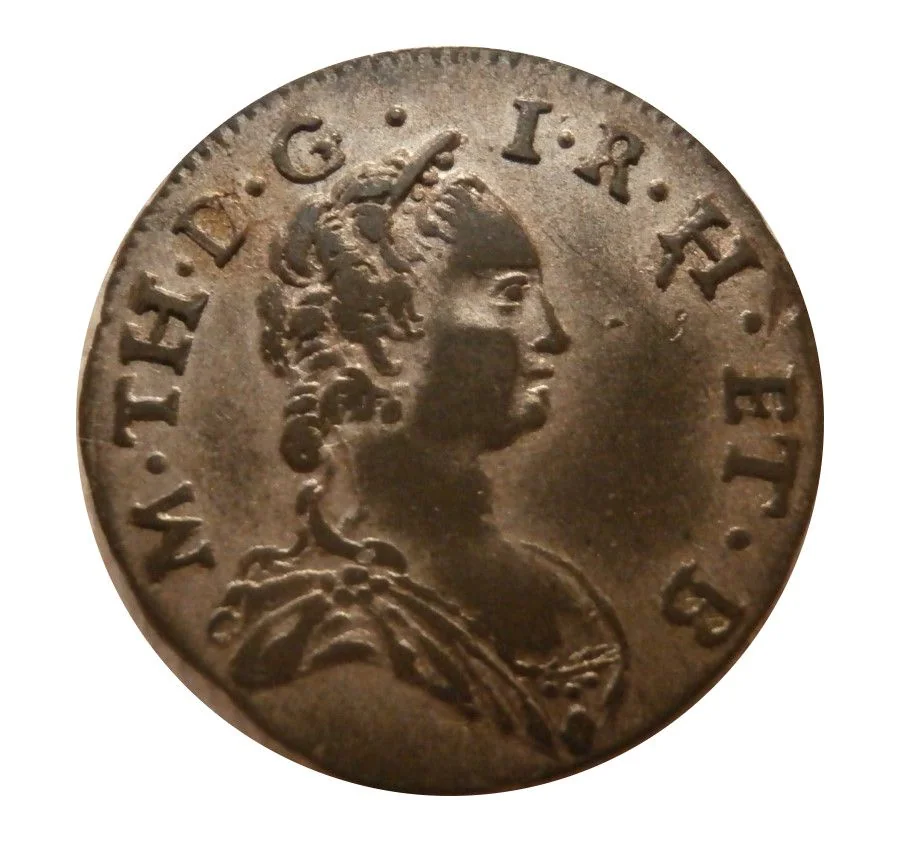
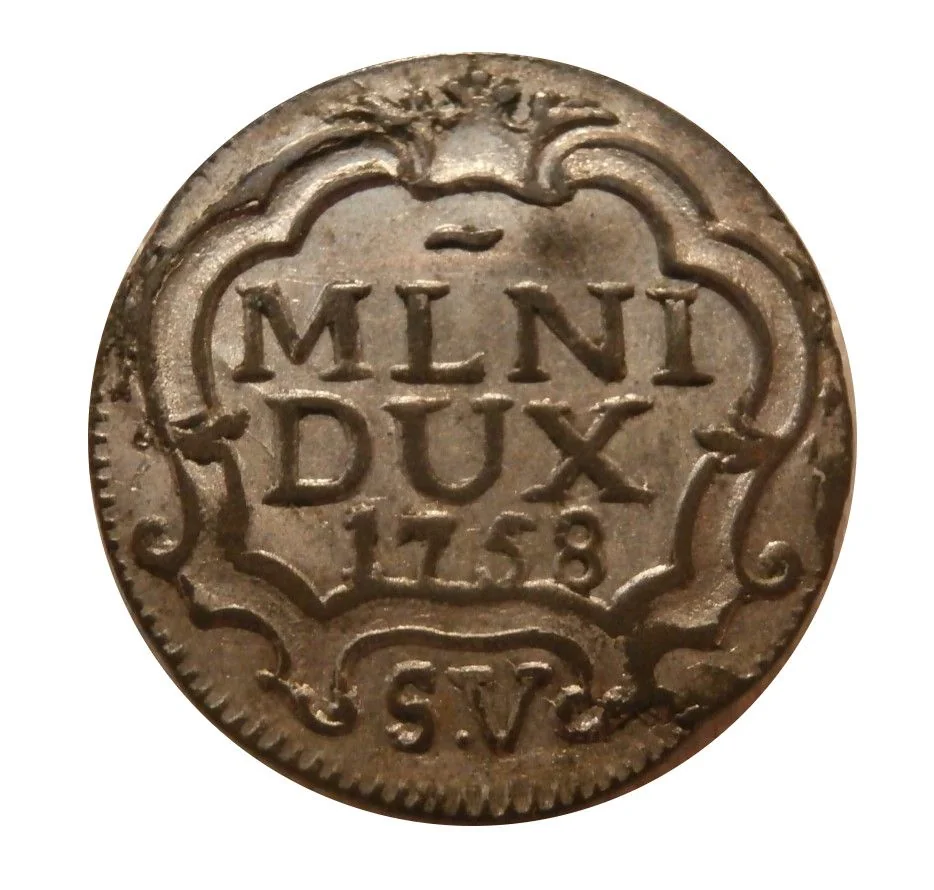
5 Soldi – Milan
Italy
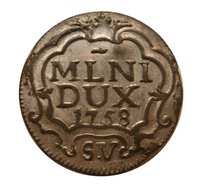
Obverse
Reverse
Description:
3-line inscription, dated cartouche, "S.V." below.
Inscription:
MLNI
DUX
1758
S.V
DUX
1758
S.V
Script: Latin
Edge
Mints
| Name | Mark |
|---|---|
| Milan | — |
Mintings
| Year | Mint Mark | Mintage | Quality | Collection |
|---|---|---|---|---|
| 1749 | — | — | ||
| 1750 | — | — | ||
| 1758 | — | — | ||
| 1758 | — | — | BU | |
| 1763 | — | — |
Historical background
In 1749, Milan found itself in a complex monetary situation, caught between its historical legacy and the demands of its Habsburg rulers. The Duchy of Milan was now part of the Austrian Habsburg Monarchy, having passed from Spanish control after the War of the Spanish Succession. The monetary system was a tangled patchwork of old and new: Spanish doubloons and scudi, local Milanese lire, soldi, and denari, and various imperial thalers all circulated simultaneously. This multiplicity of coins, each with fluctuating intrinsic and exchange values, created chronic confusion for merchants and daily transactions, hampering commerce and state revenue collection.
The core of the problem was severe debasement and a lack of uniform, trusted specie. Decades of war had led previous Spanish and now Austrian authorities to repeatedly lower the silver content in the Milanese lira to fund military expenditures. This resulted in a dual system where "old" coins of higher silver content were hoarded or exported, while "new," debased coins flooded the market, causing inflation and a loss of public confidence. Furthermore, the Habsburg state struggled to control the influx of foreign and counterfeit coins from neighboring Italian states, which further destabilized the local economy.
Recognizing the economic drag this system caused, the Habsburg administration under Empress Maria Theresa was actively working toward reform. The year 1749 was part of a transitional period leading to a major monetary reorganization. Just a few years later, in 1755, Vienna would impose a standardized Conventionsthaler system across its territories, aiming to replace Milan's chaotic mosaic with a stable, unified currency tied to a fixed silver standard. Thus, the situation in 1749 was one of lingering disorder, but with the gears of imperial centralization and economic modernization beginning to turn.
The core of the problem was severe debasement and a lack of uniform, trusted specie. Decades of war had led previous Spanish and now Austrian authorities to repeatedly lower the silver content in the Milanese lira to fund military expenditures. This resulted in a dual system where "old" coins of higher silver content were hoarded or exported, while "new," debased coins flooded the market, causing inflation and a loss of public confidence. Furthermore, the Habsburg state struggled to control the influx of foreign and counterfeit coins from neighboring Italian states, which further destabilized the local economy.
Recognizing the economic drag this system caused, the Habsburg administration under Empress Maria Theresa was actively working toward reform. The year 1749 was part of a transitional period leading to a major monetary reorganization. Just a few years later, in 1755, Vienna would impose a standardized Conventionsthaler system across its territories, aiming to replace Milan's chaotic mosaic with a stable, unified currency tied to a fixed silver standard. Thus, the situation in 1749 was one of lingering disorder, but with the gears of imperial centralization and economic modernization beginning to turn.
💎 Very Rare