

½ Duit – Netherlands East Indies
Indonesia
Context
Years: 1752–1790
Country: Indonesia 
Issuer: Netherlands East Indies
Period:
(1602—1800)
Currency:
(1726—1854)
Demonetized: Yes
Material
References
KM: #Click to copy to clipboard112
Numista: #24735
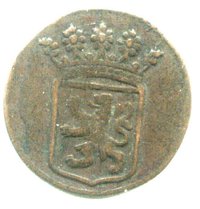
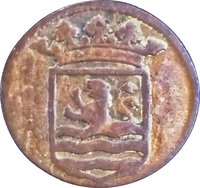
Obverse
Description:
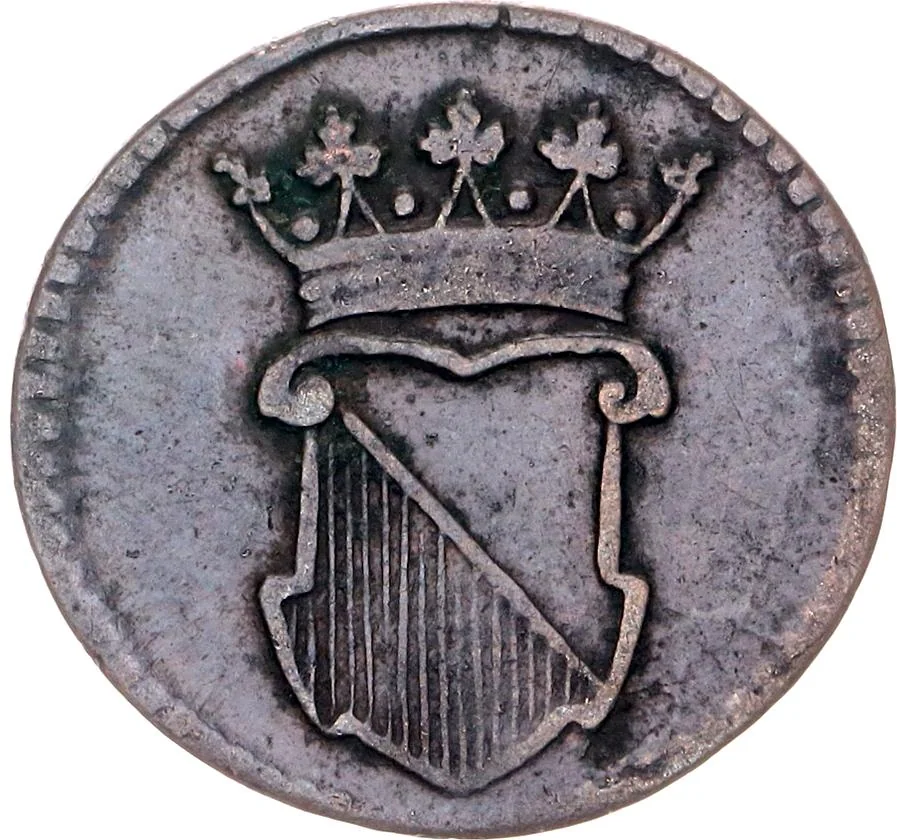
Utrecht arms with flat-topped crown.
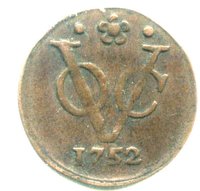
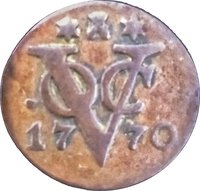
Reverse
Description:
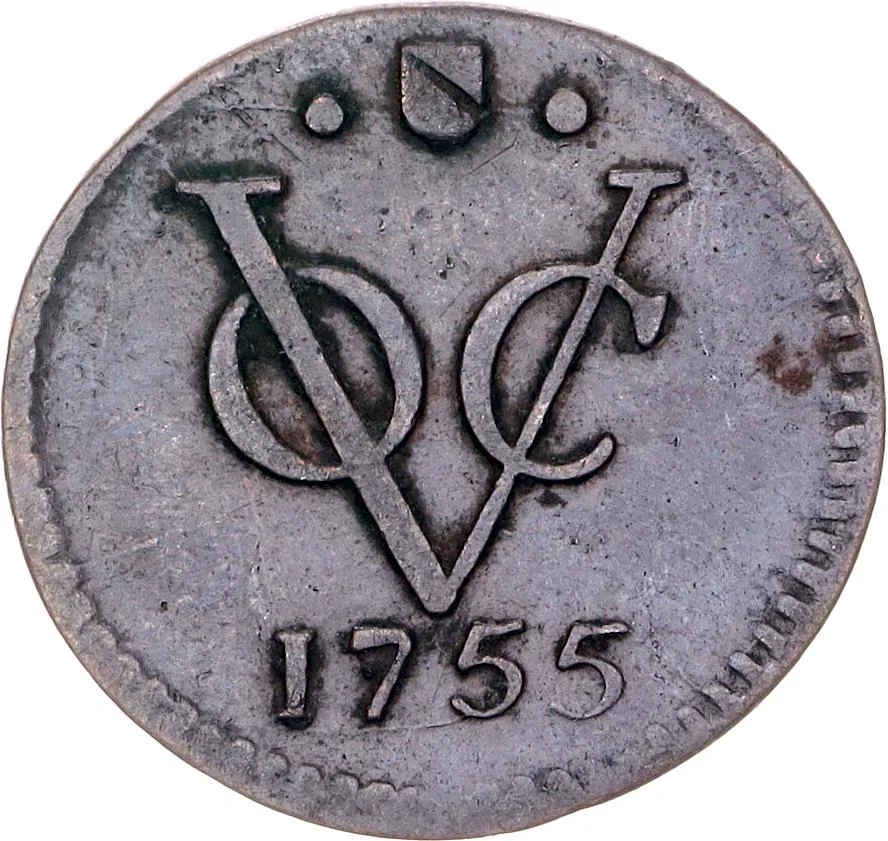
VOC monogram centered, privy mark (small shield) above between dots, date below.
Inscription:
VOC
1755
1755
Script: Latin
Edge
Plain
Mints
| Name | Mark |
|---|---|
| Royal Dutch Mint | — |
Mintings
| Year | Mint Mark | Mintage | Quality | Collection |
|---|---|---|---|---|
| 1752 | — | — | ||
| 1753 | — | — | ||
| 1754 | — | — | ||
| 1755 | — | — | ||
| 1756 | — | — | ||
| 1757 | — | — | ||
| 1758 | — | — | ||
| 1769 | — | — | ||
| 1770 | — | — | ||
| 1790 | * | — |
Historical background
In 1752, the currency situation in the Netherlands East Indies (NEI) was fundamentally shaped by the monopolistic practices of the Dutch East India Company (VOC). The official medium of exchange was the Company's own silver rijksdaalder and its fractional coins, but these were chronically scarce in the archipelago. This scarcity was a deliberate VOC policy to maintain control and prevent local economies from operating independently of Company trade. Consequently, the system was not a unified currency zone but a complex and often chaotic mosaic of different monies.
The most pervasive and practical currency in daily use was not official coin but the duit, a small copper coin minted specifically for the Asian trade. Vast quantities of these coins circulated, but they were heavily supplemented by a bewildering array of foreign silver coins, primarily Spanish-American pieces of eight (reales) and Mexican dollars, which arrived through regional trade. Their value fluctuated constantly based on weight and silver purity, requiring meticulous assaying. Furthermore, in many inland areas of Java and the outer islands, traditional commodity monies like cowrie shells, rice, or locally minted tin pitjes remained essential for small-scale transactions, creating a dual monetary system.
This fragmented landscape led to significant inefficiency and exploitation. The VOC periodically issued valuation decrees (plakkaten) to fix exchange rates between these various coins, but these official rates often diverged from market reality, creating lucrative arbitrage opportunities for merchants and Company officials alike. Widespread clipping and counterfeiting of coins further eroded trust. Ultimately, the currency situation of 1752 reflected the VOC's primary goal: to extract wealth and control commerce, not to establish a stable financial system for the colony's inhabitants, resulting in a monetary environment that was both complex and economically oppressive.
The most pervasive and practical currency in daily use was not official coin but the duit, a small copper coin minted specifically for the Asian trade. Vast quantities of these coins circulated, but they were heavily supplemented by a bewildering array of foreign silver coins, primarily Spanish-American pieces of eight (reales) and Mexican dollars, which arrived through regional trade. Their value fluctuated constantly based on weight and silver purity, requiring meticulous assaying. Furthermore, in many inland areas of Java and the outer islands, traditional commodity monies like cowrie shells, rice, or locally minted tin pitjes remained essential for small-scale transactions, creating a dual monetary system.
This fragmented landscape led to significant inefficiency and exploitation. The VOC periodically issued valuation decrees (plakkaten) to fix exchange rates between these various coins, but these official rates often diverged from market reality, creating lucrative arbitrage opportunities for merchants and Company officials alike. Widespread clipping and counterfeiting of coins further eroded trust. Ultimately, the currency situation of 1752 reflected the VOC's primary goal: to extract wealth and control commerce, not to establish a stable financial system for the colony's inhabitants, resulting in a monetary environment that was both complex and economically oppressive.
🌟 Uncommon