

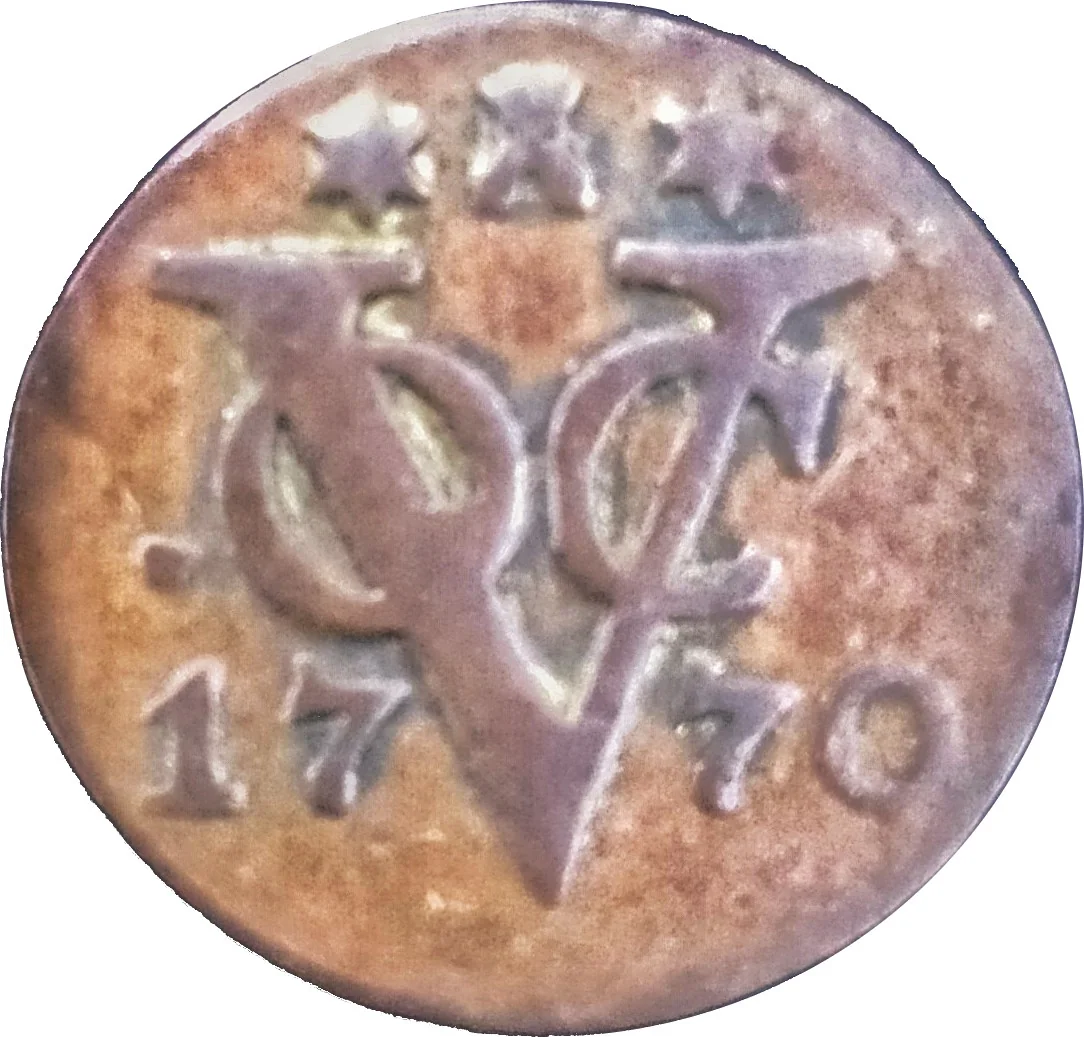
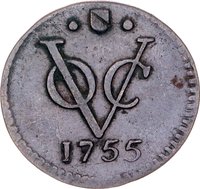
½ Duit – Netherlands East Indies
Indonesia
Context
Years: 1753–1789
Country: Indonesia 
Issuer: Netherlands East Indies
Period:
(1602—1800)
Currency:
(1726—1854)
Demonetized: Yes
Material
References
KM: #Click to copy to clipboard154
Numista: #227892
Obverse
Description:
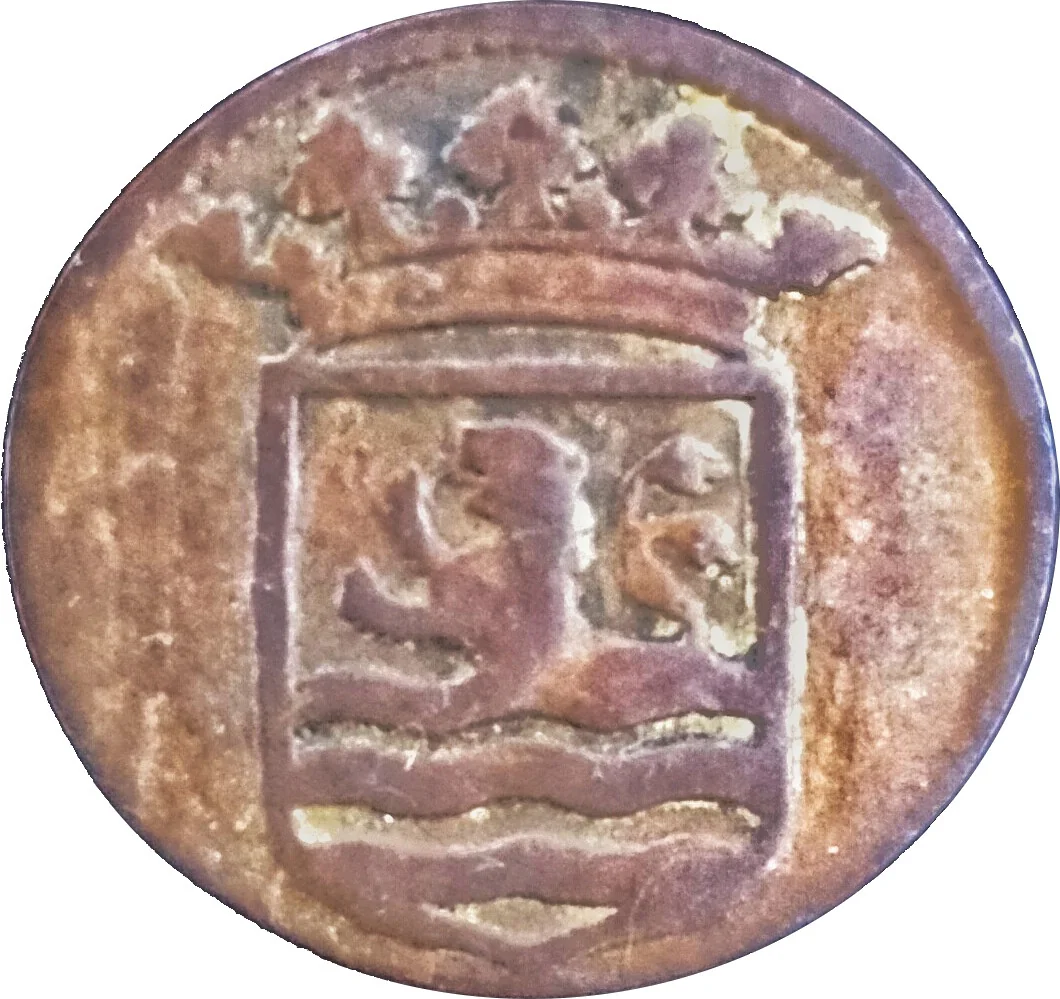
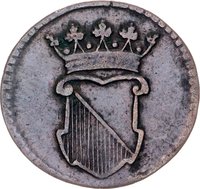
Zeeland's coat of arms
Reverse
Edge
Plain
Mintings
| Year | Mint Mark | Mintage | Quality | Collection |
|---|---|---|---|---|
| 1753 | — | — | ||
| 1770 | — | — | ||
| 1771 | — | — | ||
| 1772 | — | — | ||
| 1789 | — | — |
Historical background
In 1753, the currency situation in the Netherlands East Indies (NEI) was complex and fundamentally driven by the monopolistic aims of the Dutch East India Company (VOC). The primary objective was to ensure that all economic activity flowed through and profited the Company, which controlled the archipelago from its capital in Batavia (modern-day Jakarta). The official currency was the Netherlands Indies gulden, but its circulation was limited and it often served more as an accounting unit for the VOC's internal trade and tax collection than as a commonly used coin in daily transactions.
The reality in the markets was a chaotic multiplicity of currencies. A vast array of foreign coins circulated widely, including Spanish American silver pesos (pieces of eight), Japanese koban, and various Indian and Malay coins. This proliferation was a direct result of the VOC's own practices; while it demanded payment in silver, it often paid its own expenses and purchased local goods with these less stable foreign coins. Furthermore, the chronic shortage of official small change led to the widespread practice of cutting these large silver coins into smaller pieces, creating unofficial fractional currency that further complicated commerce.
This fragmented system created significant problems, including exchange rate confusion, rampant counterfeiting, and constant volatility. The VOC attempted to legislate control by periodically setting official valuation lists (agio lists) that dictated the worth of dozens of coin types, but these were often ignored in practice. Consequently, the monetary landscape of the NEI in 1753 was one of imposed order from the top struggling, and largely failing, to govern a vibrant and unruly pluralism of currencies at the grassroots level of the colonial economy.
The reality in the markets was a chaotic multiplicity of currencies. A vast array of foreign coins circulated widely, including Spanish American silver pesos (pieces of eight), Japanese koban, and various Indian and Malay coins. This proliferation was a direct result of the VOC's own practices; while it demanded payment in silver, it often paid its own expenses and purchased local goods with these less stable foreign coins. Furthermore, the chronic shortage of official small change led to the widespread practice of cutting these large silver coins into smaller pieces, creating unofficial fractional currency that further complicated commerce.
This fragmented system created significant problems, including exchange rate confusion, rampant counterfeiting, and constant volatility. The VOC attempted to legislate control by periodically setting official valuation lists (agio lists) that dictated the worth of dozens of coin types, but these were often ignored in practice. Consequently, the monetary landscape of the NEI in 1753 was one of imposed order from the top struggling, and largely failing, to govern a vibrant and unruly pluralism of currencies at the grassroots level of the colonial economy.
💎 Extremely Rare