

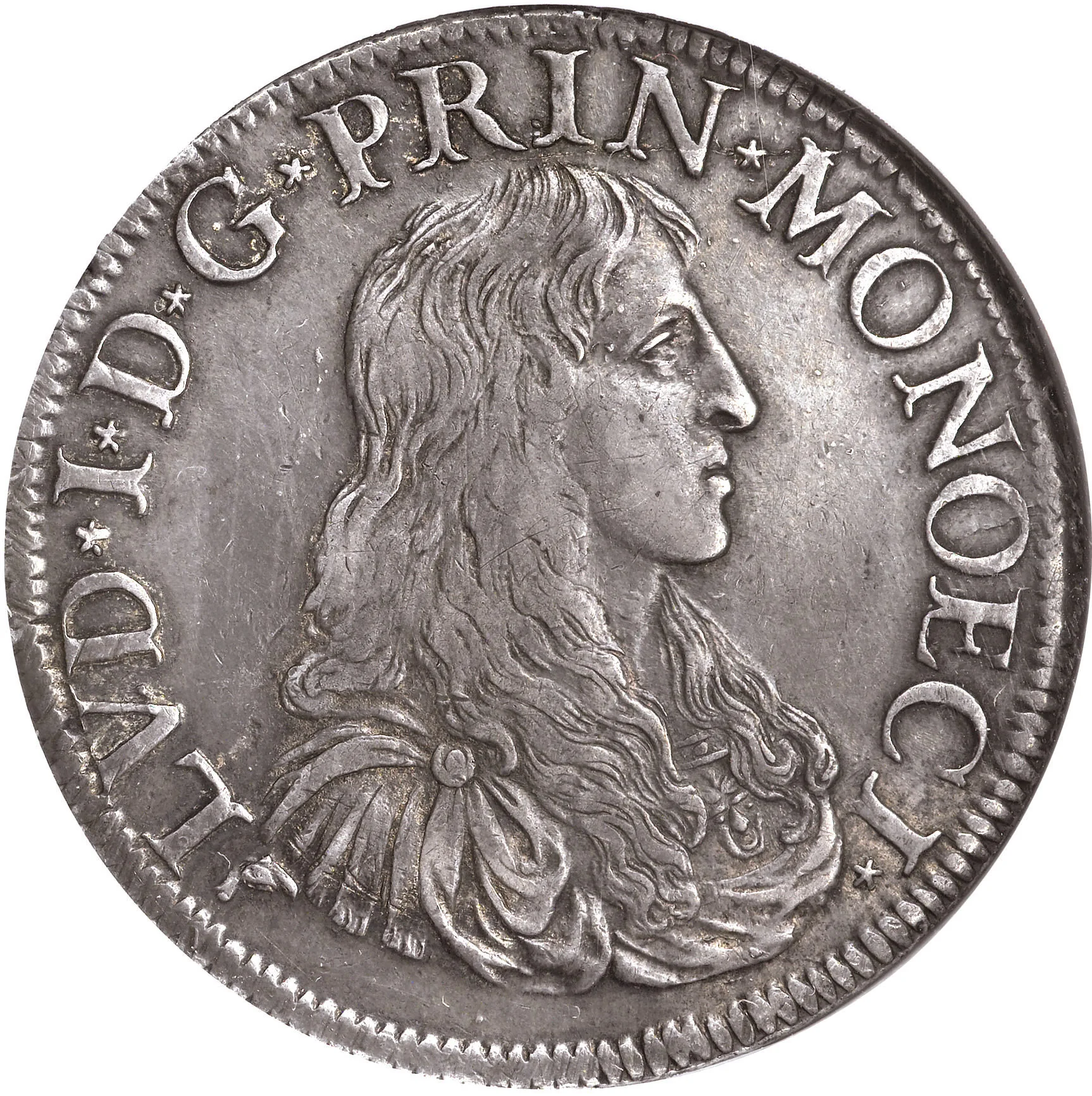

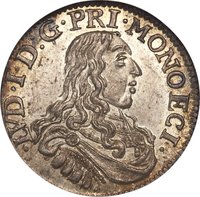
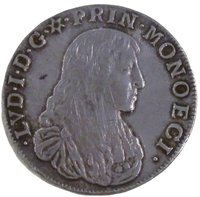
Obverse
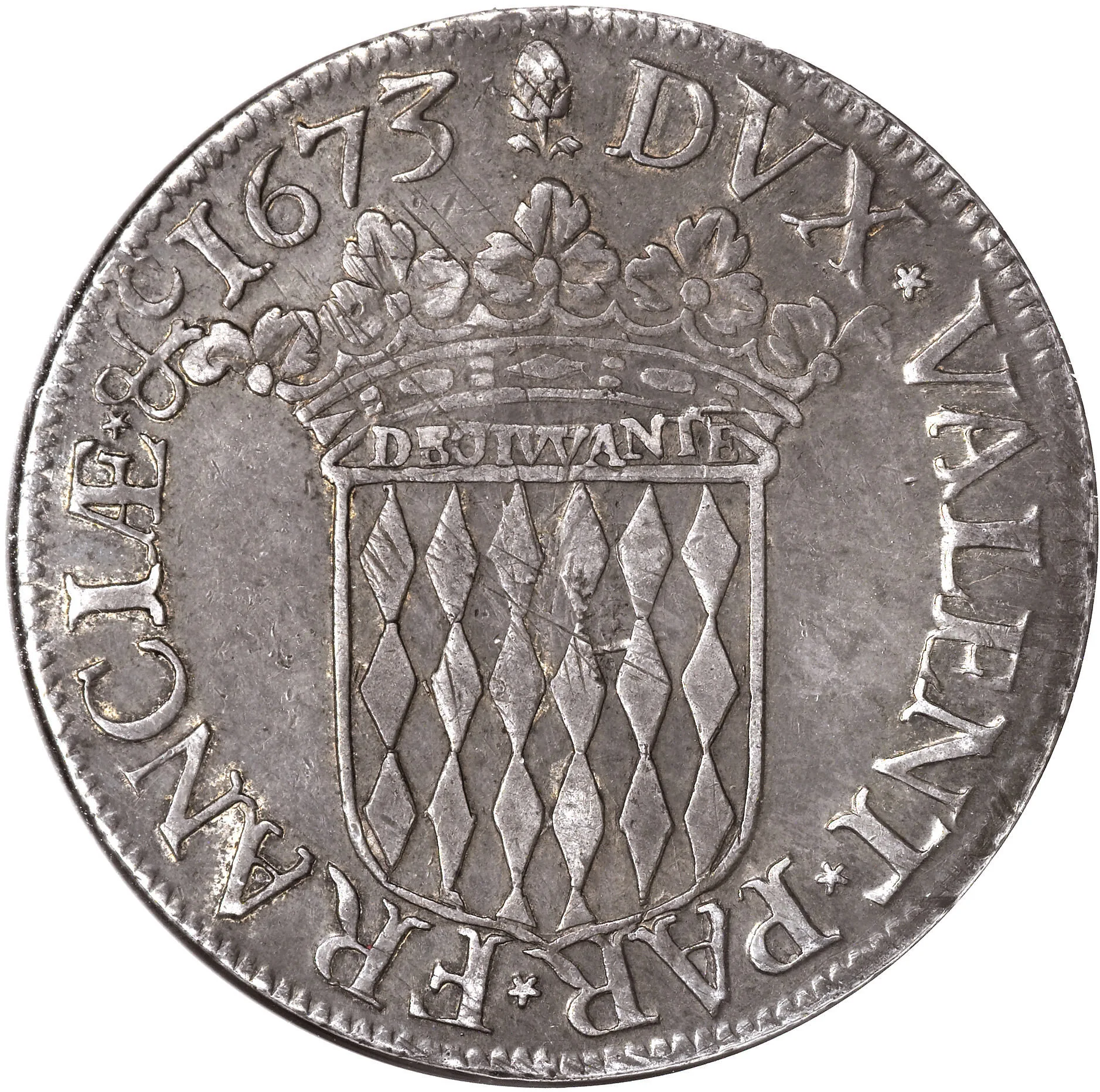
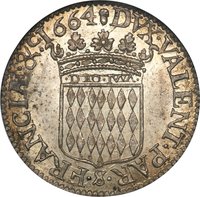
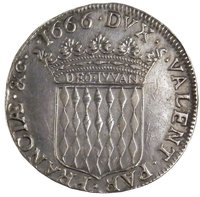
Reverse
Description:
Shield with six rows of spindles.
Inscription:
DEO IVVANTE
DVX* VALENT* PAR* FRANCIÆ* &ᶜ 1673
DVX* VALENT* PAR* FRANCIÆ* &ᶜ 1673
Script: Latin
Edge
Plain
Mints
| Name | Mark |
|---|---|
| Monaco | — |
Mintings
| Year | Mint Mark | Mintage | Quality | Collection |
|---|---|---|---|---|
| 1662 | — | — | ||
| 1663 | — | — | ||
| 1666 | — | — | ||
| 1668 | — | — | ||
| 1669 | — | — | ||
| 1670 | — | — | ||
| 1672 | — | — | ||
| 1673 | — | — | ||
| 1674 | — | — | ||
| 1675 | — | — | ||
| 1678 | — | — | ||
| 1679 | — | — | ||
| 1681 | — | — | ||
| 1682 | — | — | ||
| 1683 | — | — | ||
| 1690 | — | — | ||
| 1691 | — | — | ||
| 1692 | — | — | ||
| 1693 | — | — |
Historical background
In 1662, Monaco’s currency situation was a complex tapestry of foreign coinage and local token issues, reflecting its small size and lack of sovereign minting capacity. The Principality, under the rule of Prince Louis I of the House of Grimaldi, did not strike its own full-bodied currency. Instead, the economy relied heavily on the circulation of French, Spanish, Italian (notably Genoese and Piedmontese), and even Austrian coins, brought in through trade and the movement of people. This created a monetary environment of considerable variety but also inconsistency, where merchants had to be conversant with multiple exchange rates and metallic values.
To address small-change shortages for everyday transactions, the Prince did authorize the production of low-denomination token coinage. The most notable of these were the 3 and 6 denier pieces struck in billon (a base silver alloy). These coins, bearing the Grimaldi arms, were legal tender only within Monaco’s borders and served a vital practical function. However, their value was inherently tied to the fluctuating price of silver bullion and the stability of the surrounding major economies, particularly that of France, which exerted growing political and economic influence over the region.
The broader monetary context was one of instability, as France under Louis XIV was beginning a period of monetary manipulation that would lead to the recoinage of 1665-66. This impending turbulence in the dominant regional currency foreshadowed challenges for Monaco’s pegged token system. Thus, Monaco’s currency in 1662 was a fragile hybrid: a local fix for daily commerce, entirely dependent on and vulnerable to the monetary policies and silver flows of its much larger neighbors.
To address small-change shortages for everyday transactions, the Prince did authorize the production of low-denomination token coinage. The most notable of these were the 3 and 6 denier pieces struck in billon (a base silver alloy). These coins, bearing the Grimaldi arms, were legal tender only within Monaco’s borders and served a vital practical function. However, their value was inherently tied to the fluctuating price of silver bullion and the stability of the surrounding major economies, particularly that of France, which exerted growing political and economic influence over the region.
The broader monetary context was one of instability, as France under Louis XIV was beginning a period of monetary manipulation that would lead to the recoinage of 1665-66. This impending turbulence in the dominant regional currency foreshadowed challenges for Monaco’s pegged token system. Thus, Monaco’s currency in 1662 was a fragile hybrid: a local fix for daily commerce, entirely dependent on and vulnerable to the monetary policies and silver flows of its much larger neighbors.

✨ Legendary