

½ Penny – Ireland
Ireland
Context
Material
References
KM: #Click to copy to clipboard110
Numista: #232147
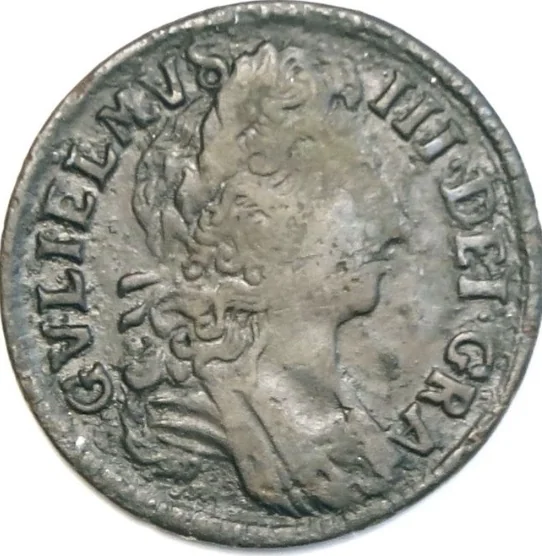
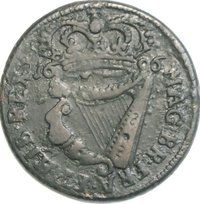
Obverse
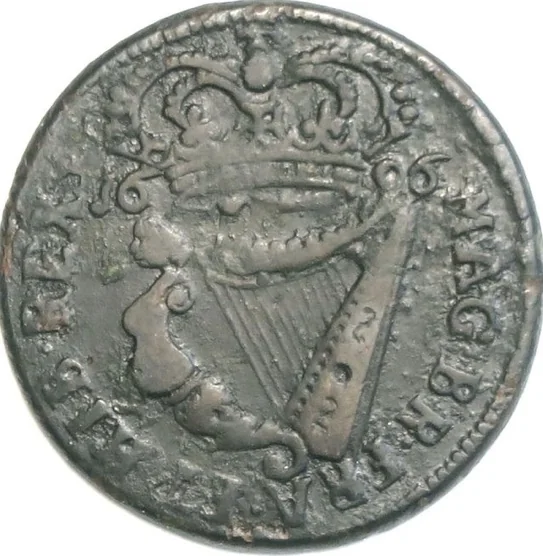
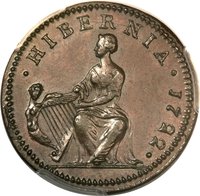
Reverse
Description:
Irish harp marks date.
Inscription:
16 96 MAG • BR • FRA • ET • HIB • REX
Script: Latin
Edge
Plain
Mintings
| Year | Mint Mark | Mintage | Quality | Collection |
|---|---|---|---|---|
| 1696 | — | — |
Historical background
In 1696, Ireland's currency situation was one of profound instability and economic strain, directly tied to its political subordination within the English sphere. Following the Williamite War (1689-1691), the Irish economy was depleted, and its silver coinage was severely degraded. A key problem was the widespread circulation of underweight, clipped, and counterfeit silver coins, primarily shillings and sixpences, which eroded trust in everyday transactions. This debasement was exacerbated by the outflow of full-weight silver to England, where it commanded a higher value, leaving Ireland with a diminished and unreliable medium of exchange.
The English Parliament attempted to address this with the "Act for Remedying the Ill State of the Coin of the Kingdom" in 1695, which called for a total recoinage. However, the process in 1696 was fraught with difficulty. The recoinage was poorly funded and executed, failing to produce enough new money to meet demand. Crucially, the new Irish silver coins were minted to the same standard as English ones, which meant they continued to be attractive for export, perpetuating the drain. This created a severe shortage of specie, hampering trade and causing widespread discontent among merchants and the public.
Consequently, 1696 marked a low point, with the official recoinage failing to solve the underlying structural issue: Ireland’s currency was subject to English monetary policy, which prioritized England’s needs. The scarcity of silver paved the way for the increased use of makeshift alternatives, including foreign coins and promissory notes, and highlighted the colony’s economic vulnerability. This crisis set the stage for future monetary experiments in the early 18th century, most notably the introduction of copper coinage and, eventually, the famous but controversial "Wood's Halfpence" affair in the 1720s.
The English Parliament attempted to address this with the "Act for Remedying the Ill State of the Coin of the Kingdom" in 1695, which called for a total recoinage. However, the process in 1696 was fraught with difficulty. The recoinage was poorly funded and executed, failing to produce enough new money to meet demand. Crucially, the new Irish silver coins were minted to the same standard as English ones, which meant they continued to be attractive for export, perpetuating the drain. This created a severe shortage of specie, hampering trade and causing widespread discontent among merchants and the public.
Consequently, 1696 marked a low point, with the official recoinage failing to solve the underlying structural issue: Ireland’s currency was subject to English monetary policy, which prioritized England’s needs. The scarcity of silver paved the way for the increased use of makeshift alternatives, including foreign coins and promissory notes, and highlighted the colony’s economic vulnerability. This crisis set the stage for future monetary experiments in the early 18th century, most notably the introduction of copper coinage and, eventually, the famous but controversial "Wood's Halfpence" affair in the 1720s.
💎 Extremely Rare