

½ Penny – Ireland
Ireland
Context
Years: 1692–1694
Issuer: Ireland 
Ruler: William III
Currency:
(1460—1826)
Demonetization: 1 January 1928
Material
References
KM: #Click to copy to clipboard109
Numista: #41084
Obverse
Description:
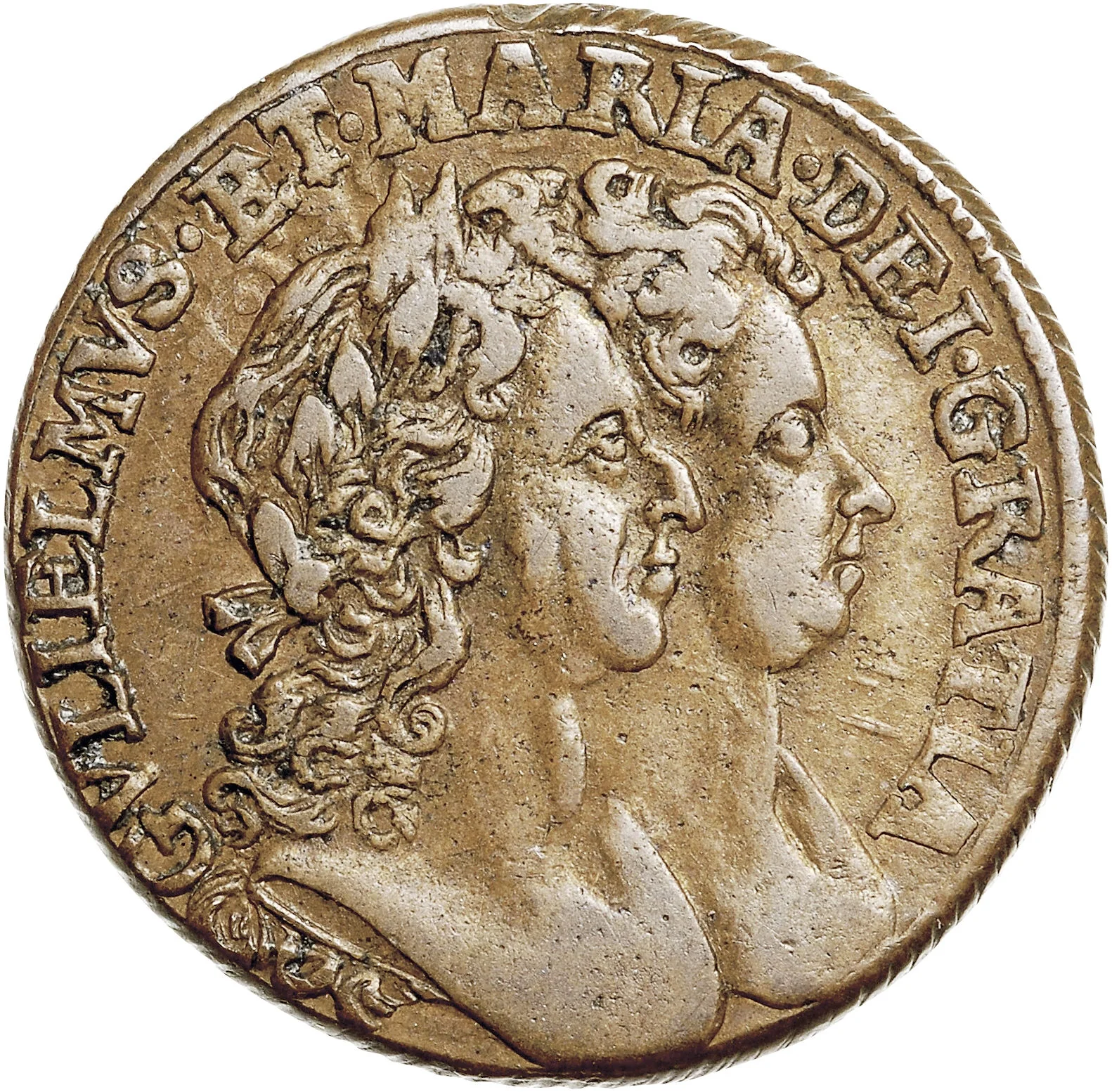
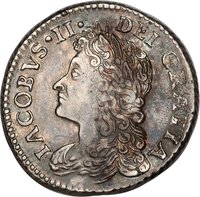
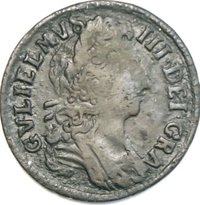
Heads of rulers with edge inscriptions.
Inscription:
GVLIELMUS.ET.MARIA.DEI.GRATIA
Script: Latin
Reverse
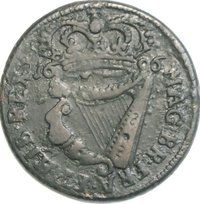
Description:
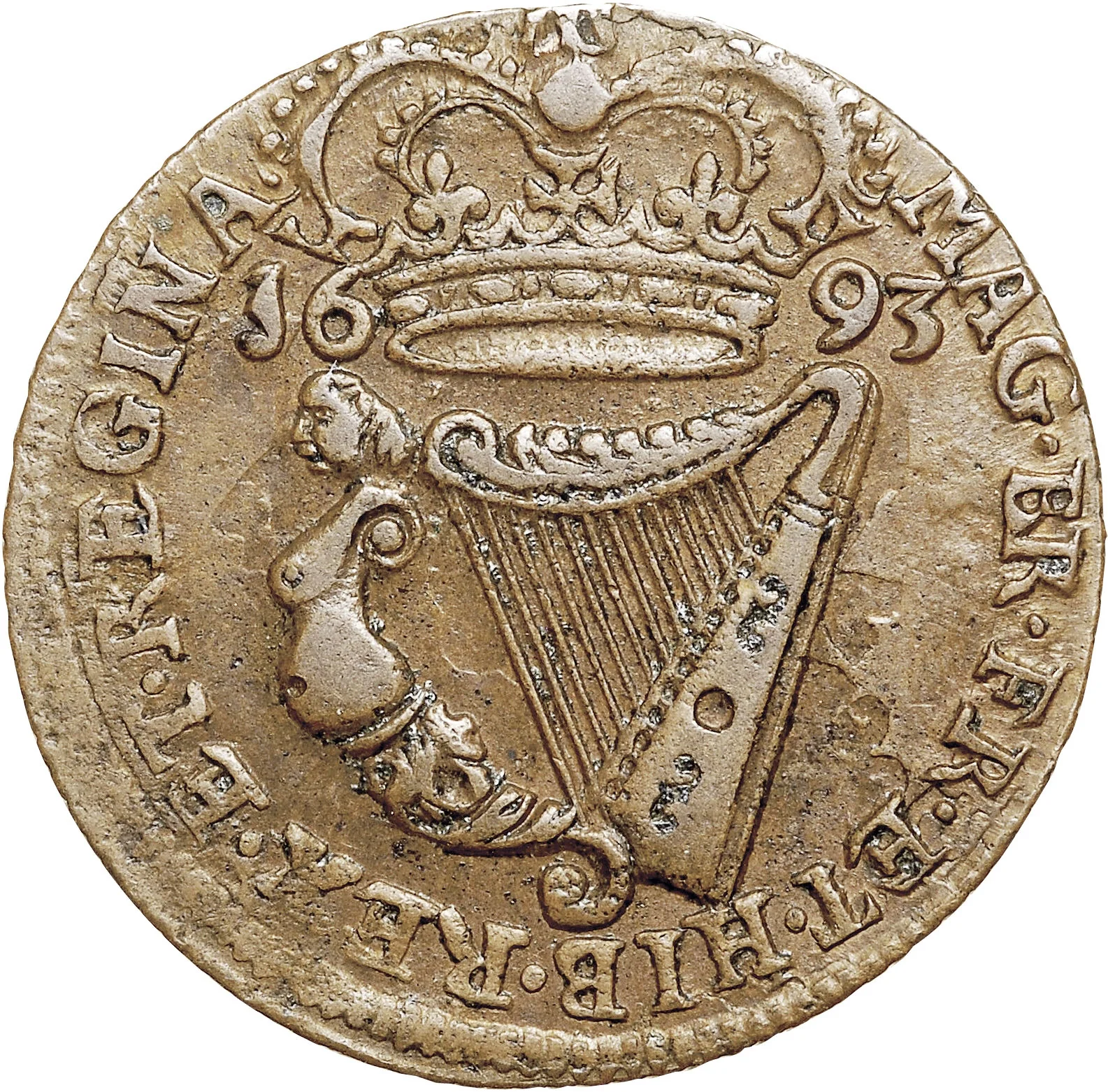
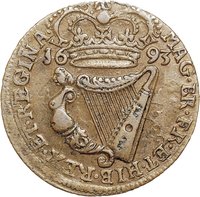
Crowned harp, date flanking crown, edge lettering.
Inscription:
MAG BR FR ET HIB REX ET REGINA 1693
Script: Latin
Edge
Milled
Mintings
| Year | Mint Mark | Mintage | Quality | Collection |
|---|---|---|---|---|
| 1692 | — | — | ||
| 1693 | — | — | ||
| 1694 | — | — |
Historical background
In 1692, Ireland's currency situation was chaotic and deeply destabilised by the preceding century of conflict, most recently the Williamite War (1689-1691). The defeat of the Jacobite forces and the subsequent Treaty of Limerick had left the economy in ruins, with trade disrupted and public confidence shattered. The monetary system was a confusing mix of underweight, clipped, and counterfeit English silver coins, Spanish pieces of eight, and various foreign currencies circulating at fluctuating values. This disorder severely hampered economic recovery and daily commerce, creating an urgent need for standardisation and reliable coinage.
The core of the problem lay in the poor state of silver specie. Good English coin was scarce and tended to be hoarded or exported, while the degraded coins in general circulation were overvalued by proclamation, driving away sound money. In response, the Irish government in Dublin, under the authority of the English Crown, took decisive action in 1692. It initiated a major recoinage, ordering the melting down of old, damaged silver and its reminting into new, full-weight shillings and sixpences at the Dublin mint. This was a direct attempt to restore a uniform and trustworthy silver currency based on the English sterling standard, albeit with distinct Irish designs.
However, this recoinage alone could not solve Ireland's deeper monetary issues. The new silver coins, like their predecessors, were vulnerable to being exported to England to settle trade imbalances, as Ireland consistently ran a large trade deficit with its dominant neighbour. This chronic drain of specie meant that even with a sound coinage, physical money in circulation remained insufficient for the economy's needs. Consequently, 1692 represents a pivotal but incomplete effort at reform, setting the stage for the later and more controversial proliferation of paper money, private tokens, and the enduring problem of a scarcity of small change that would plague Ireland for decades to come.
The core of the problem lay in the poor state of silver specie. Good English coin was scarce and tended to be hoarded or exported, while the degraded coins in general circulation were overvalued by proclamation, driving away sound money. In response, the Irish government in Dublin, under the authority of the English Crown, took decisive action in 1692. It initiated a major recoinage, ordering the melting down of old, damaged silver and its reminting into new, full-weight shillings and sixpences at the Dublin mint. This was a direct attempt to restore a uniform and trustworthy silver currency based on the English sterling standard, albeit with distinct Irish designs.
However, this recoinage alone could not solve Ireland's deeper monetary issues. The new silver coins, like their predecessors, were vulnerable to being exported to England to settle trade imbalances, as Ireland consistently ran a large trade deficit with its dominant neighbour. This chronic drain of specie meant that even with a sound coinage, physical money in circulation remained insufficient for the economy's needs. Consequently, 1692 represents a pivotal but incomplete effort at reform, setting the stage for the later and more controversial proliferation of paper money, private tokens, and the enduring problem of a scarcity of small change that would plague Ireland for decades to come.
⭐ Somewhat Rare