

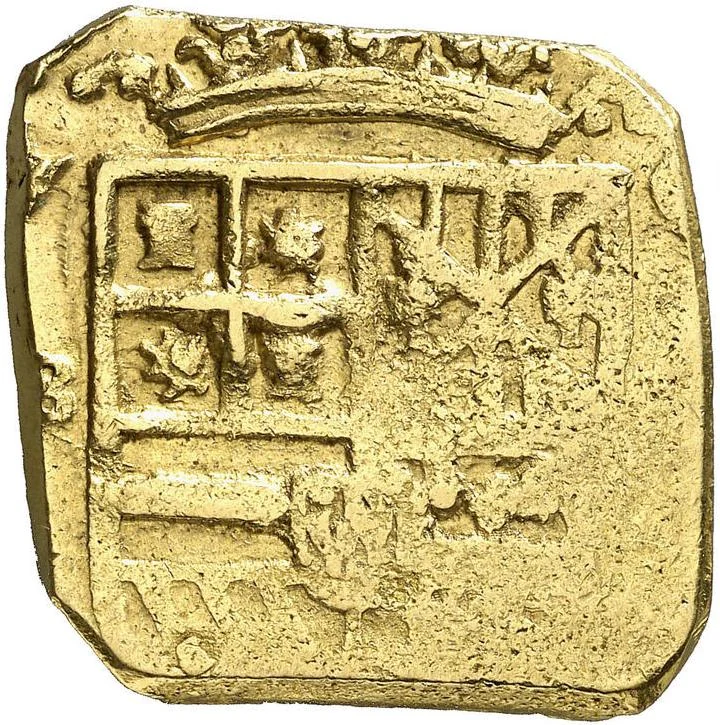
8 escudos – Spain
Add to wishlist
Spain
Context
Material
Diameter: 36 mm
Weight: 27 g
Gold Weight:: 24.76 g
Thickness: 1 mm
Shape: Irregular round
Composition: 91.7% Gold
Magnetic: No
Technique: Hammered
References
KM: #
Numista: #221793
Value
Bullion value: $3795.50
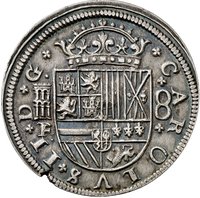
Obverse
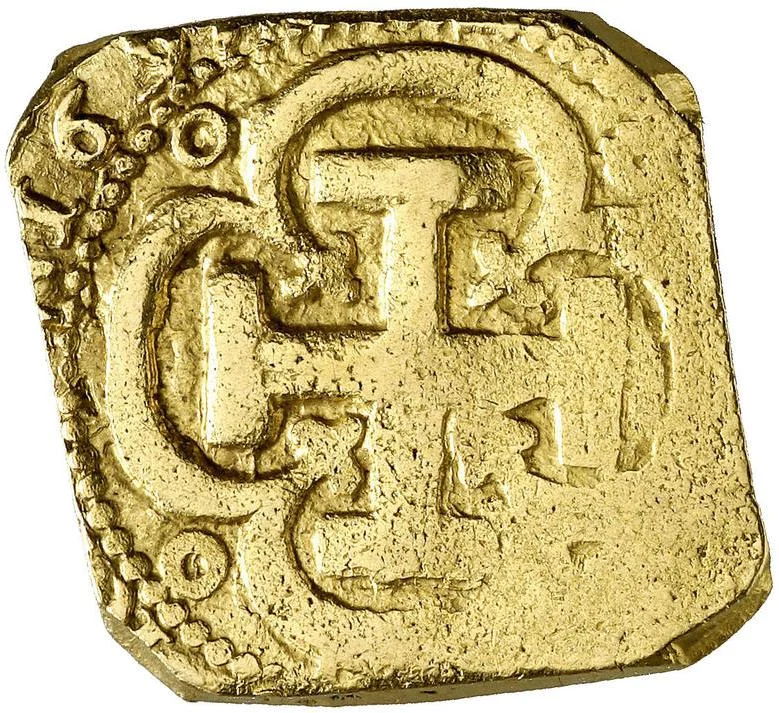
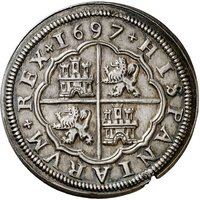
Reverse
Description:
Cross in quatrefoil within dotted circle.
Inscription:
HISPANIARVM · REX · 1697
Script: Latin
Edge
Categories
| Symbols> Coat of Arms |
| Symbol> Cross |
Mints
| Name | Mark |
|---|---|
| Barcelona Mint / La Seca | BA |
Historical background
In 1693, the Spanish monarchy under Charles II was grappling with a severe and protracted monetary crisis, a direct consequence of decades of imperial overstretch and economic decline. The core of the problem was the rampant debasement of the ubiquitous silver real. Faced with endless military commitments across Europe and a steep decline in silver imports from the Americas, the crown repeatedly resorted to clipping the silver content of its coinage to fund its deficits. This created a chaotic environment where older, purer coins were hoarded or melted down (following Gresham's Law), while the newer, inferior coins flooded the market, eroding public trust and disrupting commerce.
The situation was exacerbated by the circulation of a multitude of different coinages from various Spanish realms and foreign territories, all with fluctuating values. In practice, prices were often set in a traditional money of account, the maravedí, while physical payment was made in a confusing array of actual coins (reales, escudos, and copper vellón), requiring complex calculations. The government's attempts to fix the problem, such as the drastic medio general of 1680 which aimed to stabilize the vellón currency, had failed to provide a lasting solution, leaving the monetary system fragile and unpredictable.
This monetary instability was both a symptom and a cause of Spain's deeper economic malaise during the final years of the Habsburg dynasty. It stifled domestic trade, complicated tax collection for the crown, and contributed to social unrest as the effective value of wages and savings eroded. The crisis of 1693 thus represented a critical point in a longer downward spiral, highlighting the profound disconnect between Spain's lingering political ambitions and its crumbling financial foundations, a problem that would only begin to be addressed by the Bourbon reforms in the following century.
The situation was exacerbated by the circulation of a multitude of different coinages from various Spanish realms and foreign territories, all with fluctuating values. In practice, prices were often set in a traditional money of account, the maravedí, while physical payment was made in a confusing array of actual coins (reales, escudos, and copper vellón), requiring complex calculations. The government's attempts to fix the problem, such as the drastic medio general of 1680 which aimed to stabilize the vellón currency, had failed to provide a lasting solution, leaving the monetary system fragile and unpredictable.
This monetary instability was both a symptom and a cause of Spain's deeper economic malaise during the final years of the Habsburg dynasty. It stifled domestic trade, complicated tax collection for the crown, and contributed to social unrest as the effective value of wages and savings eroded. The crisis of 1693 thus represented a critical point in a longer downward spiral, highlighting the profound disconnect between Spain's lingering political ambitions and its crumbling financial foundations, a problem that would only begin to be addressed by the Bourbon reforms in the following century.
✨ Legendary