

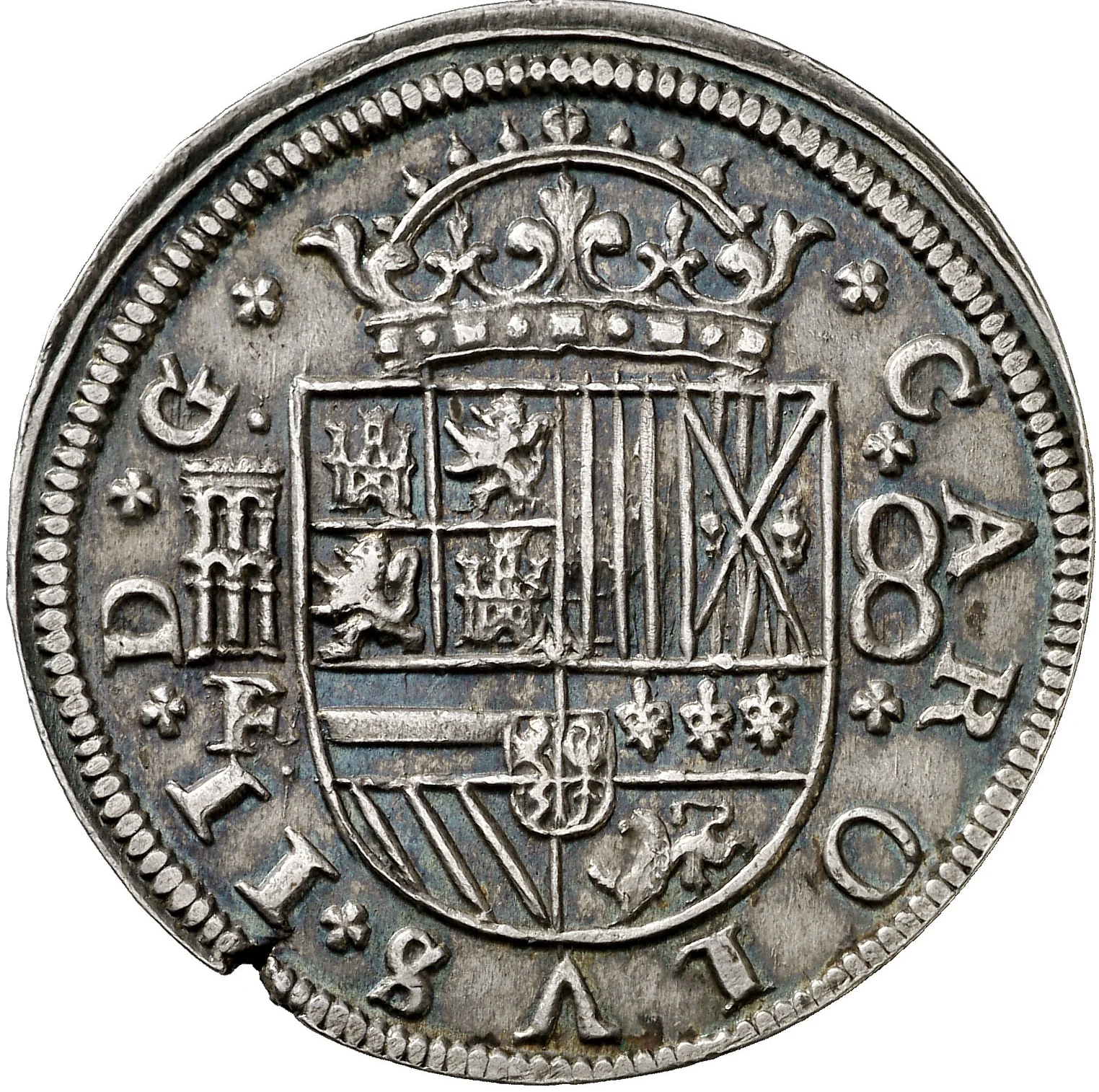
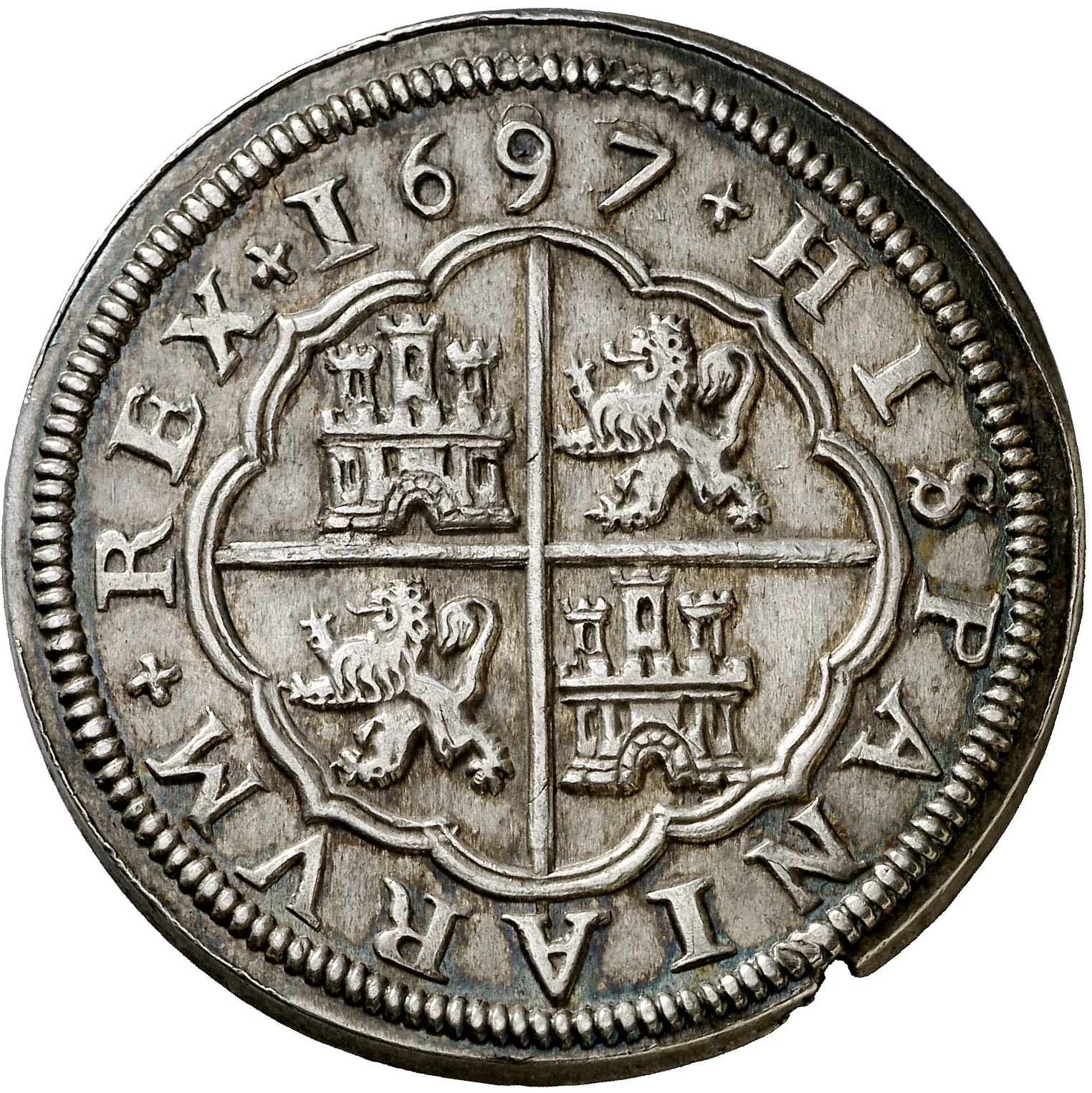
8 reales – Spain
Add to wishlist
Spain
Context
Material
Diameter: 40 mm
Weight: 27 g
Silver Weight:: 25.14 g
Thickness: 2 mm
Shape: Round
Composition: 93.1% Silver
Magnetic: No
Technique: Roller milled
References
KM: #
Numista: #23584
Value
Bullion value: $61.01
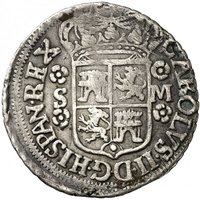
Obverse
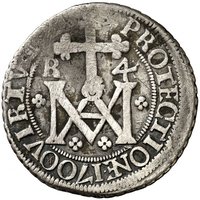
Reverse
Description:
Castile and León's coat of arms in an octolobe.
Inscription:
+ 1697 + HISPANIARVM + REX
Script: Latin
Edge
Categories
| Symbols> Coat of Arms |
Mints
| Name | Mark |
|---|---|
| Royal Mint of Segovia | — |
Mintings
| Year | Mint Mark | Mintage | Quality | Collection |
|---|---|---|---|---|
| 1696 | F | — | ||
| 1697 | F | — |
Historical background
In 1696, the Spanish monarchy under the ineffectual Charles II was embroiled in the final, draining years of the Nine Years' War (1688-1697). This global conflict against a powerful French coalition, led by Louis XIV, placed an unsustainable financial strain on the Spanish Empire. The crown's response was a desperate and chaotic monetary policy, primarily the repeated debasement of the silver real and the copper vellón coinage. By clipping silver coins and issuing vast quantities of nearly pure copper vellón with an artificially high face value, the treasury sought to meet its massive military obligations, effectively creating inflation to fund the war.
This practice led to a severe monetary crisis characterized by a stark divergence between the intrinsic metal value of a coin and its official legal tender value. Gresham's law took hold, as "good" full-weight silver coins were hoarded or exported, while the overvalued and increasingly worthless copper flooded the market. The result was rampant price inflation, a collapse in public confidence in the currency, and severe disruptions to domestic trade and taxation. Local economies often reverted to barter, and different regions of Spain's loosely integrated kingdoms experienced the crisis with varying intensity.
The situation was a stark manifestation of the broader "Decline of Spain" in the 17th century. The currency chaos of 1696 was not an isolated event but the culmination of decades of fiscal mismanagement, the failure of tax reform, and the exhaustion of New World silver shipments. It highlighted the crown's inability to manage its economy or control its disparate territories effectively, setting a bleak financial tableau on the eve of the War of the Spanish Succession, which would soon determine the fate of the empire itself.
This practice led to a severe monetary crisis characterized by a stark divergence between the intrinsic metal value of a coin and its official legal tender value. Gresham's law took hold, as "good" full-weight silver coins were hoarded or exported, while the overvalued and increasingly worthless copper flooded the market. The result was rampant price inflation, a collapse in public confidence in the currency, and severe disruptions to domestic trade and taxation. Local economies often reverted to barter, and different regions of Spain's loosely integrated kingdoms experienced the crisis with varying intensity.
The situation was a stark manifestation of the broader "Decline of Spain" in the 17th century. The currency chaos of 1696 was not an isolated event but the culmination of decades of fiscal mismanagement, the failure of tax reform, and the exhaustion of New World silver shipments. It highlighted the crown's inability to manage its economy or control its disparate territories effectively, setting a bleak financial tableau on the eve of the War of the Spanish Succession, which would soon determine the fate of the empire itself.
✨ Legendary