

1 Real – Spain
Spain
Context

Material
Diameter: 21 mm
Weight: 2.7 g
Silver weight: 2.51 g
Thickness: 0.8 mm
Shape: Irregular round
Composition: 93.1% Silver
Magnetic: No
Technique: Milled
References
KM: #Click to copy to clipboard24
Numista: #111659
Value
Bullion value: $7.15
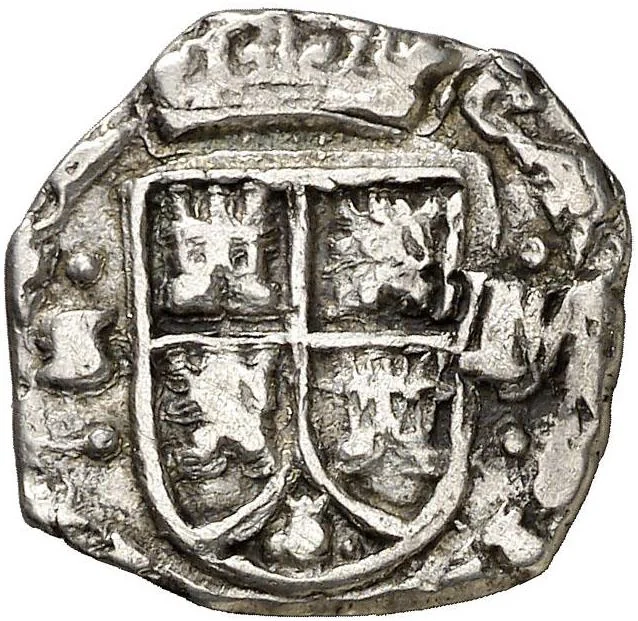
Obverse
Description:
Royal arms of Spain.
Inscription:
CAROLVS · II · D · G · HISPANIAR · REX
BR
BR
Script: Latin
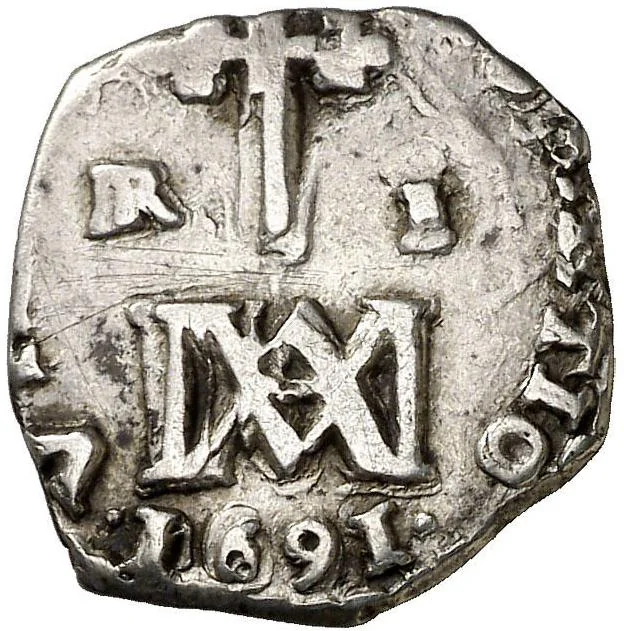
Reverse
Description:
MA monogram with trilobed cross above.
Inscription:
VIRTVTE PROTECTIO
1691
R I
MA
1691
R I
MA
Script: Latin
Edge
Mints
| Name | Mark |
|---|---|
| Royal Mint of Madrid | (MD) |
| Royal Mint of Seville | S |
Mintings
| Year | Mint Mark | Mintage | Quality | Collection |
|---|---|---|---|---|
| 1690 | SM | — | ||
| 1691 | MDBR | — | ||
| 1691 | SM | — | ||
| 1692 | MDBR | — | ||
| 1692 | SM | — | ||
| 1694 | SM | — | ||
| 1698 | SM | — | ||
| 1699 | MDBR | — | ||
| 1699 | SM | — |
Historical background
In 1690, Spain was grappling with a severe and protracted monetary crisis, rooted in decades of economic mismanagement and imperial overreach. The core of the problem was the repeated debasement of the ubiquitous silver real and the copper vellón coinage. To finance endless wars and cover state deficits, the Crown had frequently reduced the silver content in coins or arbitrarily increased the face value of copper coins, flooding the economy with intrinsically worthless currency. This led to rampant inflation, price instability, and Gresham’s Law in action: good, full-weight silver coins were hoarded or exported, while bad, debased coins drove everyday transactions, eroding public trust in the monetary system.
The situation was exacerbated by the broader economic decline of the Spanish Empire. Influxes of American silver had long since dwindled, and the costly wars of the Habsburg dynasty, particularly against France in the Nine Years' War (1688-1697), drained the treasury. The economy was further strained by a rigid social structure, declining agricultural and industrial production, and the expulsion of the Moriscos, which had damaged key sectors. The state’s response to fiscal shortfalls was not structural reform but further monetary manipulation, creating a vicious cycle of devaluation, inflation, and economic stagnation that affected all levels of society.
Attempts at reform, such as the failed Gran Reducción of 1680 which tried to stabilize the copper currency, only provided temporary relief. By 1690, the monetary chaos was a symptom of deeper Habsburg decline, hindering commerce and state finances. This instability would persist until the new Bourbon dynasty, following the War of Spanish Succession (1701-1714), implemented more centralized and effective fiscal and monetary policies. Thus, the currency situation of 1690 represents a critical low point, highlighting the urgent need for the systemic reforms that would characterize the eighteenth century.
The situation was exacerbated by the broader economic decline of the Spanish Empire. Influxes of American silver had long since dwindled, and the costly wars of the Habsburg dynasty, particularly against France in the Nine Years' War (1688-1697), drained the treasury. The economy was further strained by a rigid social structure, declining agricultural and industrial production, and the expulsion of the Moriscos, which had damaged key sectors. The state’s response to fiscal shortfalls was not structural reform but further monetary manipulation, creating a vicious cycle of devaluation, inflation, and economic stagnation that affected all levels of society.
Attempts at reform, such as the failed Gran Reducción of 1680 which tried to stabilize the copper currency, only provided temporary relief. By 1690, the monetary chaos was a symptom of deeper Habsburg decline, hindering commerce and state finances. This instability would persist until the new Bourbon dynasty, following the War of Spanish Succession (1701-1714), implemented more centralized and effective fiscal and monetary policies. Thus, the currency situation of 1690 represents a critical low point, highlighting the urgent need for the systemic reforms that would characterize the eighteenth century.



✨ Legendary