

¼ stüber – East Frisia
Add to wishlist
Germany
Context
Year: 1787
Country: Germany
Issuer: East Frisia
Ruler: Frederick William II
Currency:
Demonetized: Yes
Total mintage: 86,000
Material
References
KM: #
Numista: #221728
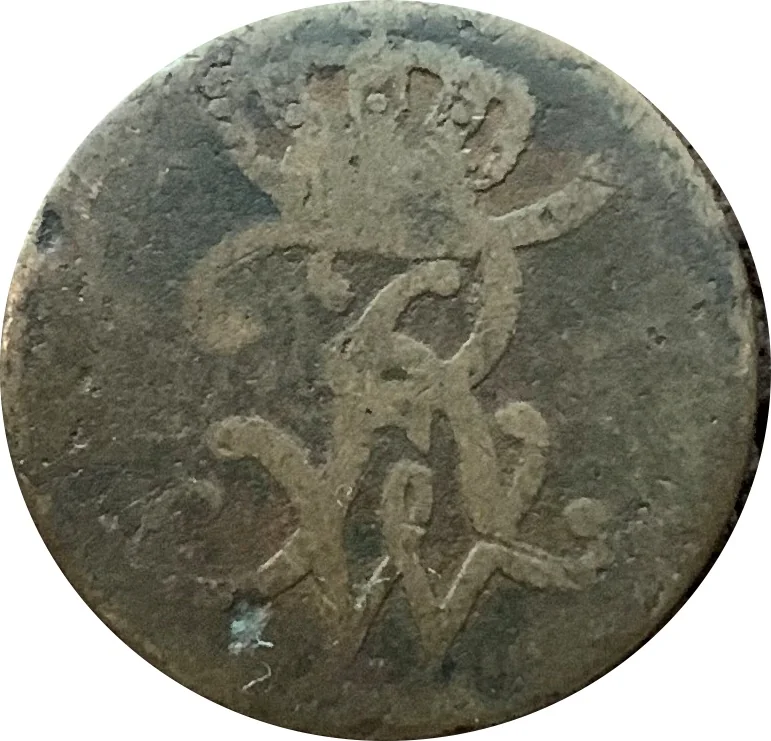
Obverse
Description:
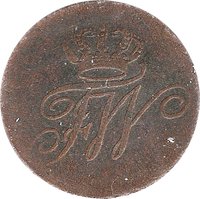
Crowned initials.
Script: Latin
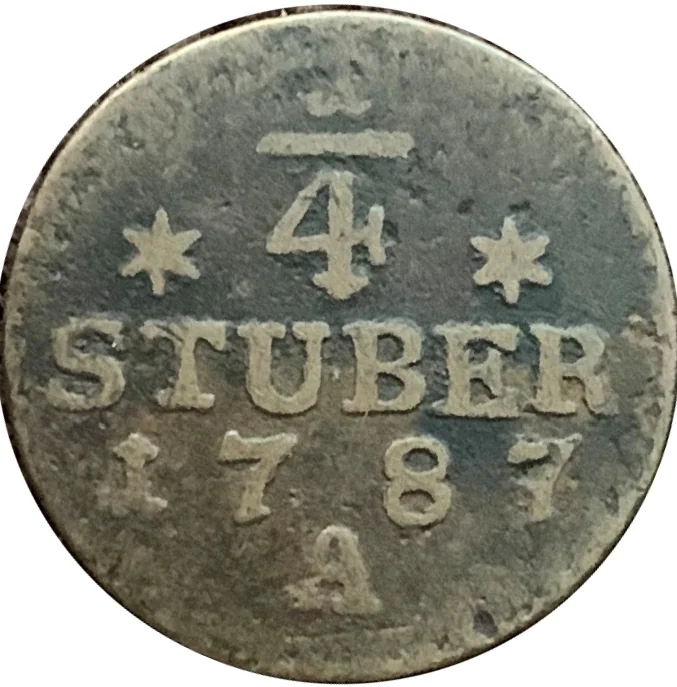
Reverse
Description:
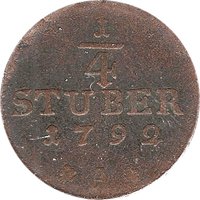
Denomination in stars above date and mintmark.
Inscription:
1/4
STUBER
1787
A
STUBER
1787
A
Script: Latin
Edge
Plain
Mintings
| Year | Mint Mark | Mintage | Quality | Collection |
|---|---|---|---|---|
| 1787 | A | 86,000 |
Historical background
In 1787, the currency situation in East Frisia was complex and fragmented, reflecting its political subordination and economic ties. The region was a dominion of the Kingdom of Prussia, having been annexed in 1744, but it retained distinct local monetary practices. While Prussian Reichsthalers and Groschen were official tender, the everyday economy was dominated by a bewildering variety of circulating coins. These included older Dutch guilders and stuivers from robust trade across the border, remnants of earlier regional issues, and even debased coins from neighboring German states, all circulating simultaneously at fluctuating exchange rates.
This monetary chaos created significant challenges for daily commerce and administration. The value of coins was not intrinsic but based on often-disputed local Kurant (exchange rate) lists, which merchants and officials had to constantly consult. The problem was exacerbated by a chronic shortage of high-quality small change, leading to the use of cut or clipped coins and hindering transactions for ordinary citizens. This environment was ripe for confusion and fraud, as the proliferation of different coins with unstable values made fair pricing and accounting difficult.
The underlying issue was a lack of unified sovereign control over the currency. Although Prussia had the authority, it did not fully streamline the monetary system in East Frisia, allowing the legacy currencies to persist. Consequently, the economy of 1787 East Frisia operated in a state of monetary pluralism, a patchwork system that was inefficient and a burden to its integration into the broader Prussian fiscal state. This situation would only begin to resolve with more forceful standardization efforts in the following decades under Napoleonic and later Hanoverian rule.
This monetary chaos created significant challenges for daily commerce and administration. The value of coins was not intrinsic but based on often-disputed local Kurant (exchange rate) lists, which merchants and officials had to constantly consult. The problem was exacerbated by a chronic shortage of high-quality small change, leading to the use of cut or clipped coins and hindering transactions for ordinary citizens. This environment was ripe for confusion and fraud, as the proliferation of different coins with unstable values made fair pricing and accounting difficult.
The underlying issue was a lack of unified sovereign control over the currency. Although Prussia had the authority, it did not fully streamline the monetary system in East Frisia, allowing the legacy currencies to persist. Consequently, the economy of 1787 East Frisia operated in a state of monetary pluralism, a patchwork system that was inefficient and a burden to its integration into the broader Prussian fiscal state. This situation would only begin to resolve with more forceful standardization efforts in the following decades under Napoleonic and later Hanoverian rule.
✨ Legendary