

1 rupee – Arcot
Add to wishlist
India
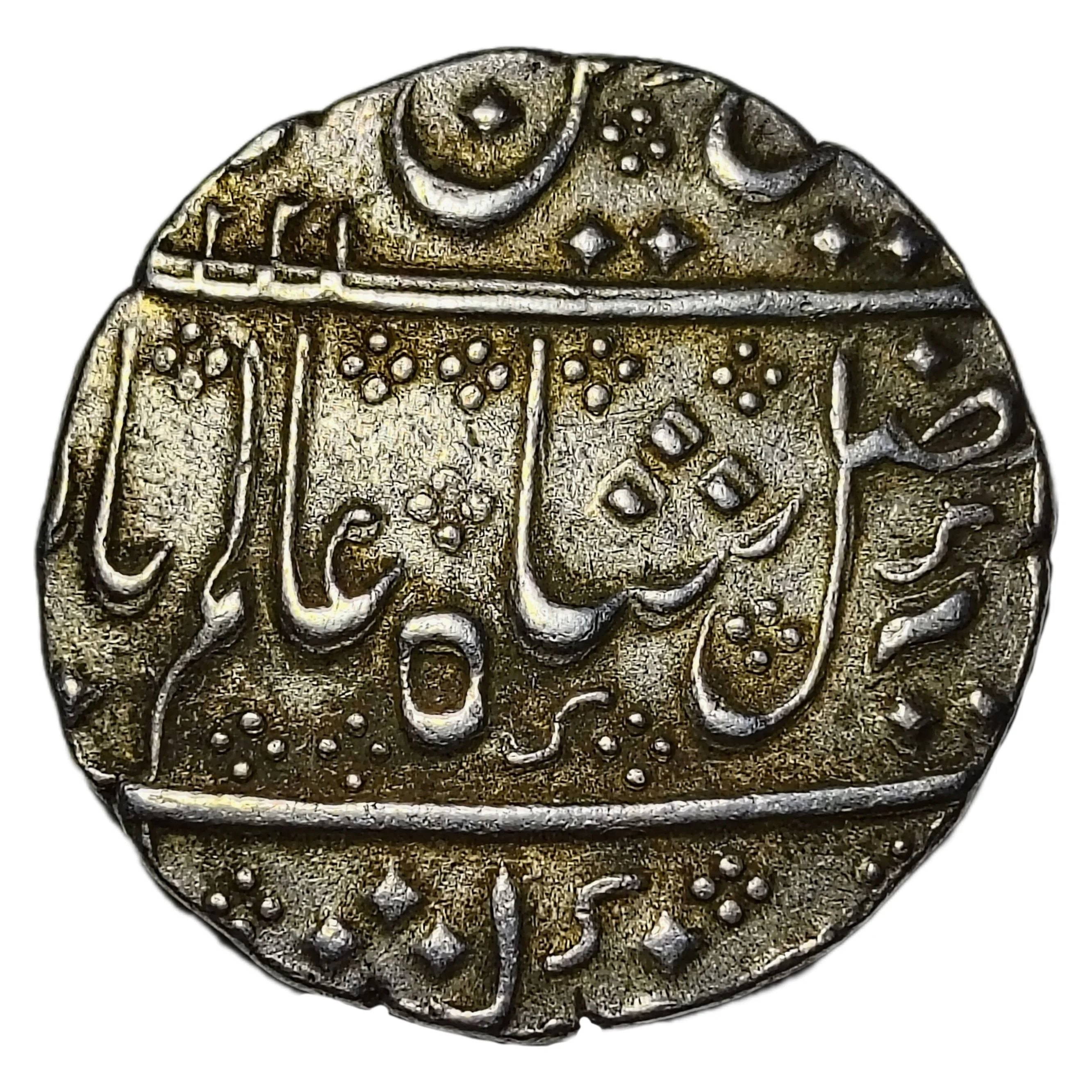
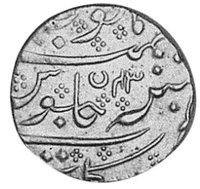
Obverse
Description:
Sikka zad bar haft Kishwur / Sayaye Fazl, Shah Alam Bad Shah / elah Hami Din Mohammad. (Read bottom to top, right to left.)
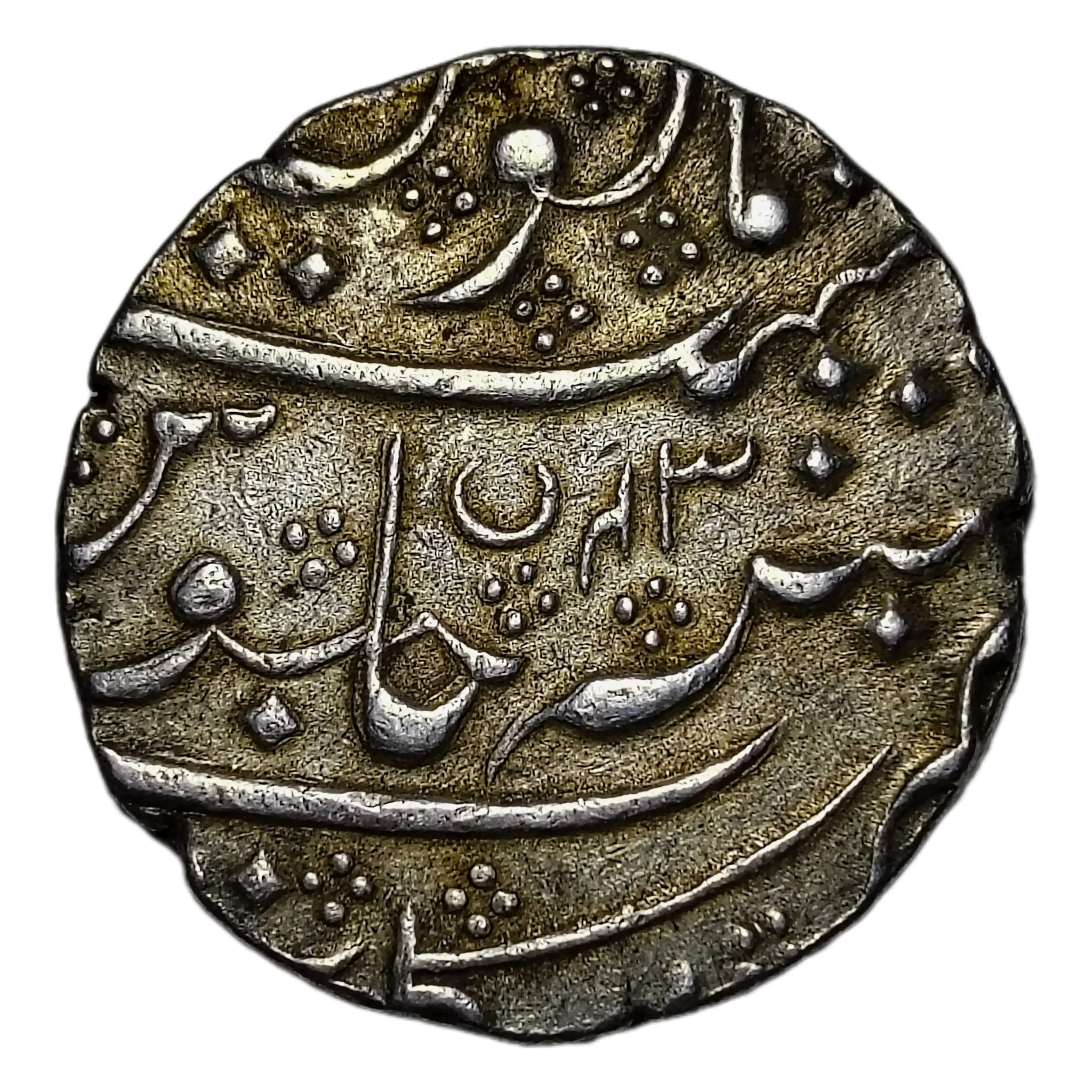
Reverse
Description:
Zarb Arkat, 44th regnal year, minted at Maimanat. (Read bottom to top, right to left.)
Inscription:
٢٦
Edge
Plain crude with possible test marks
Mints
| Name | Mark |
|---|---|
| Arcot | — |
Mintings
| Year | Mint Mark | Mintage | Quality | Collection |
|---|---|---|---|---|
| 1764 | — | — | ||
| 1765 | — | — | ||
| 1768 | — | — | ||
| 1769 | — | — | ||
| 1770 | — | — | ||
| 1771 | — | — | ||
| 1772 | — | — | ||
| 1773 | — | — | ||
| 1773 | — | — | ||
| 1774 | — | — | ||
| 1775 | — | — | ||
| 1776 | — | — | ||
| 1777 | — | — | ||
| 1783 | — | — | ||
| 1784 | — | — | ||
| 1785 | — | — | ||
| 1786 | — | — | ||
| 1787 | — | — | ||
| 1788 | — | — | ||
| 1789 | — | — | ||
| 1790 | — | — | ||
| 1791 | — | — | ||
| 1792 | — | — | ||
| 1793 | — | — | ||
| 1794 | — | — | ||
| 1804 | — | — | ||
| 1805 | — | — | ||
| 1806 | — | — | ||
| 1806 | — | — | ||
| 1807 | — | — |
Historical background
In 1764, the Carnatic region of South India, with Arcot as its capital, was in a state of profound financial and political turmoil. The Nawab of Arcot, Muhammad Ali Khan Wallajah, was a key British ally, but his position was entirely dependent on military and financial support from the British East India Company. This dependence had led to a crippling cycle of debt. The Nawab had financed his wars and his lavish court by borrowing enormous sums from both the Company and, more significantly, from private British creditors and dubashes (local intermediaries), using future tax revenues (land rents) as collateral. By 1764, this debt had ballooned to over £1 million, creating a parasitic financial system that drained the region's wealth.
The currency situation was a direct reflection of this crisis. The Arcot rupee, the local currency, was under severe strain due to the Nawab's desperate need for cash to service his debts and pay his British-backed troops. This led to chronic revenue shortfalls, forcing the treasury to manipulate currency. Practices like currency debasement (reducing the silver content in coins) and the proliferation of poorly regulated minting were common, undermining the rupee's stability and value. Furthermore, a chaotic mix of older Mughal rupees, newer Arcot issues, and currencies from neighboring regions circulated, creating confusion and hindering trade.
Ultimately, the monetary instability in Arcot was not an isolated economic issue but a symptom of the larger political takeover. The "Arcot Debts" became a scandal in Britain and a primary mechanism for the Company's deepening control. By insisting on repayment, the Company and its private creditors tightened their grip on the Nawab's revenue administration. This financial stranglehold, exemplified by the chaotic currency, systematically transferred real political and economic power from the Nawab to the British, setting a precedent for the Company's expansion across India. The situation in 1764, therefore, marks a critical point where currency manipulation and sovereign debt became tools of colonial conquest.
The currency situation was a direct reflection of this crisis. The Arcot rupee, the local currency, was under severe strain due to the Nawab's desperate need for cash to service his debts and pay his British-backed troops. This led to chronic revenue shortfalls, forcing the treasury to manipulate currency. Practices like currency debasement (reducing the silver content in coins) and the proliferation of poorly regulated minting were common, undermining the rupee's stability and value. Furthermore, a chaotic mix of older Mughal rupees, newer Arcot issues, and currencies from neighboring regions circulated, creating confusion and hindering trade.
Ultimately, the monetary instability in Arcot was not an isolated economic issue but a symptom of the larger political takeover. The "Arcot Debts" became a scandal in Britain and a primary mechanism for the Company's deepening control. By insisting on repayment, the Company and its private creditors tightened their grip on the Nawab's revenue administration. This financial stranglehold, exemplified by the chaotic currency, systematically transferred real political and economic power from the Nawab to the British, setting a precedent for the Company's expansion across India. The situation in 1764, therefore, marks a critical point where currency manipulation and sovereign debt became tools of colonial conquest.

⭐ Somewhat Rare