

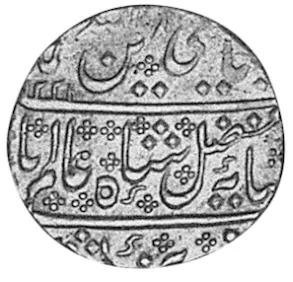
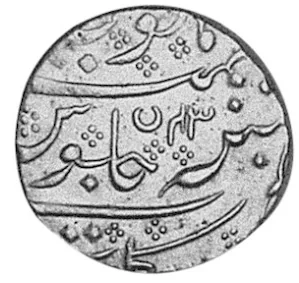
1 rupee – Arcot
Add to wishlist
India
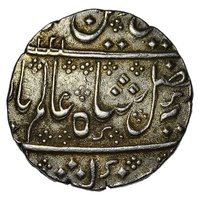
Obverse
Description:
Persian couplet by Shah Alam II.
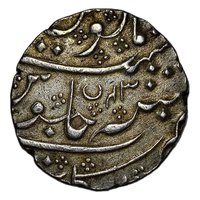
Reverse
Description:
Persian - Julus mint.
Edge
Mints
| Name | Mark |
|---|---|
| Arcot | — |
Mintings
| Year | Mint Mark | Mintage | Quality | Collection |
|---|---|---|---|---|
| 1765 | — | — | ||
| 1770 | — | — | ||
| 1771 | — | — | ||
| 1772 | — | — | ||
| 1784 | — | — | ||
| 1785 | — | — | ||
| 1787 | — | — | ||
| 1804 | — | — | ||
| 1818 | — | — |
Historical background
In 1765, the Arcot region of the Carnatic in South India was in a state of profound monetary instability, caught between collapsing indigenous systems and emerging colonial control. The region had long used a complex bimetallic system of gold pagodas and silver rupees, but decades of warfare between the British East India Company and the French, fought through proxy Nawabs, had drained the treasury and severely debased the coinage. The Nawab of Arcot, Muhammad Ali Khan Wallajah, was deeply indebted to both the Company and private British creditors, leading to a cycle of borrowing and the reckless minting of low-quality coins to meet obligations, which further eroded public trust in the currency.
This financial crisis was formally cemented by the Treaty of Allahabad in August 1765, which, while primarily granting the East India Company the diwani (revenue rights) of Bengal, also confirmed Company support for the Nawab of Arcot. In practice, this made the Company the paramount power behind the throne. The Nawab’s crippling debts, often inflated through corruption, meant that a significant portion of Arcot's land revenue was siphoned off to service loans, leaving little for governance or for maintaining a stable monetary system. The local economy suffered from unpredictable currency values, hindering trade and agriculture.
Consequently, the period was marked by a chaotic coexistence of overstruck, lightweight, and counterfeit coins alongside older, full-weight issues. While the British would later move to standardize the rupee in the early 19th century, the situation in 1765 was one of transition and disorder. The monetary landscape reflected the broader political reality: the traditional Mughal-era fiscal order was collapsing, and the region was becoming a financial satellite of the East India Company, which prioritized the extraction of wealth and debt repayment over monetary stability for Arcot itself.
This financial crisis was formally cemented by the Treaty of Allahabad in August 1765, which, while primarily granting the East India Company the diwani (revenue rights) of Bengal, also confirmed Company support for the Nawab of Arcot. In practice, this made the Company the paramount power behind the throne. The Nawab’s crippling debts, often inflated through corruption, meant that a significant portion of Arcot's land revenue was siphoned off to service loans, leaving little for governance or for maintaining a stable monetary system. The local economy suffered from unpredictable currency values, hindering trade and agriculture.
Consequently, the period was marked by a chaotic coexistence of overstruck, lightweight, and counterfeit coins alongside older, full-weight issues. While the British would later move to standardize the rupee in the early 19th century, the situation in 1765 was one of transition and disorder. The monetary landscape reflected the broader political reality: the traditional Mughal-era fiscal order was collapsing, and the region was becoming a financial satellite of the East India Company, which prioritized the extraction of wealth and debt repayment over monetary stability for Arcot itself.

✨ Legendary