



¼ rupee – Arcot
Add to wishlist
India
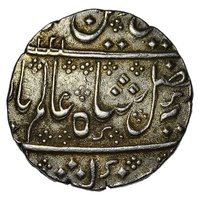
Obverse
Description:
Persian, Almagir II.
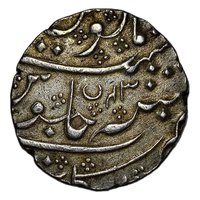
Reverse
Description:
Persian - Julus mint.
Edge
Mints
| Name | Mark |
|---|---|
| Arcot | — |
Mintings
| Year | Mint Mark | Mintage | Quality | Collection |
|---|---|---|---|---|
| 1755 | — | — | ||
| 1756 | — | — | ||
| 1758 | — | — |
Historical background
By 1755, the Carnatic region of India, with Arcot as a key political center, was embroiled in the complex fallout of the ongoing Anglo-French colonial rivalry, manifested in the Carnatic Wars. This conflict created a chaotic monetary environment. The Nawab of Arcot, Muhammad Ali Khan Wallajah, was a client of the British East India Company, but his authority was contested and his finances were crippled by war expenses and massive debts owed to both the Company and private British creditors. This political instability directly undermined the reliability and uniformity of the currency in circulation.
The monetary system itself was a fragmented mix. The primary currency was the silver Arcot rupee, but its value and purity were unstable due to frequent debasement by various authorities seeking to raise short-term funds. Alongside this, older Mughal rupees, French colonial coins, and gold pagodas (particularly the Star Pagoda minted in Madras) all circulated simultaneously, with fluctuating exchange rates. The British East India Company, needing to pay its sepoys and finance its operations, also minted its own coins, adding another layer to the monetary confusion.
Consequently, the currency situation was one of profound disorder and uncertainty. Merchants, soldiers, and the public had to navigate a hazardous landscape of multiple coinages with unreliable intrinsic values. This financial instability mirrored the broader political chaos, as control over the mint and the right to issue currency was a key symbol of sovereignty and a crucial source of revenue, fiercely contested by the Nawab, the British, and the French. The monetary turbulence of 1755 thus reflects a region in transition, where colonial powers were beginning to dominate not just militarily, but also financially.
The monetary system itself was a fragmented mix. The primary currency was the silver Arcot rupee, but its value and purity were unstable due to frequent debasement by various authorities seeking to raise short-term funds. Alongside this, older Mughal rupees, French colonial coins, and gold pagodas (particularly the Star Pagoda minted in Madras) all circulated simultaneously, with fluctuating exchange rates. The British East India Company, needing to pay its sepoys and finance its operations, also minted its own coins, adding another layer to the monetary confusion.
Consequently, the currency situation was one of profound disorder and uncertainty. Merchants, soldiers, and the public had to navigate a hazardous landscape of multiple coinages with unreliable intrinsic values. This financial instability mirrored the broader political chaos, as control over the mint and the right to issue currency was a key symbol of sovereignty and a crucial source of revenue, fiercely contested by the Nawab, the British, and the French. The monetary turbulence of 1755 thus reflects a region in transition, where colonial powers were beginning to dominate not just militarily, but also financially.

✨ Legendary