

India
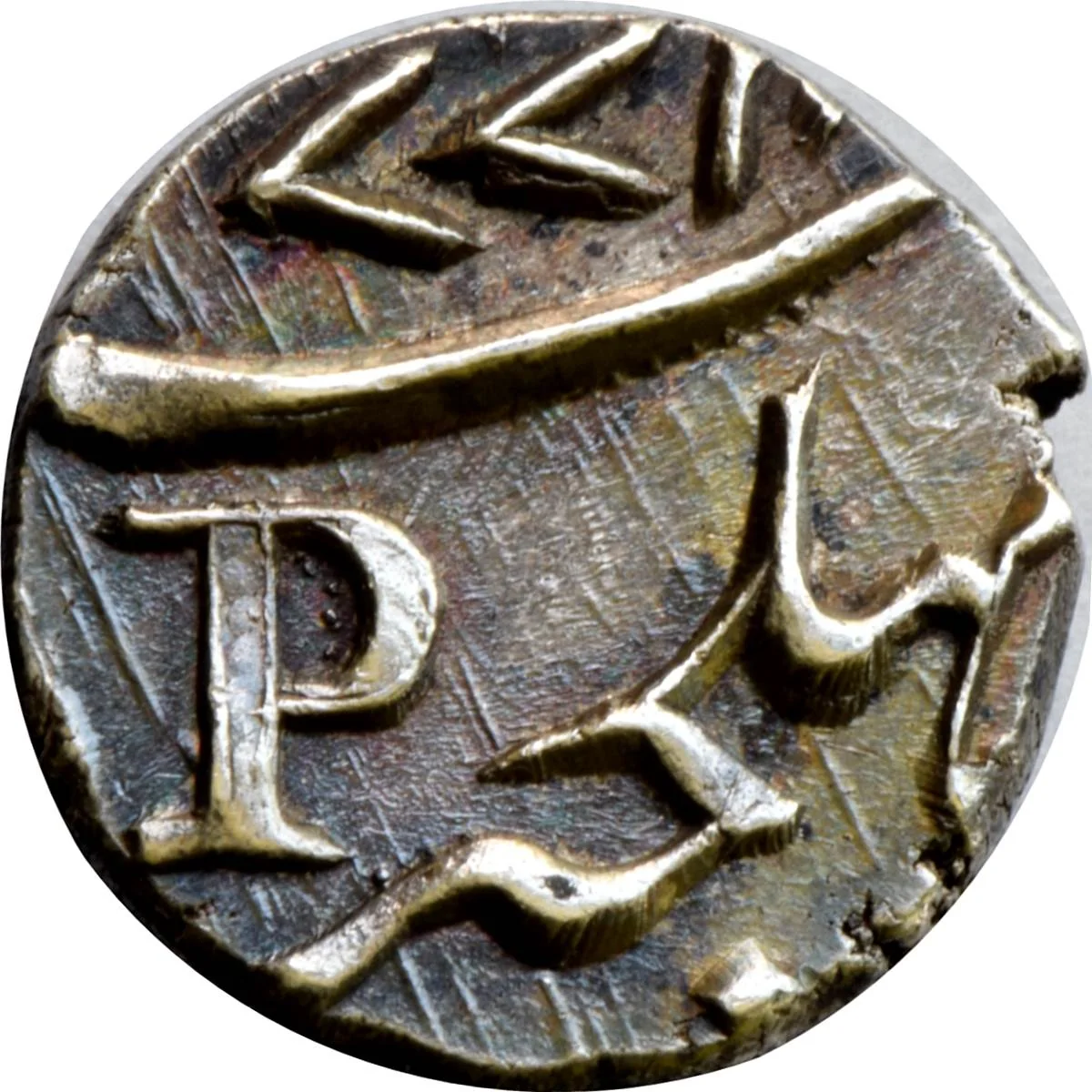
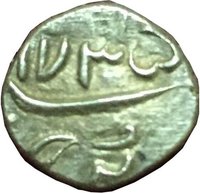
Obverse
Description:
Phulcherry (Pondicherry). Persian inscription: "sanah 1774"
Inscription:
P
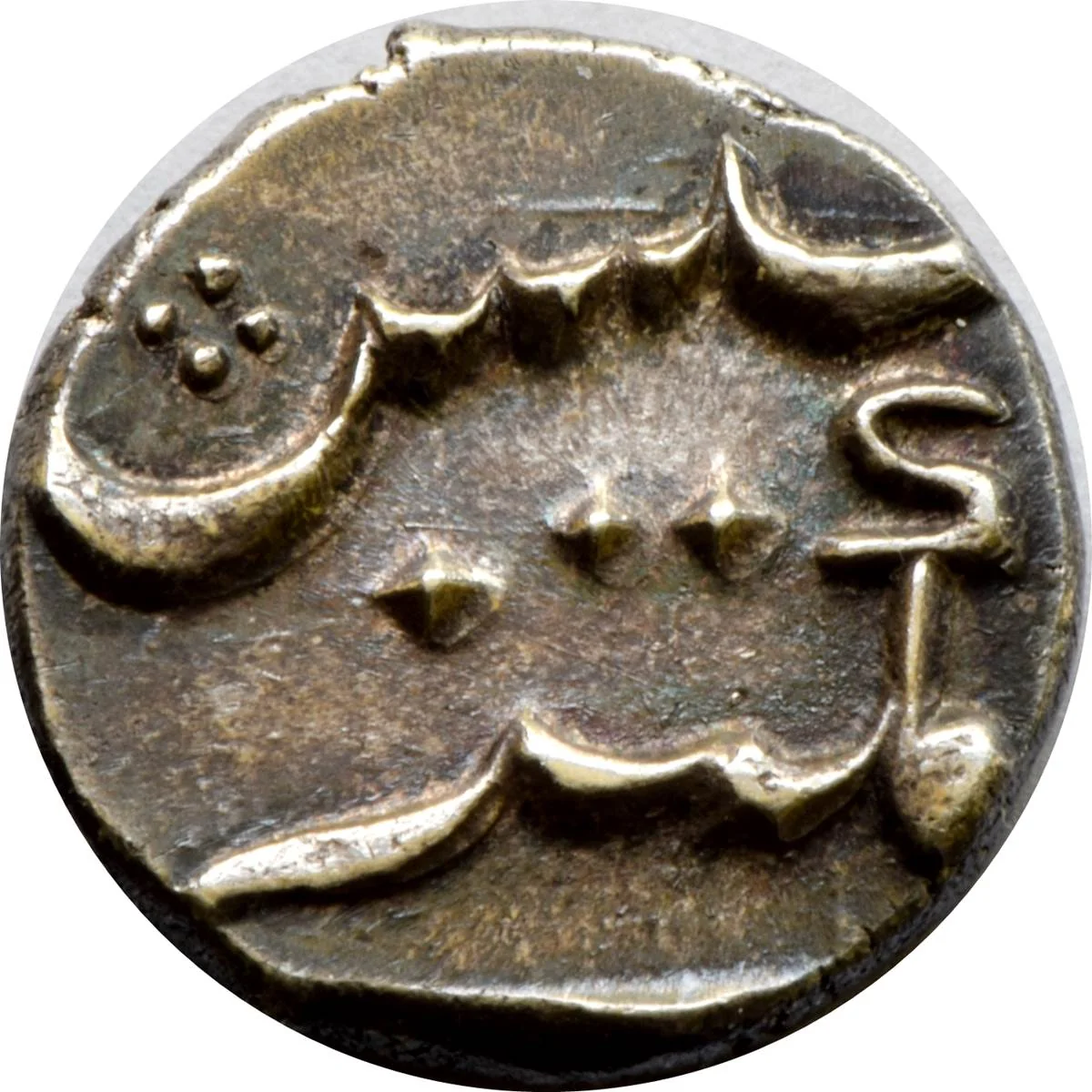
Reverse
Description:
"franch kompani"
Edge
Plain
Mints
| Name | Mark |
|---|---|
| Pondicherry | P |
Mintings
Historical background
In 1738, Mahé, a small but strategically significant French outpost on India's Malabar Coast, operated within a complex and fluid monetary environment. As a trading enclave of the French East India Company, its primary economic function was the procurement of pepper and other spices, which necessitated engagement with diverse currency systems. The official French livre was theoretically in use for Company accounts and salaries, but it held little practical sway in local markets. The real lifeblood of commerce was a heterogeneous mix of foreign and regional coins, reflecting Mahé's position at the crossroads of Indian Ocean trade.
The most prevalent and trusted currencies were silver rupees from neighboring Indian powers, particularly the Mughal Empire and the rising Kingdom of Mysore. Alongside these, various European silver coins—especially Spanish American pieces of eight and their fractional equivalents—circulated widely due to their reliable silver content and acceptance in international trade. Gold pagodas from South India also featured in larger transactions. This created a constant need for assayers and money-changers, as merchants and the Company itself had to navigate fluctuating exchange rates and the varying purity of coins, a process fraught with risk and calculation.
This monetary pluralism presented significant administrative challenges for the French authorities. They struggled to enforce fixed exchange rates between the official livre and the de facto circulating media, leading to frequent disputes and accounting complexities. The situation was inherently unstable, as the supply of key coins depended on the ebb and flow of trade ships and the political fortunes of Indian states. Thus, in 1738, Mahé's currency situation was less a unified system and more a pragmatic, often chaotic, bazaar of metallic money, where commercial necessity consistently overrode colonial monetary policy.
The most prevalent and trusted currencies were silver rupees from neighboring Indian powers, particularly the Mughal Empire and the rising Kingdom of Mysore. Alongside these, various European silver coins—especially Spanish American pieces of eight and their fractional equivalents—circulated widely due to their reliable silver content and acceptance in international trade. Gold pagodas from South India also featured in larger transactions. This created a constant need for assayers and money-changers, as merchants and the Company itself had to navigate fluctuating exchange rates and the varying purity of coins, a process fraught with risk and calculation.
This monetary pluralism presented significant administrative challenges for the French authorities. They struggled to enforce fixed exchange rates between the official livre and the de facto circulating media, leading to frequent disputes and accounting complexities. The situation was inherently unstable, as the supply of key coins depended on the ebb and flow of trade ships and the political fortunes of Indian states. Thus, in 1738, Mahé's currency situation was less a unified system and more a pragmatic, often chaotic, bazaar of metallic money, where commercial necessity consistently overrode colonial monetary policy.
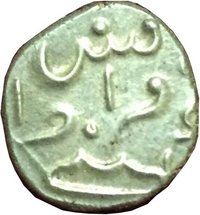

⭐ Somewhat Rare