

1 fanon – Mahé
Add to wishlist
India
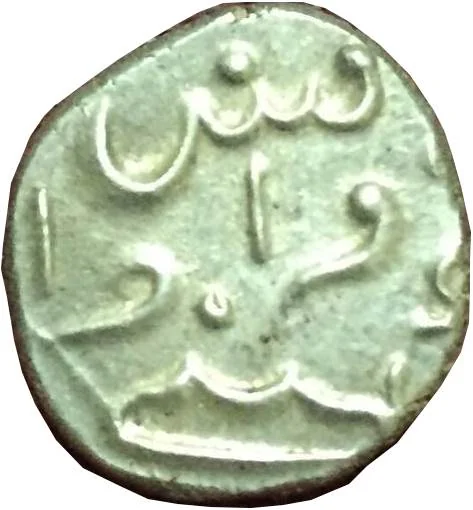
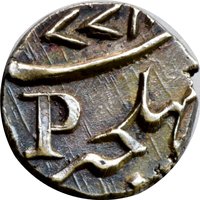
Obverse
Description:
"franch kompani"
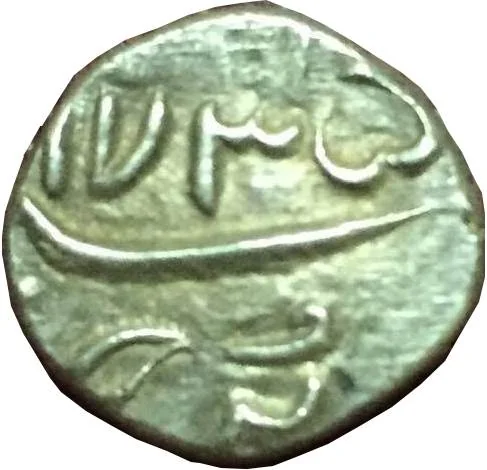
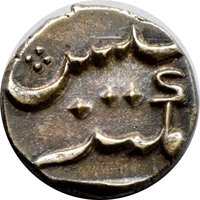
Reverse
Description:
Legend: mint and date in Persian.
Inscription:
١٧٣۵
Edge
Plain
Mints
| Name | Mark |
|---|---|
| Mahé | — |
Mintings
| Year | Mint Mark | Mintage | Quality | Collection |
|---|---|---|---|---|
| 1731 | — | — | ||
| 1732 | — | — | ||
| 1734 | — | — | ||
| 1735 | — | — | ||
| 1737 | — | — |
Historical background
In 1731, the French colony of Mahé, a small but strategically important settlement on the Malabar Coast of India, operated within a complex and often chaotic monetary environment. The official currency was the French livre tournois, as decreed by the Compagnie des Indes (French East India Company) which administered the territory. However, the practical reality on the ground was one of severe specie shortage; actual French coinage was scarce, forcing the colonial economy to rely heavily on a diverse array of foreign currencies that circulated through regional trade networks.
The daily commerce of Mahé was dominated by a bazaar of silver coins from various empires. The most prevalent and trusted were Spanish pieces of eight (reales) and their fractional coins, which served as a de facto global currency. Portuguese xerafins and tangas, Dutch rixdollars, and a variety of Mughal rupees—particularly those from the Surat mint—also circulated widely. Their values fluctuated constantly based on weight, silver purity, and the reputation of their mint, requiring merchants and colonial officials to be adept assayers. This multi-currency system created significant administrative challenges for the French Company, which struggled to impose fixed exchange rates and account for its finances.
Ultimately, the currency situation in Mahé 1731 reflected its position as a minor European outpost embedded in a vibrant and ancient Asian trading world. The colony’s monetary system was not self-contained but was instead a permeable interface, dictated more by the inflow and outflow of merchant silver from the Indian Ocean trade than by edicts from Paris or even Pondichéry. This reliance on foreign specie underscored the colony’s economic vulnerability and its dependence on the very commercial currents it sought to profit from and control.
The daily commerce of Mahé was dominated by a bazaar of silver coins from various empires. The most prevalent and trusted were Spanish pieces of eight (reales) and their fractional coins, which served as a de facto global currency. Portuguese xerafins and tangas, Dutch rixdollars, and a variety of Mughal rupees—particularly those from the Surat mint—also circulated widely. Their values fluctuated constantly based on weight, silver purity, and the reputation of their mint, requiring merchants and colonial officials to be adept assayers. This multi-currency system created significant administrative challenges for the French Company, which struggled to impose fixed exchange rates and account for its finances.
Ultimately, the currency situation in Mahé 1731 reflected its position as a minor European outpost embedded in a vibrant and ancient Asian trading world. The colony’s monetary system was not self-contained but was instead a permeable interface, dictated more by the inflow and outflow of merchant silver from the Indian Ocean trade than by edicts from Paris or even Pondichéry. This reliance on foreign specie underscored the colony’s economic vulnerability and its dependence on the very commercial currents it sought to profit from and control.
✨ Legendary