

¼ biche – Mahé
Add to wishlist
India
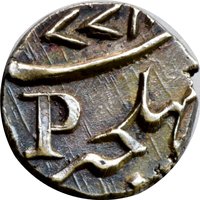
Obverse
Description:
Five fleurs-de-lis.
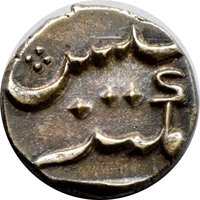
Reverse
Description:
Date.
Edge
Mints
| Name | Mark |
|---|---|
| Mahé | — |
Mintings
| Year | Mint Mark | Mintage | Quality | Collection |
|---|---|---|---|---|
| 1752 | — | — | ||
| 1753 | — | — | ||
| 1767 | — | — | ||
| 1769 | — | — |
Historical background
In 1752, Mahé, a small coastal enclave on India's Malabar Coast, was a French trading post under the administration of the French East India Company. The broader monetary landscape of the region was complex and pluralistic, dominated not by a single French system but by the circulation of a wide variety of foreign and local currencies. The primary medium of exchange for significant trade was the Spanish silver dollar (piece of eight) and other European silver coins, which were valued for their intrinsic metal content and accepted in ports across the Indian Ocean. Alongside these, various gold pagodas from neighbouring Indian states and silver rupees from the Mughal Empire also circulated freely, their values fluctuating based on weight, purity, and local demand.
The French authorities, while attempting to impose some order for official Company business and tax collection, largely acquiesced to this multi-currency reality. They published periodic tarifs or valuation tables that fixed the exchange rates between the French livre, the Spanish dollar, the local rupee, and other coins. This was essential for accounting, paying soldiers, and setting prices at the Company's warehouse. However, these official rates often conflicted with market rates, leading to arbitrage and confusion. For the majority of daily transactions among the local population, merchants, and smaller traders, older systems of commodity money and smaller denomination coins, like cowrie shells and copper cash, remained in widespread use.
Thus, the currency situation in Mahé in 1752 was characterised by a layered and pragmatic system. At its core, it was a hybrid monetary zone where global trade coins (Spanish dollars), regional imperial currencies (Mughal rupees), and local customary money (cowries) all coexisted. The French administration’s primary concern was to facilitate commerce and profit, not to enforce a unified currency. This pragmatic approach ensured trade could flow but also meant the settlement was embedded in the diverse and intricate economic fabric of the Malabar Coast, rather than operating under a sovereign European monetary system.
The French authorities, while attempting to impose some order for official Company business and tax collection, largely acquiesced to this multi-currency reality. They published periodic tarifs or valuation tables that fixed the exchange rates between the French livre, the Spanish dollar, the local rupee, and other coins. This was essential for accounting, paying soldiers, and setting prices at the Company's warehouse. However, these official rates often conflicted with market rates, leading to arbitrage and confusion. For the majority of daily transactions among the local population, merchants, and smaller traders, older systems of commodity money and smaller denomination coins, like cowrie shells and copper cash, remained in widespread use.
Thus, the currency situation in Mahé in 1752 was characterised by a layered and pragmatic system. At its core, it was a hybrid monetary zone where global trade coins (Spanish dollars), regional imperial currencies (Mughal rupees), and local customary money (cowries) all coexisted. The French administration’s primary concern was to facilitate commerce and profit, not to enforce a unified currency. This pragmatic approach ensured trade could flow but also meant the settlement was embedded in the diverse and intricate economic fabric of the Malabar Coast, rather than operating under a sovereign European monetary system.
✨ Legendary