

1 Ducaton – Netherlands East Indies
Indonesia
Context
Years: 1728–1741
Country: Indonesia 
Issuer: Netherlands East Indies
Period:
(1602—1800)
Currency:
(1726—1854)
Demonetized: Yes
Material
References
KM: #Click to copy to clipboard130
Numista: #21874
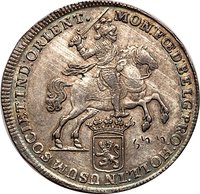
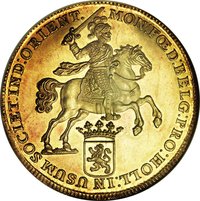
Obverse
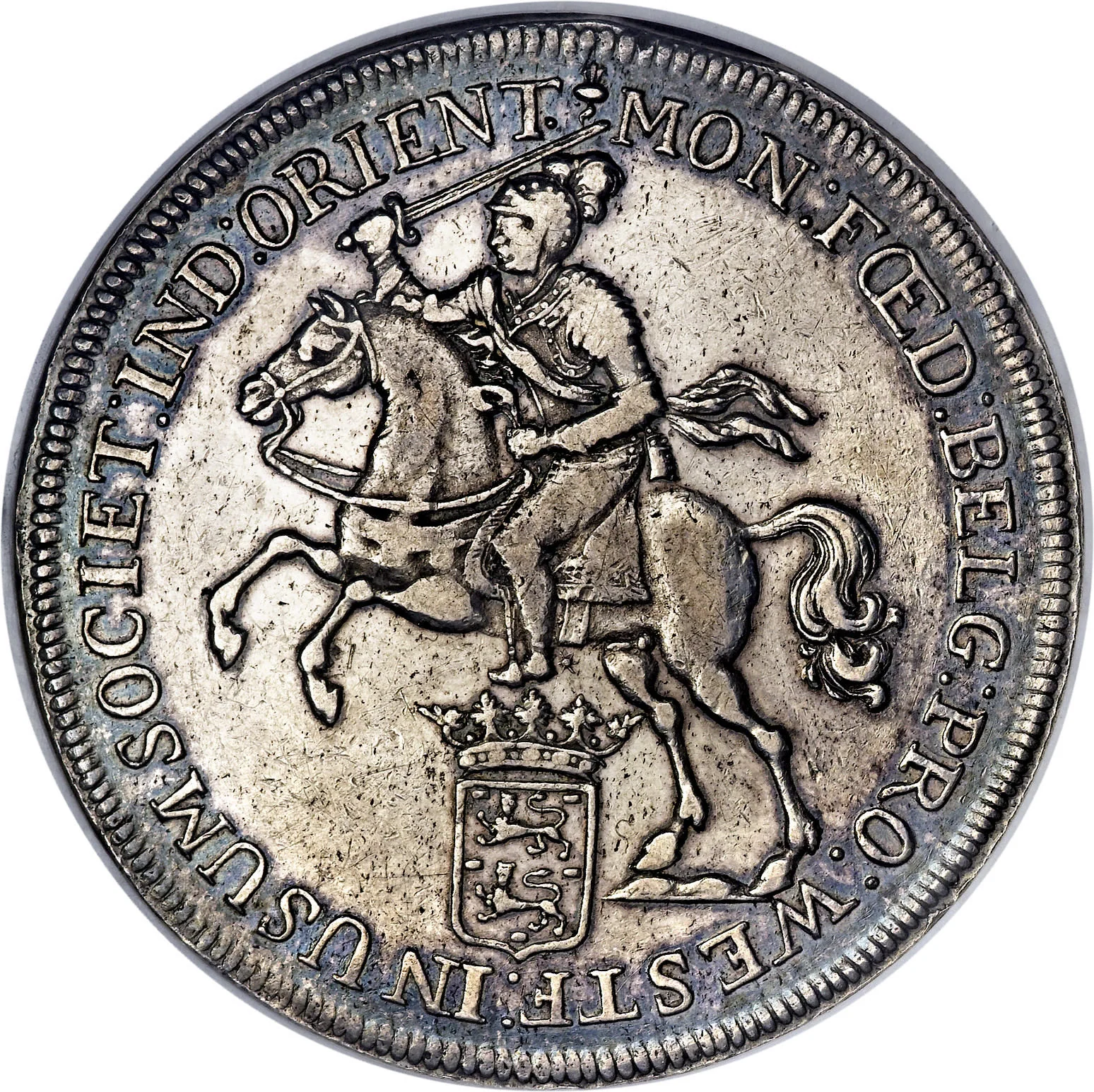
Description:
Knight on horseback left, crowned West Friesland arms below.
Inscription:
MON FOED BELG PRO WESTF IN USUM SOCIET IND ORIENT
Script: Latin
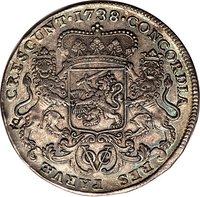
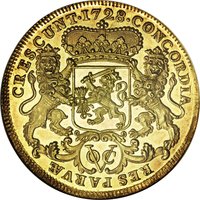
Reverse
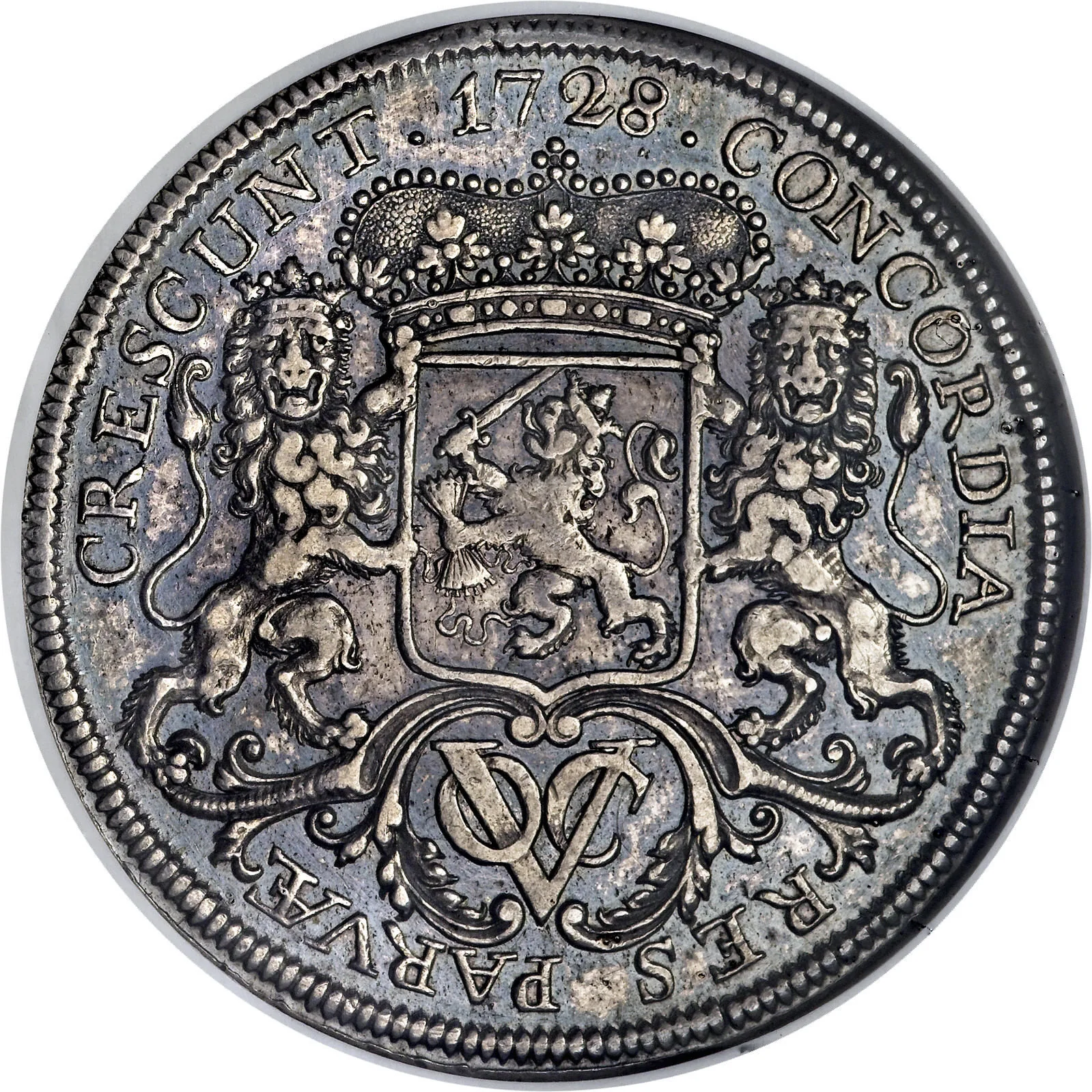
Description:
Crowned arms with lion supporters, VOC monogram below, date above.
Inscription:
CONCORDIA RESPARVÆ CRESCUNT
1728
1728
Script: Latin
Edge
Mintings
| Year | Mint Mark | Mintage | Quality | Collection |
|---|---|---|---|---|
| 1728 | — | — | ||
| 1731 | — | — | ||
| 1737 | — | — | ||
| 1738 | — | — | ||
| 1739 | — | — | ||
| 1740 | — | — | ||
| 1741 | — | — |
Historical background
In 1728, the currency situation in the Netherlands East Indies (NEI) was dominated by the chronic shortage of official coinage and the widespread circulation of foreign and debased money. The Dutch East India Company (VOC), which governed the colony, officially valued trade in terms of the Dutch guilder. However, the physical supply of reliable silver coins, like Spanish Reales (popularly known as "pieces of eight") and Dutch rijksdaalders, was insufficient for the booming colonial economy. This scarcity was a deliberate VOC policy to prevent the export of precious metal from the Batavia treasury, but it created severe practical problems for daily transactions.
Consequently, a complex and unstable multi-currency system filled the void. Alongside the full-weight silver coins, a plethora of other mediums of exchange were in use, including Japanese koban gold coins, various copper duits, and—most problematically—heavily debased and clipped foreign silver. The VOC attempted to manage this by periodically issuing official plakkaten (decrees) that set and adjusted the valuation of these myriad coins in stuivers. These rates often differed from their intrinsic metal value, leading to arbitrage, confusion, and Gresham's Law in action, where "bad money" (debased coins) drove "good money" (full-weight coins) into hoarding or export.
The year 1728 fell within a period of particular monetary stress. The VOC's financial position was weakening, and its attempts to introduce and control currency, such as the Batavian duit and the issuance of paper credit notes (creditbrieven), were not yet fully effective in stabilizing the system. Therefore, the monetary landscape was one of official proclamations struggling against market realities, where merchants, colonists, and indigenous populations navigated a daily marketplace rife with multiple, fluctuating values for the coins in their pockets, undermining both trust and efficient commerce.
Consequently, a complex and unstable multi-currency system filled the void. Alongside the full-weight silver coins, a plethora of other mediums of exchange were in use, including Japanese koban gold coins, various copper duits, and—most problematically—heavily debased and clipped foreign silver. The VOC attempted to manage this by periodically issuing official plakkaten (decrees) that set and adjusted the valuation of these myriad coins in stuivers. These rates often differed from their intrinsic metal value, leading to arbitrage, confusion, and Gresham's Law in action, where "bad money" (debased coins) drove "good money" (full-weight coins) into hoarding or export.
The year 1728 fell within a period of particular monetary stress. The VOC's financial position was weakening, and its attempts to introduce and control currency, such as the Batavian duit and the issuance of paper credit notes (creditbrieven), were not yet fully effective in stabilizing the system. Therefore, the monetary landscape was one of official proclamations struggling against market realities, where merchants, colonists, and indigenous populations navigated a daily marketplace rife with multiple, fluctuating values for the coins in their pockets, undermining both trust and efficient commerce.
✨ Legendary