

1 Duit – Netherlands East Indies
Indonesia
Context
Years: 1726–1804
Country: Indonesia 
Issuer: Netherlands East Indies
Period:
(1602—1800)
Currency:
(1726—1854)
Demonetized: Yes
Material
References
KM: #Click to copy to clipboard70
Numista: #18851
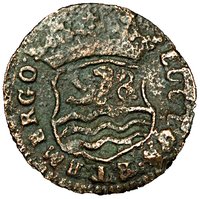
Obverse
Description:
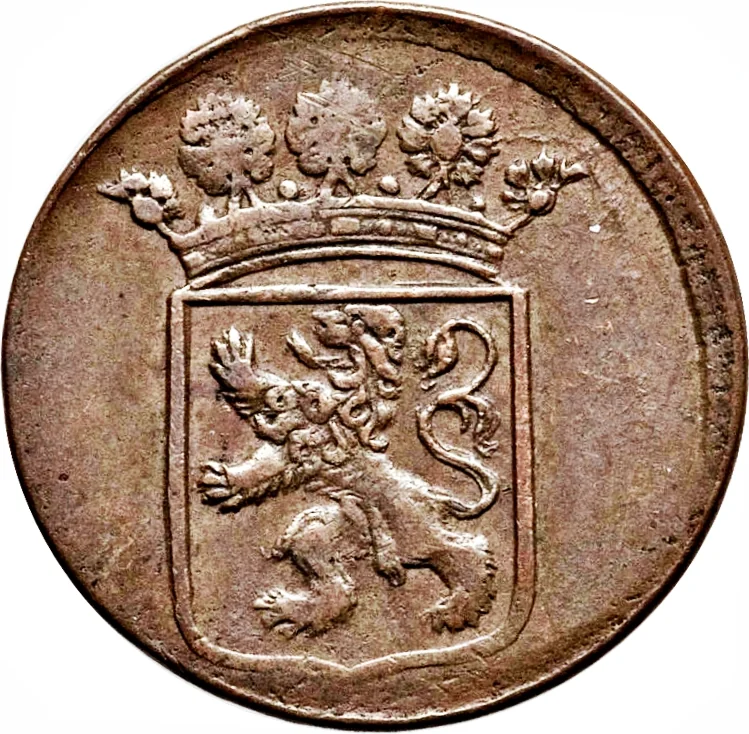
Arms of Holland crowned.
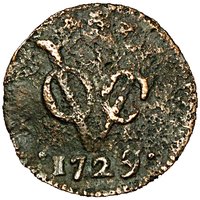
Reverse
Description:
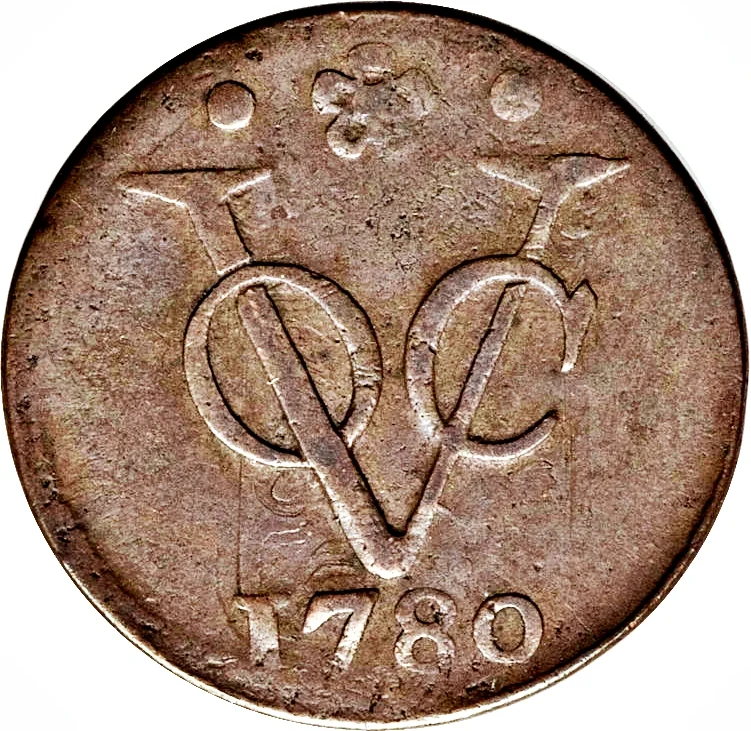
VOC monogram centered, rosette mintmark above between dots, date below.
Inscription:
·*·
VOC
1780
VOC
1780
Script: Latin
Edge
Plain
Categories
| Symbols> Coat of Arms |
| Symbols> Monogram |
Mintings
| Year | Mint Mark | Mintage | Quality | Collection |
|---|---|---|---|---|
| 1726 | — | — | ||
| 1730 | — | — | ||
| 1731 | — | — | ||
| 1732 | — | — | ||
| 1733 | — | — | ||
| 1734 | — | — | ||
| 1735 | — | — | ||
| 1736 | — | — | ||
| 1737 | — | — | ||
| 1742 | — | — | ||
| 1743 | — | — | ||
| 1744 | — | — | ||
| 1745 | — | — | ||
| 1746 | — | — | ||
| 1747 | — | — | ||
| 1748 | — | — | ||
| 1749 | — | — | ||
| 1750 | — | — | ||
| 1751 | — | — | ||
| 1752 | — | — | ||
| 1753 | — | — | ||
| 1754 | — | — | ||
| 1755 | — | — | ||
| 1764 | — | — | ||
| 1765 | — | — | ||
| 1766 | — | — | ||
| 1767 | — | — | ||
| 1768 | — | — | ||
| 1770 | — | — | ||
| 1771 | — | — | ||
| 1772 | — | — | ||
| 1776 | — | — | ||
| 1777 | — | — | ||
| 1778 | — | — | ||
| 1779 | — | — | ||
| 1780 | — | — | ||
| 1781 | — | — | ||
| 1784 | — | — | ||
| 1788 | — | — | ||
| 1789 | — | — | ||
| 1790 | — | — | ||
| 1791 | — | — | ||
| 1792 | — | — | ||
| 1793 | — | — | ||
| 1802 | — | — | ||
| 1803 | — | — | ||
| 1804 | — | — |
Historical background
In 1726, the currency system of the Netherlands East Indies (NEI) was a complex and problematic bazaar of competing monies, centrally managed by the Dutch East India Company (VOC). The official unit of account was the Dutch guilder, but the physical circulation was dominated by silver coins, primarily Spanish-American pieces of eight (Reales) and their fractional parts. These coins were valued by weight and fineness, leading to constant evaluation headaches. A severe shortage of small change for everyday transactions was chronic, a gap often filled by a bewildering array of unofficial currencies: Chinese copper cash coins, Japanese koban gold coins, and locally minted lead and tin doits of dubious quality.
The VOC's primary concern was ensuring a favorable balance of trade, leading to a policy that actively drained silver from the archipelago to pay for spices and other commodities in Asia. This "bullionist" approach created a persistent deflationary pressure and coin shortage within the NEI itself. To function, the Company issued paper credit in the form of negotiable bonds and bills of exchange, but these were instruments for large-scale trade and not a solution for the retail economy. Consequently, the system was fragile, reliant on imported coin, and perpetually on the brink of liquidity crisis.
Attempts to impose order, such as setting official valuation ratios for foreign coins, often failed in the face of market forces and rampant clipping and counterfeiting of coins. The year 1726 falls within a period of particular strain, as European wars and shifting global silver flows disrupted supplies. The result was an economy where the official currency was scarce, unofficial monies proliferated, and the VOC's financial control was constantly undermined by the very market it sought to dominate, laying bare the contradiction between its mercantile ambitions and the monetary needs of the colony it administered.
The VOC's primary concern was ensuring a favorable balance of trade, leading to a policy that actively drained silver from the archipelago to pay for spices and other commodities in Asia. This "bullionist" approach created a persistent deflationary pressure and coin shortage within the NEI itself. To function, the Company issued paper credit in the form of negotiable bonds and bills of exchange, but these were instruments for large-scale trade and not a solution for the retail economy. Consequently, the system was fragile, reliant on imported coin, and perpetually on the brink of liquidity crisis.
Attempts to impose order, such as setting official valuation ratios for foreign coins, often failed in the face of market forces and rampant clipping and counterfeiting of coins. The year 1726 falls within a period of particular strain, as European wars and shifting global silver flows disrupted supplies. The result was an economy where the official currency was scarce, unofficial monies proliferated, and the VOC's financial control was constantly undermined by the very market it sought to dominate, laying bare the contradiction between its mercantile ambitions and the monetary needs of the colony it administered.
🌱 Common