

1 Ducaton – Netherlands East Indies
Indonesia
Context
Years: 1739–1740
Country: Indonesia 
Issuer: Netherlands East Indies
Period:
(1602—1800)
Currency:
(1726—1854)
Demonetized: Yes
Material
References
KM: #Click to copy to clipboard110
Numista: #21743
Obverse
Description:
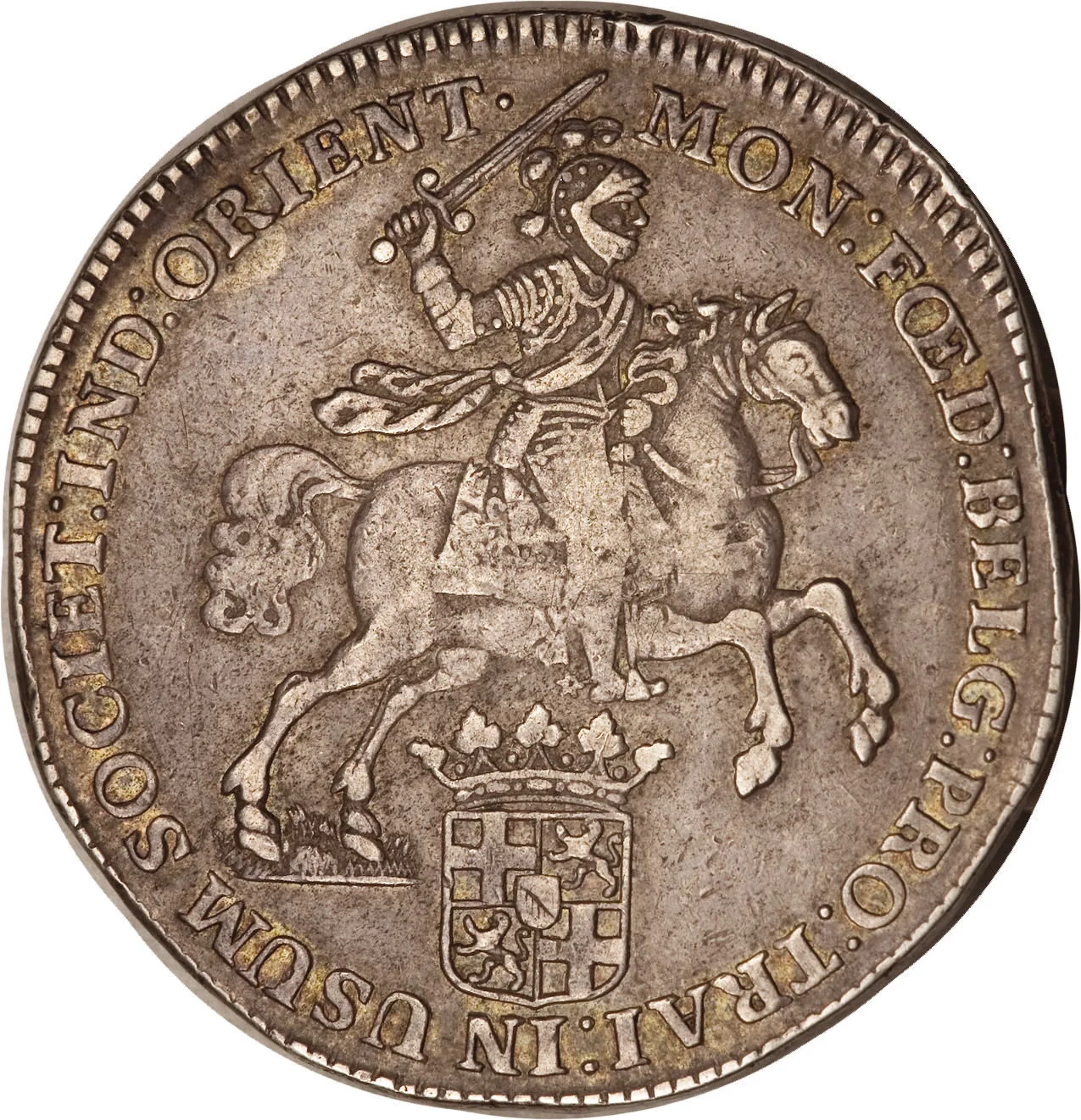
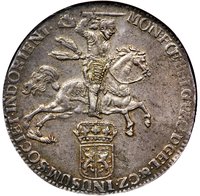
Knight on horseback right, sword raised, crowned Utrecht arms below.
Inscription:
MON FOED BELG PRO TRAI IN USUM SOCIET IND ORIENT
Script: Latin
Reverse
Description:
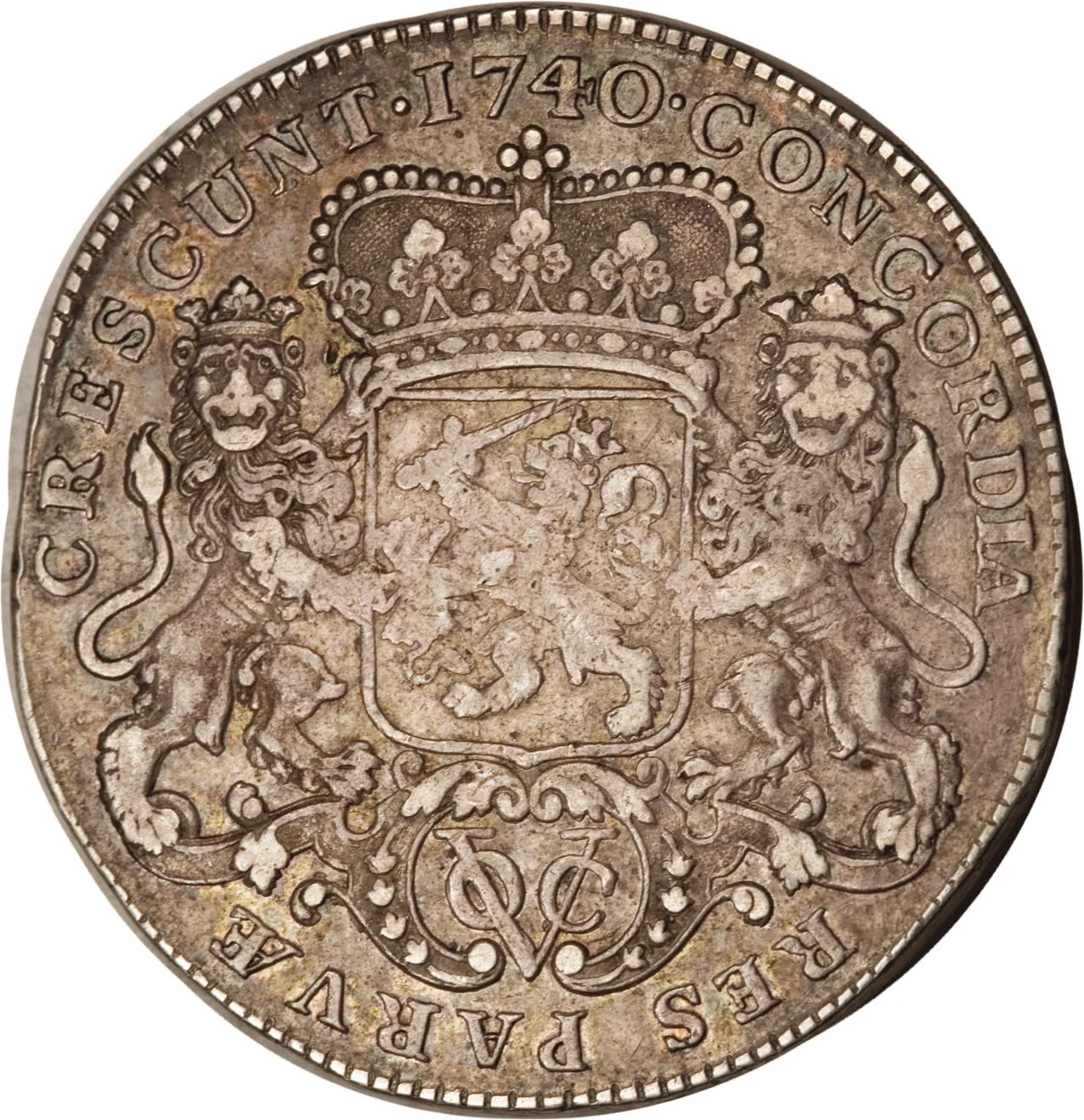
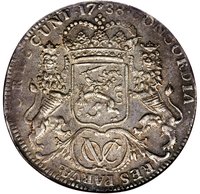
Crowned arms with lion supporters, VOC monogram below, date above.
Inscription:
CONCORDIA RES PARVÆ CRESCUNT
1740
1740
Script: Latin
Edge
Categories
| Animal> Feline |
| Animal> Horse |
| Object> Cold weapons |
| Symbols> Coat of Arms |
| Symbol> Crown |
Mintings
| Year | Mint Mark | Mintage | Quality | Collection |
|---|---|---|---|---|
| 1739 | — | — | ||
| 1740 | — | — |
Historical background
In 1739, the currency situation in the Netherlands East Indies (NEI) was defined by a severe and chronic shortage of official coinage, a problem plaguing the Dutch East India Company (VOC) for decades. The VOC's relentless extraction of silver and gold coins to pay for Asian trade goods and to remit profits to Europe drained the colony of sound money. This created a dysfunctional monetary environment where a multitude of foreign coins—including Spanish American silver pesos (reales), Japanese koban, and various Indian and Arabian rupees—circulated alongside a limited supply of decrepit VOC-minted coins. Their values fluctuated wildly based on weight, fineness, and local proclamation, leading to confusion and inefficiency.
To bridge this gap, the VOC heavily relied on the issuance of creditbrieven (credit notes), a form of paper money payable at the Company's cashier offices. While these notes provided essential liquidity for large commercial transactions within Batavia and other key ports, they were not a comprehensive solution. Their acceptance was largely confined to the European merchant community and the Company's own operations. For the vast archipelago's everyday internal economy, the currency vacuum was filled by an array of low-value, locally produced copper duits and lead doits, often minted in vast quantities by the VOC itself but prone to debasement and counterfeiting.
Consequently, 1739 fell within a period of monetary fragmentation and instability. The VOC's primary focus remained on securing high-value specie for its intra-Asian trading network, not on creating a unified currency system for the local population. This resulted in a multi-tiered system: a high-level trade economy using silver and paper credit, and a disorderly local economy saturated with inferior coinage. This scarcity and complexity would persist until more decisive, but still problematic, monetary reforms were attempted later in the 18th century.
To bridge this gap, the VOC heavily relied on the issuance of creditbrieven (credit notes), a form of paper money payable at the Company's cashier offices. While these notes provided essential liquidity for large commercial transactions within Batavia and other key ports, they were not a comprehensive solution. Their acceptance was largely confined to the European merchant community and the Company's own operations. For the vast archipelago's everyday internal economy, the currency vacuum was filled by an array of low-value, locally produced copper duits and lead doits, often minted in vast quantities by the VOC itself but prone to debasement and counterfeiting.
Consequently, 1739 fell within a period of monetary fragmentation and instability. The VOC's primary focus remained on securing high-value specie for its intra-Asian trading network, not on creating a unified currency system for the local population. This resulted in a multi-tiered system: a high-level trade economy using silver and paper credit, and a disorderly local economy saturated with inferior coinage. This scarcity and complexity would persist until more decisive, but still problematic, monetary reforms were attempted later in the 18th century.
✨ Legendary